
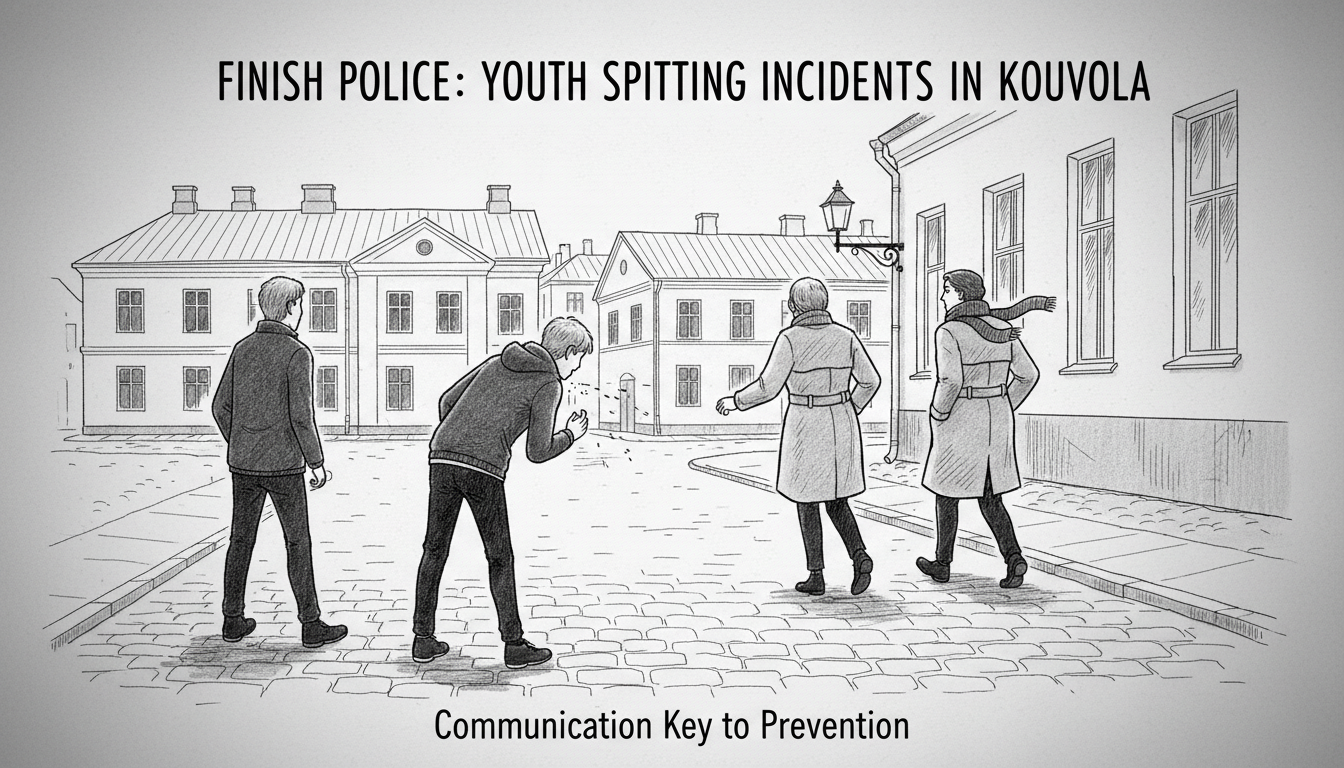
Police in southeastern Finland report concerning behavioral patterns among youth in the Kouvola region. Officers confirm multiple incidents where young people approach adults and spit on them. The behavior has sparked both official investigations and social media discussions.
Senior Constable Janne Kyrönviita of the Southeast Finland Police Department described the situation as troubling. He works with the youth investigation team at Kouvola's main police station. The constable noted this represents a shift from previous behavior patterns. Young people now initiate contact with adults rather than responding to adult intervention.
Kyrönviita explained the typical scenario. Adults who approach groups of young people about questionable behavior often face resistance. He emphasized these adults act correctly by intervening but may encounter opposition. The police have received reports from multiple urban areas including Valkeala and Kuusankoski.
The constable clarified this doesn't represent all local youth. The issue involves specific groups rather than the entire younger population. Participants include both primary and secondary school-aged children. Some cases have been resolved through discussions with the young people involved.
Parents typically express surprise when contacted by authorities. Kyrönviita suggested this indicates guardians may not fully understand their children's activities. Most parents want to think positively about their children, which makes the behavioral reports particularly disappointing.
Legal consequences can accompany these incidents. Property damage may constitute vandalism while spitting on individuals could qualify as defamation. The constable identified thrill-seeking as a primary motivation. Young people often engage in这种行为 for excitement and amusement despite knowing it's wrong.
Social pressure likely plays a role in these group behaviors. Kyrönviita noted the difficulty of being the only person in a friend group who says no to questionable activities. Social media content showing similar misbehavior might inspire imitation, though he doesn't consider this primarily a social media phenomenon.
The police emphasize prevention through strong guardian-youth relationships. Kyrönviita encourages adults to maintain ongoing communication with young people about their daily experiences. He acknowledges children throughout history have devised various pranks, making this behavior nothing fundamentally new.
Similar activity has occurred elsewhere in Southeast Finland, though its origins remain unclear. The police continue monitoring the situation while working with families and community organizations. Their approach combines law enforcement with preventive measures addressing the root causes of antisocial behavior among youth.
This situation reflects broader challenges in youth engagement and community safety. It highlights the importance of intergenerational communication and early intervention strategies. Local authorities balance enforcement with understanding the developmental factors driving such behavior in young people.