
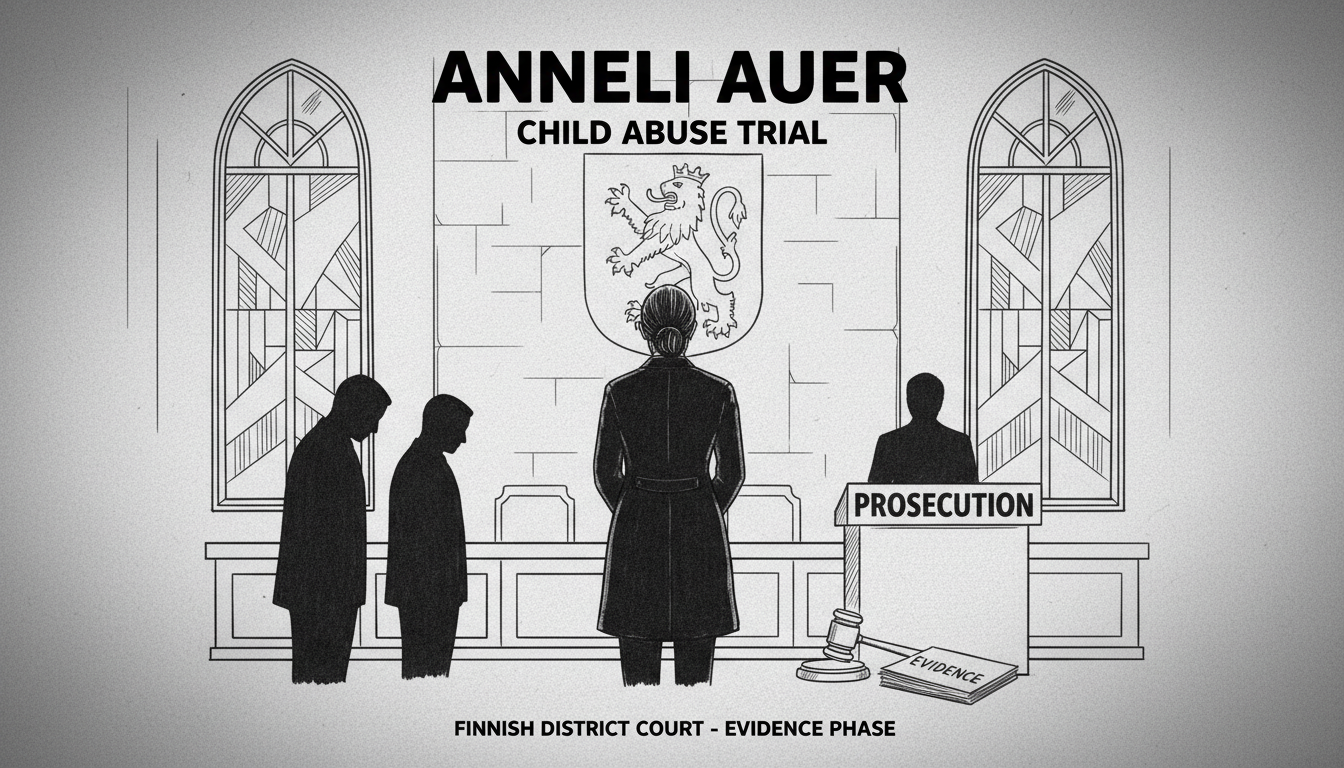
Anneli Auer, a former Finnish political figure, arrived at the Varsinais-Suomen District Court in Turku for her trial on serious charges. She appeared calm but offered minimal comment to the gathered press. The case has captured national attention due to Auer's previous public profile and the gravity of the allegations. She faces accusations alongside her former partner, Jens Ihle, concerning sexual and violent crimes allegedly committed against her four children between 2007 and 2009. The charges represent a profound legal and personal crisis for the defendant, moving from the political arena to the courtroom.
Prosecutor Leena Koivuniemi stated the prosecution maintains a solid foundation for pursuing the charges. She addressed media speculation directly, asserting that no critical element of their case had collapsed. The court has recently focused on evaluating the reliability of evidence presented. This phase is standard in Finnish criminal procedure, which requires a high burden of proof, especially in cases involving historical allegations and child witnesses. The Finnish legal system handles such sensitive cases with specific protocols to protect minors, even when they are now adults.
Auer's reserved demeanor outside the courtroom contrasted with her previously more open media interactions. She indicated she might comment after her own hearing concludes, depending on her stamina. Her defense is being managed by attorney Markku Fredman. The trial's proceedings are not just a legal matter but also a societal test of how Finland addresses complex familial abuse cases within its social fabric. The outcome will be closely watched by advocacy groups and legal experts alike.
The prosecution planned to question Auer directly about her perspective on the events during the period in question. This testimony is a pivotal moment in the trial. Finnish court proceedings allow for direct examination, and a defendant's account can significantly influence the judges' assessment. The case is being heard in a district court, the first level in Finland's three-tier judicial system. A verdict is expected later, with both sides retaining the right to appeal to the Court of Appeal and potentially the Supreme Court.
This trial underscores the rigorous nature of Finland's judicial process, where even prominent individuals face thorough scrutiny. The case also touches on broader themes of accountability and child protection within Nordic societies, which often pride themselves on strong social welfare systems. The legal process will continue to unfold methodically, with the court's primary duty being to establish the facts beyond a reasonable doubt. The final judgment will have lasting implications for all involved, regardless of the verdict.