
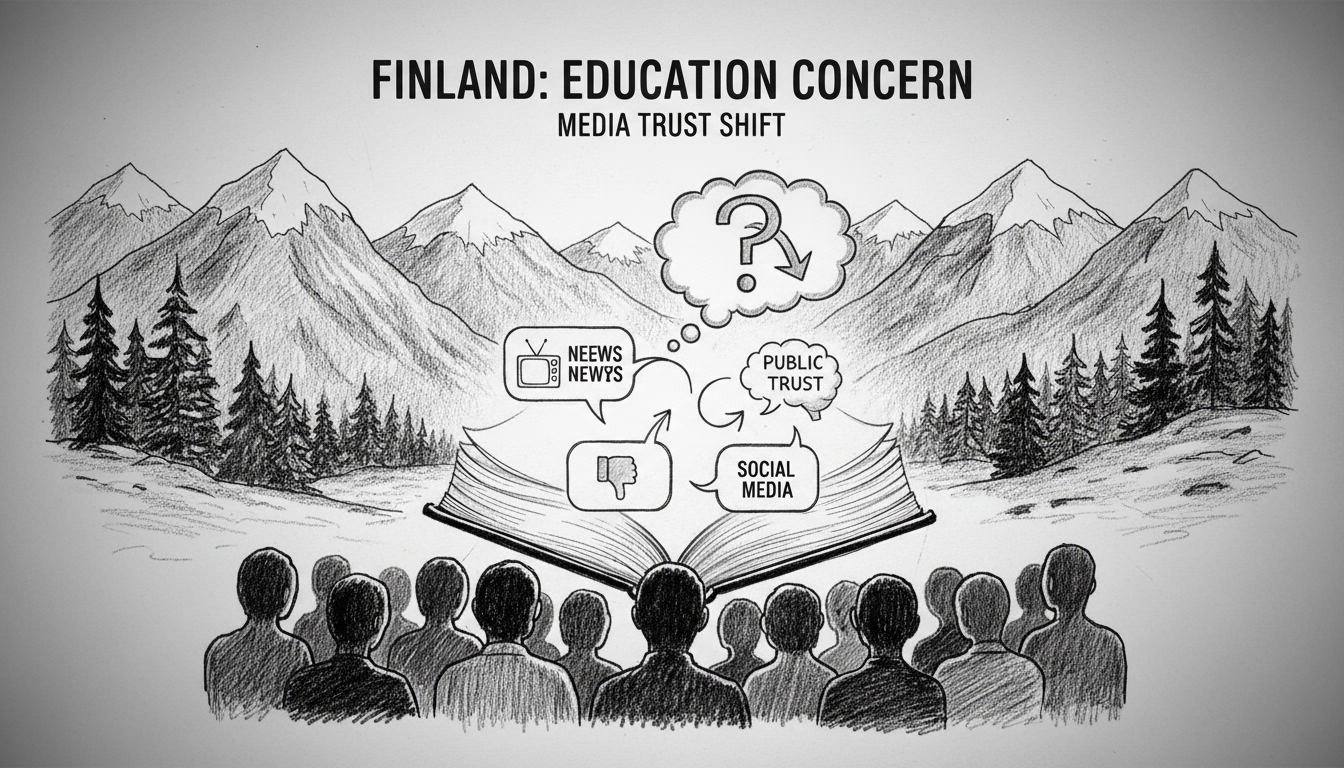
A comprehensive new study reveals deepening public anxiety in Finland regarding the nation's general knowledge and education standards. The research, commissioned by a national media association, indicates that 79 percent of Finns are now concerned about the level of general education, a four-percentage-point increase from just three years prior. This growing unease exists alongside an overwhelming consensus, with 93 percent of citizens affirming the fundamental importance of a broad-based education for society. The findings arrive during a period of intense national debate over education funding, curriculum reforms, and the societal impact of digital platforms, placing significant pressure on policymakers in Helsinki's government district to address these foundational concerns.
The study provides a clear hierarchy of media trust and perceived educational value in Finnish society. Traditional and digital newspapers are viewed as the most educational media, followed by television and radio. In terms of reliability, the national public broadcaster scored highest with a rating of 7.6 out of 10, with newspapers close behind at 7.4. These scores have remained stable from the previous year. The digital services of commercial broadcasters placed third, while various social media platforms clustered at the bottom with average ratings just above three. This trust gap highlights a critical challenge for democratic discourse, as 90 percent of Finns believe a diverse media landscape is essential for a functioning democracy, a figure that has risen four points in a year.
A striking three out of four respondents anticipate increasing societal polarization and a faster pace of inequality. As a remedy, they advocate for the equitable and comprehensive distribution of information and content. This sentiment underscores the perceived power of the press, with 85 percent acknowledging that newspapers have a significant impact on public debate. Interest in societal affairs is growing, particularly among young adults aged 15 to 24, where 68 percent report increased engagement. This demographic shift suggests a politically aware generation is emerging, even as their media consumption habits evolve.
The report details a complex relationship with social media, which nearly all Finns use. WhatsApp, YouTube, and Facebook remain the most popular services. Criticism of these platforms is intensifying, however, with just over half of users expressing fatigue with social media and 46 percent assessing its overall effect on their lives as negative. The rise of artificial intelligence is further complicating the information landscape. While only about ten percent use AI tools daily, the proliferation of AI-generated content has made 69 percent of Finns more critical of various information sources than before. A quarter have experimented with AI but not adopted it, and nearly a third have neither used nor considered using it.
This data presents a clear mandate for the Finnish government and the Eduskunta. The public's high trust in established media like the public broadcaster and newspapers, coupled with deep concern over education and social cohesion, creates a policy imperative. Ministers from the governing coalition must reconcile these public expectations with budgetary realities and EU-level digital policy directives. The strong link drawn by citizens between quality information, education, and a healthy democracy cannot be ignored in upcoming parliamentary debates. The challenge will be crafting policies that support reliable media and robust education systems without stifling innovation or running afoul of broader European Union regulations on competition and digital markets. The Finnish political tradition of consensus may be tested as parties navigate these pressures ahead of the next electoral cycle.