
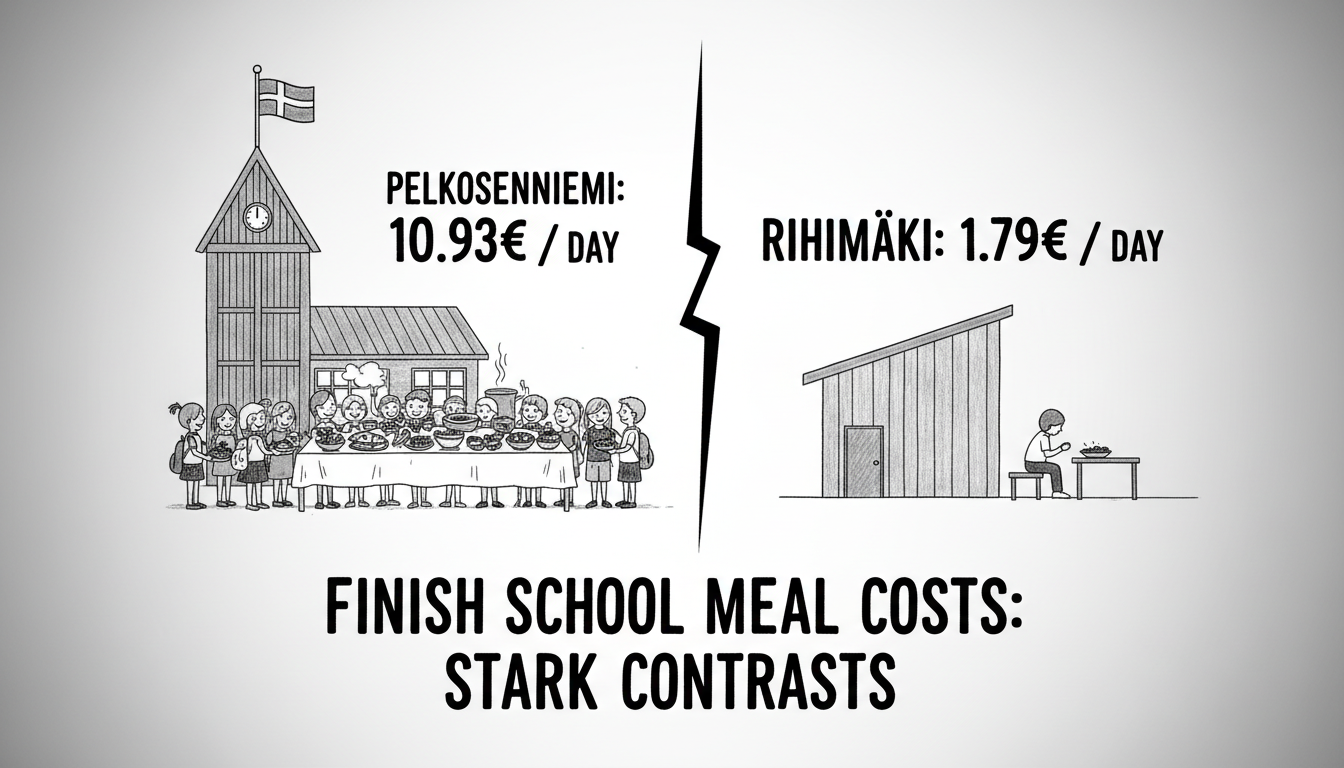
Finnish municipalities show dramatic differences in school meal spending per student, with costs ranging from 1.79 euros to nearly 11 euros daily according to the latest education authority report. Pelkosenniemi in Lapland spends 10.93 euros per student for school meals, while Riihimäki allocates only 1.79 euros for the same purpose. Helsinki maintains a middle position at 2.66 euros per student daily. These disparities highlight significant regional variations in Finland's celebrated school meal system.
Pelkosenniemi's welfare director Sirpa Koskenlaine explained their approach prioritizes local food sourcing and kitchen preparation. The municipality requires at least 20 percent local ingredients in school meals under their procurement policy. Local potatoes arrive from neighboring Kemijärvi while salmon comes from Sallann Naruska village. Kitchen staff bake bread daily except for crispbread, and wild berries gathered from forests supplement desserts and snacks. The school even maintains its own vegetable garden through catering partner Neidon Sydän Oy.
Local sourcing naturally increases costs compared to wholesale purchasing. Koskenlaine acknowledged local salmon from Naruska costs more than wholesale alternatives. The school regularly serves lamb, reindeer, and moose from local producers, with reindeer coming from municipal-owned herds. Students choose from fresh salad bar components separately rather than pre-mixed options, and all meat arrives raw for kitchen processing. Vegetarian and vegan alternatives remain available daily with advance notice.
Riihimäki's service coordinator Niina Niskanen emphasized their compliance with national nutritional recommendations despite minimal spending. The city monitors nutritional content regularly and provides one weekly vegetarian day following school meal guidelines. Niskanen suggested additional funding could expand local food usage, organic products, or dessert offerings. Current meals include warm main dishes with energy components like potatoes or whole grain pasta plus vegetable side dishes and bread.
Helsinki's food service expert Katja Peränen described their rotating six-week menu incorporating theme weeks and student favorites like fish sticks and spinach pancakes. The capital serves two daily lunch options including one vegetarian choice plus salad bar, bread, and milk or buttermilk. Peränen noted extra funding could improve soft bread availability, fish frequency, oat drink alternatives, and salad bar variety. The city measures food waste quantities to optimize meal planning.
Education board advisor Marjaana Manninen identified multiple factors behind cost variations beyond ingredient prices. Municipality size, school sizes, transportation needs, kitchen types, and staffing costs all influence final figures. Compact municipalities with few students and multiple small schools face higher per-student costs, while larger schools benefit from economies of scale. Manninen stressed participation rates matter more than raw costs, asking whether higher spending reflects better student engagement with meals.
Finland's Basic Education Act mandates appropriately organized, balanced free meals without specifying exact standards. The national school meal recommendation suggests two daily options with one plant-based, but municipalities determine implementation. Manninen observed choice improves meal consumption, noting breakfast availability correlates with better lunch participation. The fundamental question remains whether cost differences reflect varying educational priorities or simply structural realities across Finland's diverse municipalities.
This cost analysis reveals deeper questions about educational equality in Finland's decentralized system. While all students receive free meals, the quality and sourcing variations raise concerns about consistent nutritional standards nationwide. The debate touches Finland's core values of regional autonomy versus national standards in education policy.