
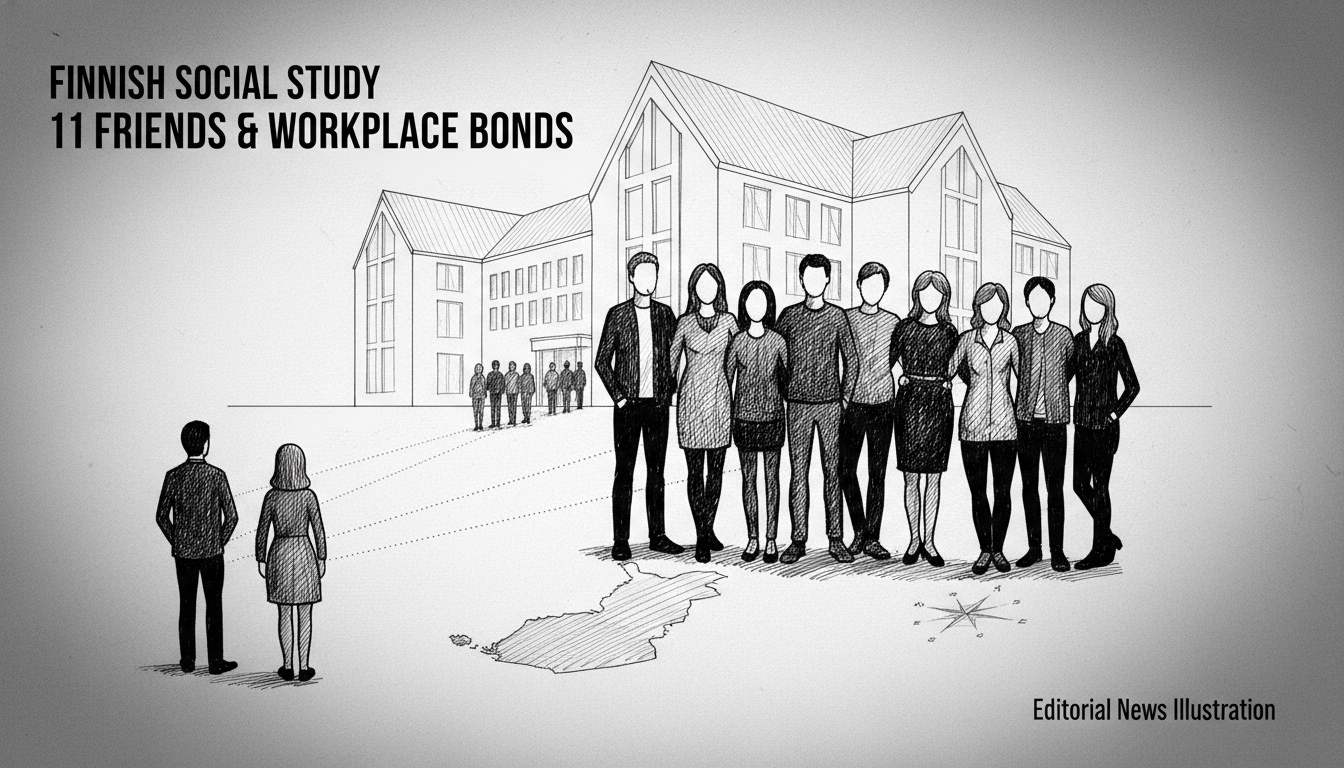
A new study from Finland provides a detailed snapshot of national friendship patterns, revealing that the average Finn maintains a social circle of approximately 11 friends. The research, conducted by the Family Federation of Finland, distinguishes between close confidants and broader acquaintances. On average, Finns report having four close friends, a figure that includes life partners and relatives for a notable portion of the population. The data shows significant gender divides in friendship composition, with men's close friend groups being more gender-diverse than women's. The findings challenge international stereotypes about Finnish social reticence, instead painting a picture of deep, often long-standing bonds formed in traditional settings.
The study's methodology involved a survey of over 5,000 individuals in May. It found that workplace interactions serve as the most common modern catalyst for friendship, with about one-fifth of respondents meeting close friends through work. School connections and introductions through mutual friends also ranked highly. In contrast, friendships originating online remain relatively rare, accounting for under ten percent of relationships formed in the last five years. This underscores a cultural preference for in-person, shared-experience foundations for trust and camaraderie, a hallmark of Nordic social cohesion.
Historical and cultural context is crucial for understanding these patterns. Finland's society has long valued sincerity and depth in relationships over breadth, a concept sometimes referred to as "sisu" in social bonding. The data on friendship longevity supports this, with many relationships beginning in childhood and maintaining small average age gaps of about three years. The study also reveals a small but notable segment of the population, approximately four percent of men and two percent of women, who report having no friends or companions at all. This highlights ongoing social challenges even within a generally well-connected society.
For international observers and expatriates in Finland, the research offers practical insights. It suggests that integrating into Finnish social life may be most effective through sustained shared activities, like work or hobbies, rather than brief encounters. The low incidence of online friendships transitioning to close bonds indicates that digital tools are supplements, not replacements, for the Finnish social framework. The government and municipal social services may also use this data to tailor community-building programs, especially for those at risk of isolation. The study ultimately reflects a stable social structure where quality and longevity are prized, with the workplace acting as the central hub for new adult friendship formation in contemporary Finland.