
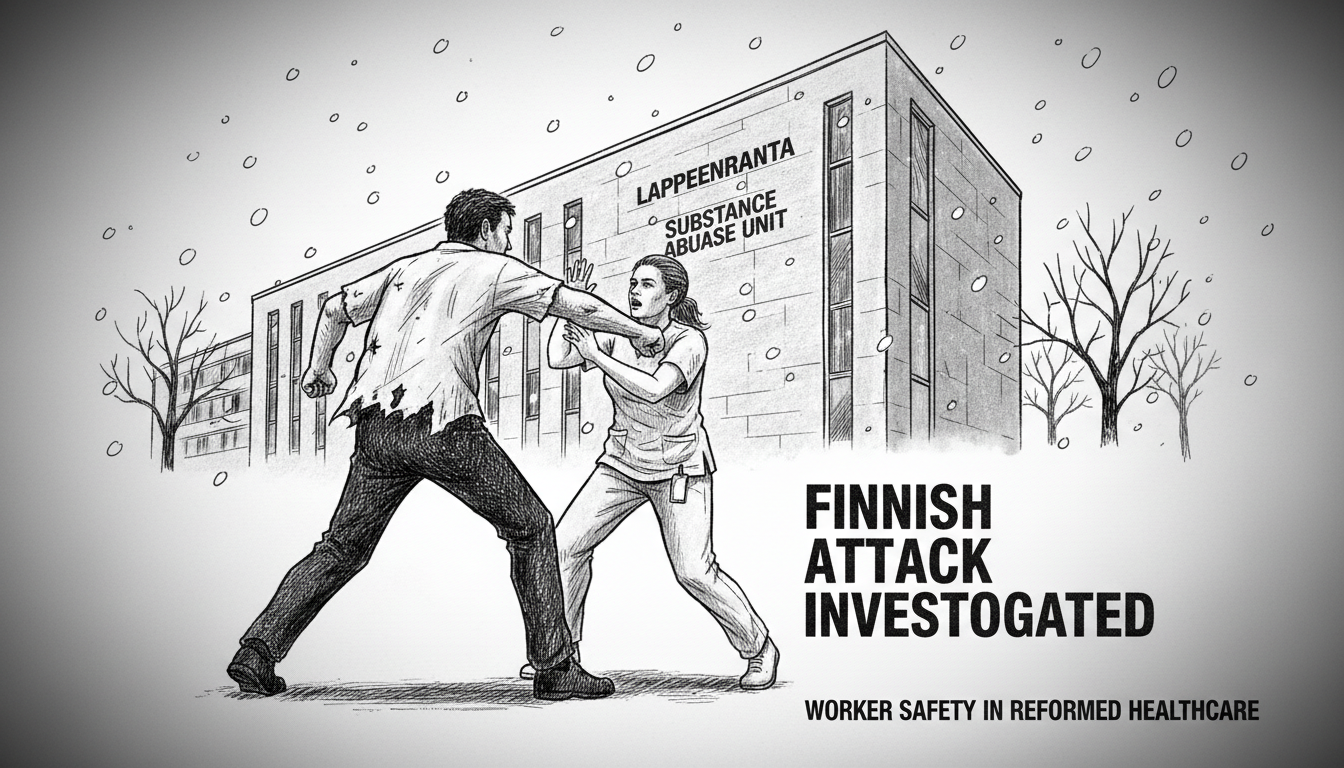
Police in the South Karelia region are investigating a violent attack at a healthcare facility in Lappeenranta as aggravated assault. The incident occurred at a substance abuse treatment unit late last week. A client allegedly assaulted a staff member, with a colleague intervening to stop the attack. The victim sustained only minor injuries. Authorities apprehended a man born in the 1990s at the scene. He has since admitted to the crime and was released from custody on Monday. The police investigation is in its final stages and the case will soon proceed to prosecution consideration. The South Karelia Wellbeing Services District confirmed the incident posed no danger to other unit personnel or the public. Details remain limited under Finnish publicity laws governing healthcare and police matters.
This assault highlights persistent challenges within Finland's decentralized social and healthcare system, known as SOTE. The reform transferred responsibility from municipalities to 21 wellbeing services counties. Critics argue this has created inconsistencies in resource allocation and staff safety protocols. Substance abuse and mental health units often face complex client situations. Staff in these frontline roles regularly manage high-risk interactions with limited support. The Finnish Union of Public and Welfare Services has repeatedly called for enhanced safety measures and staffing levels. This incident in Lappeenranta is not an isolated case. Similar reports of violence against social and healthcare workers surface periodically across the country.
The legal framework in Finland treats assaults against public officials or persons performing a public duty with particular severity. Aggravated assault carries a maximum penalty of ten years imprisonment. The classification depends on factors like the method used, the victim's vulnerability, and the consequences. The quick release of the suspect is standard procedure for less severe cases where flight risk is minimal. It does not indicate the seriousness of the charges is diminished. The case will be evaluated by a prosecutor who decides on formal charges. Finland's judicial process emphasizes rehabilitation, especially in cases linked to substance abuse or mental health issues. The outcome often involves a combination of punishment and mandatory treatment.
For international observers, this event underscores the operational pressures within the Nordic welfare model. Finland maintains a high standard of public healthcare, but system reforms and economic constraints create friction. Employee safety in high-stress public service roles remains a critical negotiation point between unions and regional authorities. The incident also reflects broader European trends of increasing workplace violence in healthcare settings. Finland's response will be watched as a potential indicator of policy shifts. The government may face renewed calls to review safety protocols and funding for wellbeing service counties. The final legal disposition of this case will signal how seriously the system protects its frontline workers.