
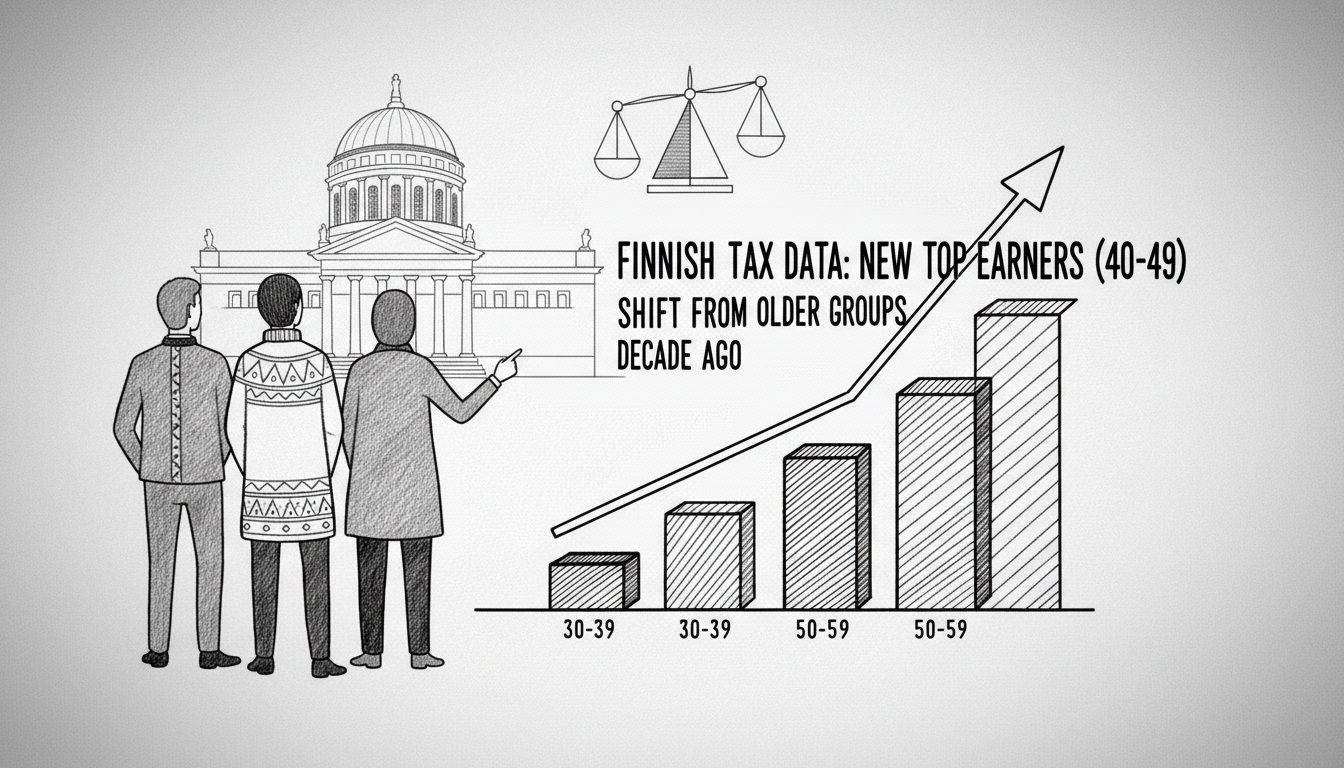
New income statistics from the Finnish Tax Administration show a clear shift in the nation's earning power. The data reveals that 40 to 49-year-olds now form the highest-earning age group in Finland. This marks a notable change from a decade ago when the 50 to 59-year-old cohort held that position. The figures provide a detailed snapshot of wage distribution across different generations, offering citizens a chance to compare their own salaries against national averages. The data is based on taxable gross wage income from the most recent complete tax year, calculated into monthly figures.
Finnish wage earners can now see exactly which income decile they fall into for their age group. The first decile represents the lowest ten percent of earners, while the tenth decile contains the top ten percent. This breakdown includes not just monetary salary but also taxable benefits like company cars. Social benefits and pensions are excluded from this specific dataset. The shift in peak earning years reflects broader societal trends, including rising retirement ages and increased workforce participation among older citizens.
The statistics indicate that the income share for 60 to 69-year-olds has grown over the past ten years. Officials link this trend directly to the rising statutory retirement age and to more pensioners continuing to work. This has tangible implications for Finland's labor market policies and pension system sustainability. The data emerges as the government in Helsinki debates long-term economic strategies and tax policies. These figures will likely inform discussions in the Eduskunta about intergenerational equity and future social security funding.
For younger workers, the data provides a benchmark for early and mid-career salary expectations. The detailed decile tables allow for precise comparison within specific age brackets. This transparency is characteristic of Nordic societal models, where detailed public data informs both personal decisions and national policy. The release comes amid ongoing EU-level discussions about wage transparency directives and combating pay discrimination. Finland's comprehensive dataset offers a model for evidence-based policy, though it also highlights the pressures of an aging population on the tax base.
The practical takeaway for international observers is Finland's commitment to data-driven governance. The public availability of such granular income statistics supports informed public debate. It also allows workers to understand their position in the national economic landscape with unusual clarity. The shift in peak earning age may influence everything from housing market dynamics to consumer spending patterns. This is not just a statistical release but a tool for societal navigation, reflecting the Nordic principle that an informed citizenry makes for stronger democracy.