
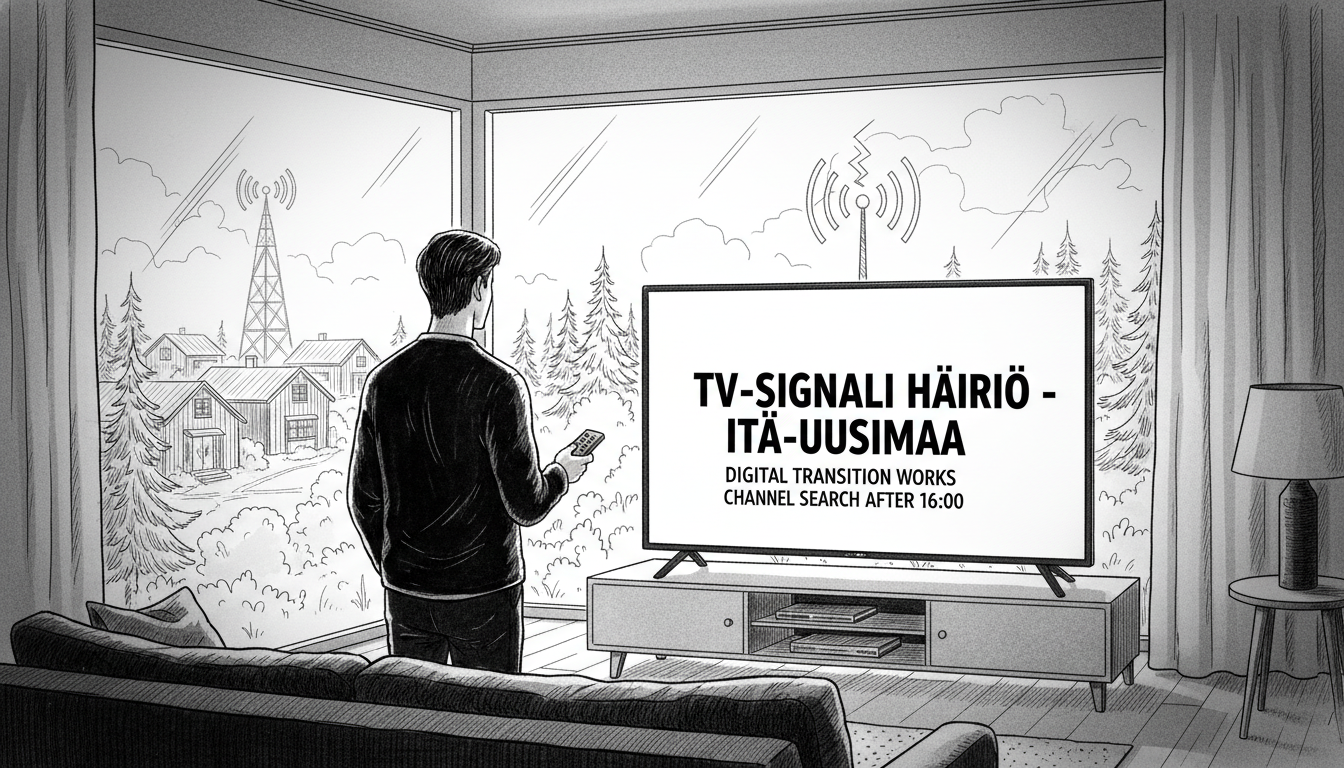
Television and radio signals will experience a planned blackout across much of Eastern Uusimaa this Wednesday. The disruption stems from essential frequency adjustment works being conducted by the national network operator Digita. The technical upgrades are scheduled for the Suomenkylä and Pernaja transmission stations in the Porvoo region. The work window runs from 8:00 AM to 4:00 PM local time, affecting nearly all antenna-reliant households in the area. This is not a fault but a coordinated infrastructure project. Viewers are advised that channels may disappear from their televisions and should perform a new channel search once the work concludes. The process is a standard part of maintaining Finland's robust digital terrestrial network, known for its high coverage even in remote areas.
The temporary signal loss highlights Finland's ongoing commitment to its public service broadcasting infrastructure. This network is a critical component of national security and public information, especially in a country where reliable communication in all conditions is paramount. The work in Porvoo region is part of a wider, gradual modernization of transmission masts across the country. These updates ensure compatibility with evolving broadcast standards and prepare the network for future demands. For international observers, this meticulous planning reflects a typically Finnish approach to public utilities: scheduled, transparent, and focused on long-term reliability over short-term convenience. The direct communication to households about the timing and required action minimizes public confusion.
For residents and expats in the affected municipalities, the disruption serves as a reminder of Finland's dual reliance on both terrestrial and internet-based media. While streaming services may be unaffected, the terrestrial network remains vital for emergency broadcasts and for households without high-speed broadband. The Finnish Ministry of Transport and Communications oversees such technical transitions, ensuring they align with broader national digital strategies. The brief outage, while inconvenient, is a minor trade-off for a system that provides free-to-air access to national channels Yle, MTV, and others. This model supports media pluralism and universal access to information, principles deeply embedded in Finnish communications policy. The work also underscores the technical challenge of maintaining seamless service in a geographically large country with a dispersed population.
What should viewers do if their channels do not return? The official guidance is clear. After 4:00 PM on Wednesday, residents should initiate a manual channel search on their television sets. This process is often found in the settings or setup menu of most modern TVs. If the channels fail to reappear after a search, the advice is to wait a short while and try again, as some transmitters may take additional time to come fully online. Persistent problems should be reported directly to Digita's customer service. This proactive public guidance is standard and prevents a flood of support calls for a known, temporary issue. The efficiency of this communication is a hallmark of Finnish public administration, where clear instructions are prioritized to foster public self-reliance and smooth operational rollouts.