
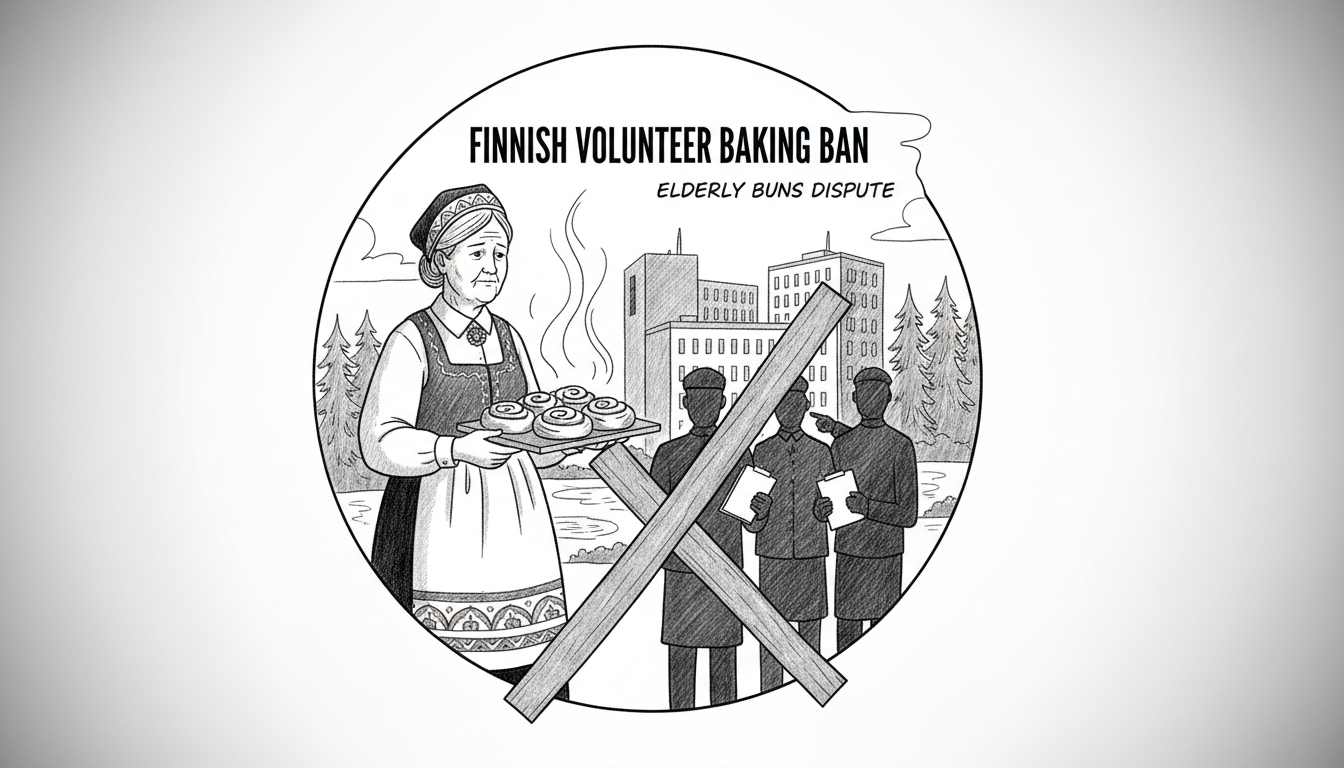
A Finnish volunteer baker finds herself at the center of a bureaucratic battle after welfare authorities prohibited her from baking traditional pulla buns for elderly care home residents. Pia Lehtonen, a retired professional kitchen manager with fifty years of food service experience, can no longer prepare her popular buns at Hämeenkyrö's Aurinkorinne day activity center despite holding valid hygiene certification. The Pirkanmaa welfare district known as Pirha implemented the ban during the third quarter, citing food safety legislation and standardization of practices across their facilities as primary reasons. This decision has sparked both local outrage and national political attention, creating what locals now call Pullagate across the Pirkanmaa region.
Lehtonen received the surprising news that she could continue baking gingerbread cookies with participants but could not bake them in the oven. The regulations also forbid coffee brewing in facility kitchens, creating additional barriers to traditional Finnish hospitality practices. The retired professional finds these restrictions particularly baffling given her extensive background in food safety management and her valid hygiene pass certification. She had previously baked for years using ingredients provided by the facility until the new rules took effect, then briefly used her own supplies until that too was prohibited.
Social Services and Health Minister Kaisa Juuso clarified in a recent statement that Finnish food legislation does not specifically prohibit volunteers from baking buns provided they meet basic hygiene requirements. The minister's intervention highlights the tension between national policy and local implementation within Finland's recently reformed social and healthcare system. Despite this ministerial clarification, Pirha maintains its position, creating a standoff that reflects broader challenges in standardizing practices across Finland's new welfare regions.
Mari Ollinpoika, the welfare district's operational director, defends the decision by emphasizing the need for consistent practices across all day activity services. She notes that no other facilities within their network permit bun baking by volunteers, making this a matter of standardized operational policy rather than specific safety concerns about Lehtonen's capabilities. The director confirmed that gingerbread dough would be provided by their meal services for cookie decorating activities, though actual baking remains prohibited.
The situation has mobilized substantial public support with over two thousand people signing an online petition defending both Lehtonen's baking rights and the importance of volunteer work in Finnish society. Supporters argue that such bureaucratic obstacles undermine the very community engagement that Finland's welfare system seeks to encourage. The petition highlights the emotional value of traditional baking for elderly participants and questions whether safety concerns are being disproportionately applied to volunteer activities.
Lehtonen continues to seek compromise solutions, having suggested alternatives like providing fresh buns for participants to take home after activities. This proposal was rejected over concerns about potential choking hazards or allergic reactions during transportation, with officials noting that participants remain under facility responsibility until they reach their homes. The volunteer has even contemplated secretly baking elsewhere and discreetly distributing the forbidden buns but worries about potential repercussions for facility staff.
The determined baker recently submitted a formal written inquiry to Pirha demanding more specific justification for the baking prohibition. Her persistence reflects a character trait she describes as Finnish sisu, that particular combination of stoic determination and resilience that defines the national character. The ongoing bun saga continues to raise fundamental questions about balancing safety regulations with meaningful volunteer contributions in Finland's care system.
This case exposes the practical challenges emerging from Finland's social and healthcare reform that created new regional welfare authorities. As these new entities establish standardized practices, conflicts between local traditions and centralized policies are becoming increasingly common. The situation demonstrates how well-intentioned regulations can sometimes create unintended barriers to community engagement and traditional practices that form the fabric of Finnish social care.