
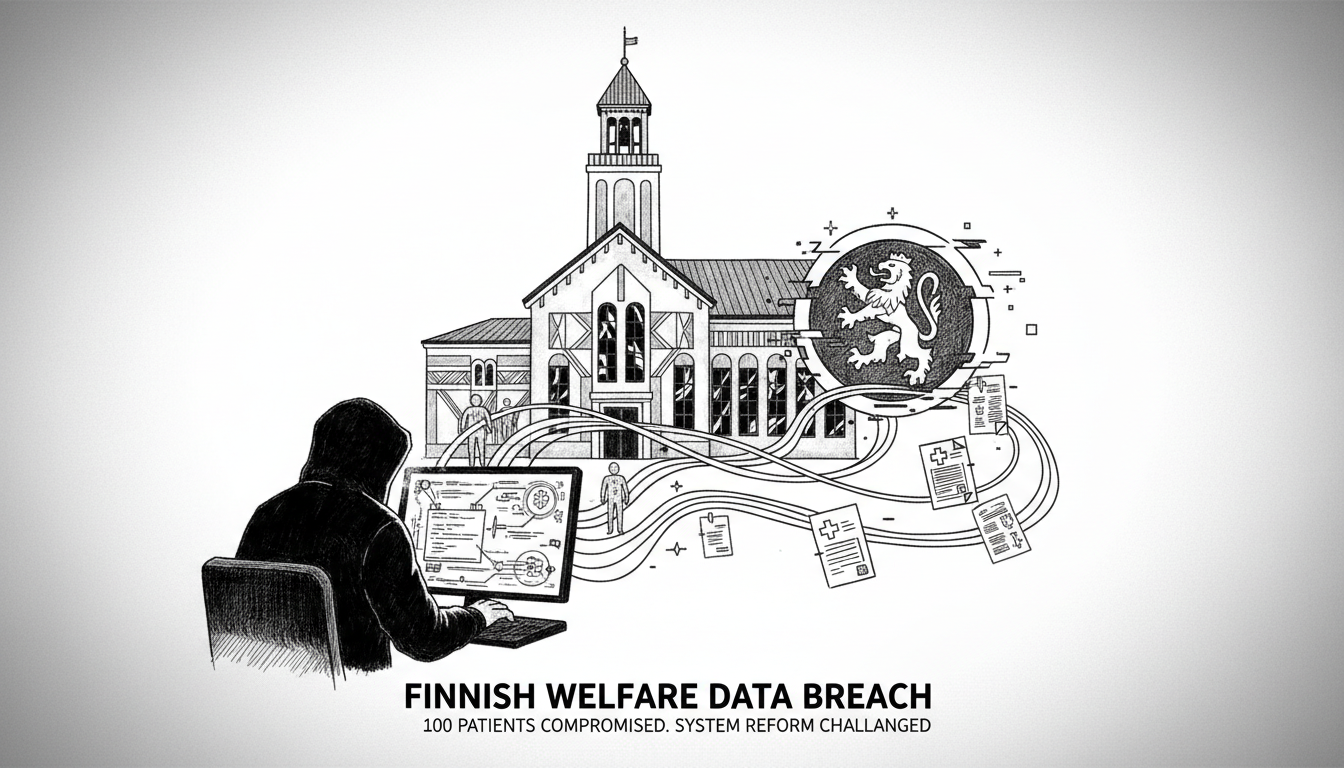
A serious breach of patient confidentiality has been uncovered within the Central Finland welfare region. An employee accessed the client and patient records of approximately one hundred individuals without a valid legal or professional basis. The unauthorized access occurred over a period spanning from the previous year into the current third quarter. The employee's contract has since been terminated, and the welfare region has filed a criminal report with local police authorities. This incident raises immediate questions about data security protocols within Finland's recently reformed social and healthcare system.
The case stems from an internal investigation conducted by the welfare region itself. Officials confirmed the scale of the breach and the subsequent personnel action. The data accessed is understood to be highly sensitive, covering personal health information protected under both Finnish law and the European Union's General Data Protection Regulation. The Central Finland welfare region is now obligated to notify all affected individuals about the violation of their privacy. This process is a standard requirement under EU data protection rules, but it will undoubtedly cause distress and erode public trust.
This breach occurs against the backdrop of Finland's major social and healthcare reform, known as SOTE. The reform transferred responsibility for these services from individual municipalities to 21 larger welfare regions. The Central Finland region is one of these new entities. A core promise of the restructuring was improved efficiency and service quality. A data breach of this magnitude so early in the new system's implementation represents a significant setback. It exposes critical vulnerabilities in the digital infrastructure and internal oversight mechanisms that are fundamental to modern healthcare.
The implications extend beyond regional administration. Finland's Ministry of Social Affairs and Health, along with the Data Protection Ombudsman's office, will likely scrutinize this case closely. It serves as a stark test of the new regional model's accountability and governance structures. For international observers and EU partners, it highlights the ongoing challenges of securing digital health data even in a technologically advanced society like Finland. The incident also has potential ramifications for Finland's digital reputation, often hailed for its trust-based public services.
What happens next involves multiple layers of response. The police investigation will determine if criminal charges for data breach offenses are warranted. The welfare region must complete its notification to patients and demonstrate concrete steps to prevent recurrence. This will likely involve a review of all user access logs, enhanced staff training, and possibly technical restrictions on data retrieval. The Finnish Parliament's Social Affairs and Health Committee may also call for a report on the incident, examining whether systemic flaws in the SOTE model need legislative attention. The breach is a clear reminder that robust policy frameworks require equally robust practical safeguards to protect citizen rights.