
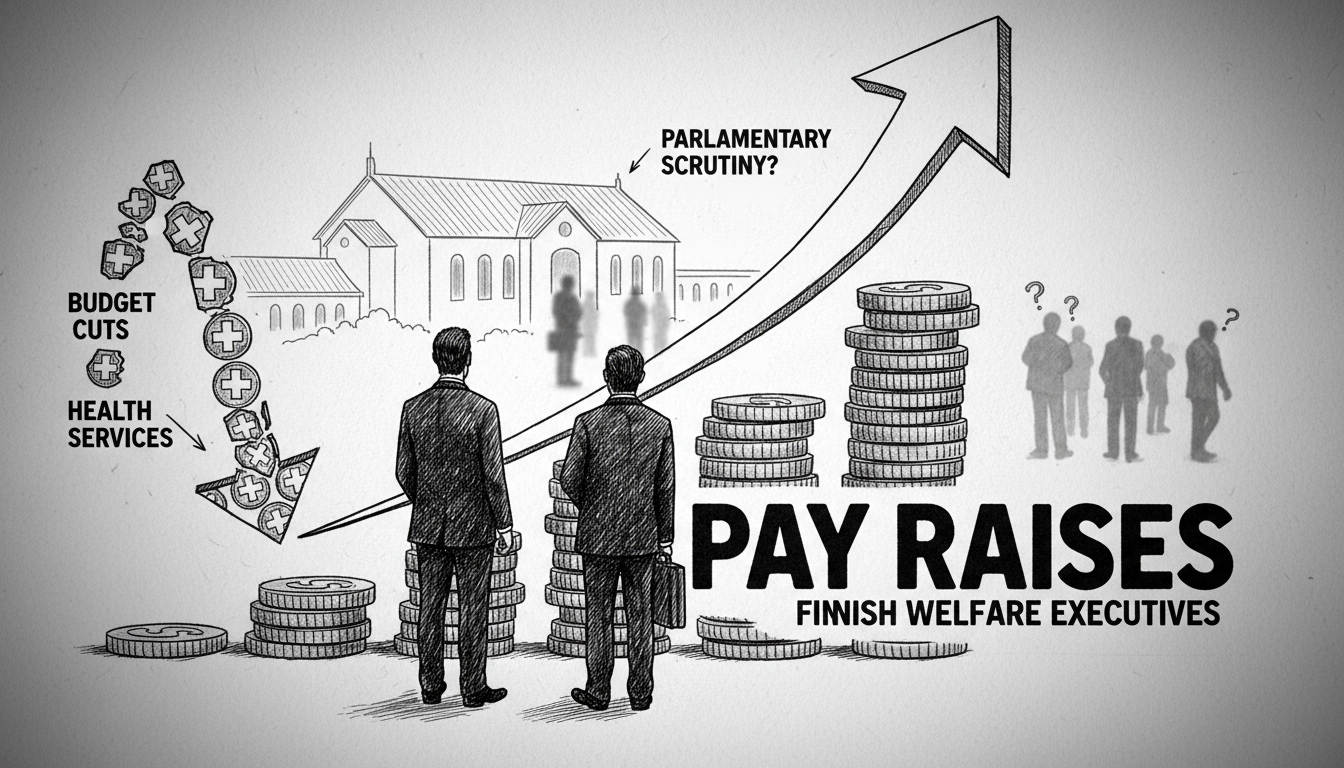
Finland's welfare regions face mounting financial pressure while their top executives continue receiving substantial salary increases. Recent data reveals that regional health and social services leaders obtained significant pay raises despite ongoing austerity measures affecting frontline services across the country.
Parliament member Hjallis Harkimo voiced public frustration about excessive management structures and compensation levels. He stated that welfare regions employ too many administrators with disproportionately high salaries compared to their operational challenges. His comments reflect growing citizen concerns about public sector spending priorities during economic constraints.
These salary developments occur as Finland's welfare regions grapple with implementing major structural reforms. The country transitioned to a regional governance model for health and social services to improve efficiency and control costs. This reorganization created 21 welfare regions replacing previous municipal-based service provision systems.
Executive compensation trends raise questions about financial management within Finland's decentralized welfare system. The government initially projected that regional administration would reduce bureaucratic overhead and redirect resources toward patient care. Current salary patterns suggest these efficiency gains remain unrealized in many districts.
European Union fiscal monitoring adds another layer of complexity to Finland's welfare financing challenges. The European Commission regularly reviews member states' public spending efficiency, particularly in healthcare systems facing demographic pressures. Finland's aging population requires increased health services while its tax base gradually shrinks.
The Eduskunta recently debated welfare region funding mechanisms amid broader discussions about public sector compensation. Several parliamentary committees have requested detailed financial reports from welfare region boards. Legislators seek transparency about administrative costs versus direct service expenditures.
Political parties differ in their approaches to resolving this compensation controversy. The governing coalition emphasizes regional autonomy in personnel decisions while opposition groups demand stronger central oversight. This debate reflects Finland's ongoing balancing act between local decision-making and national standards.
International observers note that Finland's welfare region model represents an ambitious attempt to reform Nordic universal healthcare systems. Similar restructuring efforts in Sweden and Norway also faced challenges balancing administrative costs with service quality. The Finnish experience provides valuable lessons for other countries considering decentralized health governance.
What practical implications do these salary decisions have for ordinary Finnish residents? Service reductions may affect elderly care facilities, mental health programs, and primary healthcare access in some regions. Citizens increasingly question whether administrative priorities align with community health needs.
The situation demonstrates the inherent tensions in public sector reform implementation. Organizational restructuring intended to create efficiency sometimes generates new bureaucratic layers instead. Finland's welfare regions now face the difficult task of justifying their management expenses while maintaining service quality.
Future developments will likely involve closer parliamentary scrutiny of regional spending patterns. The Finance Committee may propose new reporting requirements for executive compensation in publicly-funded organizations. Such measures would increase transparency but could also limit regional operational flexibility.
These compensation decisions occur against Finland's broader economic backdrop of rising inflation and constrained public finances. The government must balance fair compensation for skilled administrators with responsible stewardship of taxpayer funds. This challenge requires careful consideration of both recruitment needs and fiscal reality.