
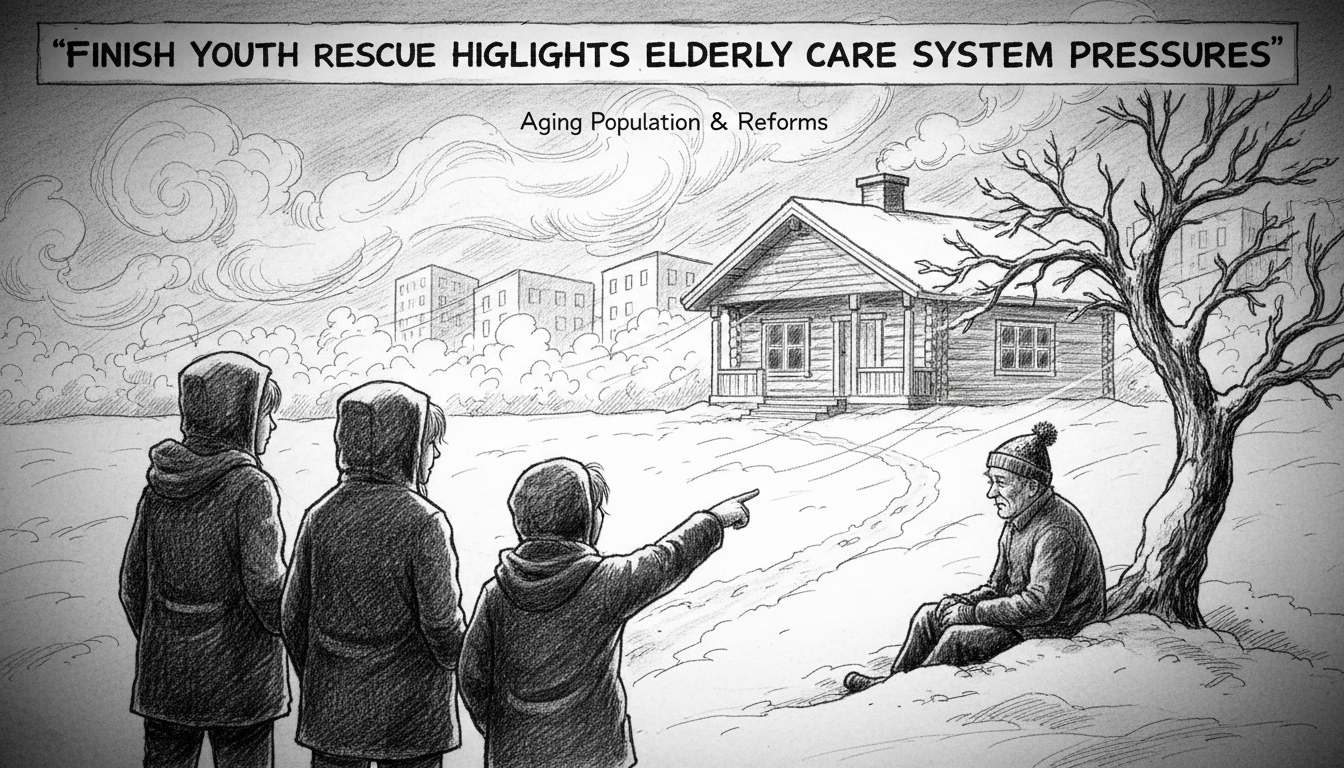
A group of quick-thinking young people in Finland located a missing elderly man in a late-night search, sparking a national conversation about care systems. The incident occurred in Vilppula, a town in the Pirkanmaa region, during the night of November 22-23. Temperatures hovered around freezing. Pinja Mäkinen, 19, and her friends found the man who had wandered from a care home. This was not the first time Mäkinen had helped locate a missing senior citizen. The successful rescue prevented a potential tragedy in harsh conditions.
The event immediately drew attention to Finland's elderly care infrastructure. The country faces a well-documented demographic challenge with a rapidly aging population. This places increasing strain on municipal social and health services, known as 'sote' in Finnish. Municipalities are legally responsible for organizing these services, but funding and staffing shortages are common themes in political debates. The coalition government, led by Prime Minister Petteri Orpo, has made social and healthcare reform a key policy area. Their stated goal is to improve efficiency and access, but critics argue reforms may lead to further privatization and inequality.
This specific case raises practical questions about security protocols in residential care facilities. How often do such incidents occur? What technological solutions, like GPS tracking devices, are available and funded? The Finnish Institute for Health and Welfare (THL) collects data on social care, but local implementation varies widely. The brave actions of these young citizens effectively filled a gap in the system's safety net, a fact acknowledged by local officials in statements following the event.
The story resonates because it touches on core Finnish values of community responsibility, 'sisu' or perseverance, and caring for the vulnerable. It also presents a stark contrast. On one hand, it showcases admirable civic-mindedness in the younger generation. On the other, it underscores systemic vulnerabilities that should not rely on chance interventions. The incident will likely be cited in ongoing parliamentary discussions in the Eduskunta about social welfare budgets and the future shape of elderly care. As Finland continues to negotiate its role within the European Union, balancing fiscal responsibility with robust social protection remains a central tension. The Vilppula rescue is a human-scale example of a much larger policy puzzle facing the Helsinki government district and municipalities across the nation.