
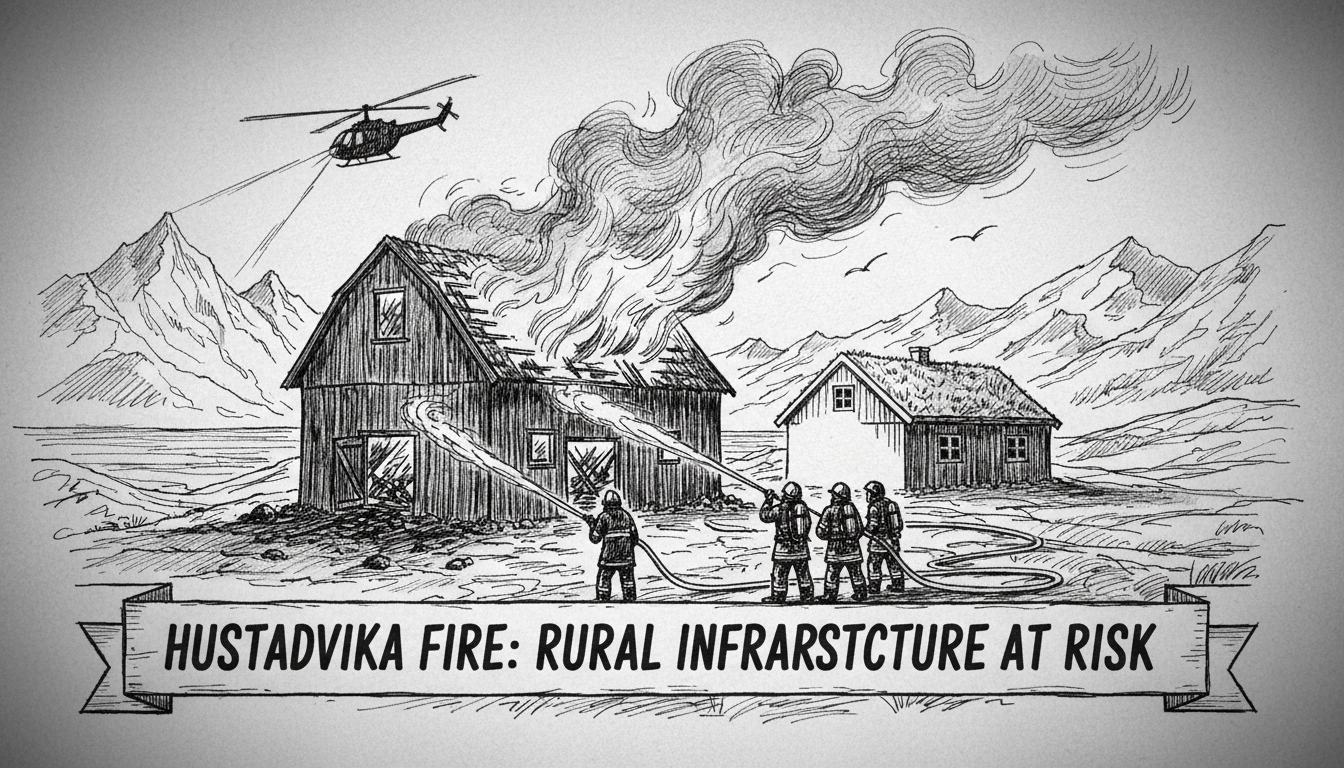
Emergency services responded to a major fire in a farm building in Hustadvika on Norway's west coast. The incident involved a fully engulfed barn, with authorities confirming open flames and a risk of spreading to nearby residential property. Police operations leader Per Åge Ferstad stated that the fire service was on scene immediately after receiving the alert. Fire Chief John Rune Lillebø confirmed the structure was a total loss but noted no animals were present and no immediate evacuation was required for the area.
This fire in the Hustadvika municipality underscores a persistent challenge for Norwegian coastal and rural communities. The region, part of Møre og Romsdal county, features a dispersed population and older agricultural infrastructure. These factors can complicate firefighting efforts and increase property risks. The quick response from local emergency teams likely prevented a more serious outcome, but the event serves as a reminder of the vulnerabilities outside major urban centers.
Norway maintains a highly professional civil protection system, yet geography tests its reach. The country's long coastline and deep fjords, like the nearby Hustadvika fjord itself, create logistical hurdles. Fire crews often rely on local knowledge and a network of volunteer responders to complement professional stations. This incident occurred near a residence, raising immediate questions about building spacing and firebreak standards in rural zoning plans.
Analysts note that while Norway's focus often centers on its oil industry and Arctic policy, domestic infrastructure resilience remains a core concern for the Storting. Funding for local emergency services and maintenance of rural roads for access are recurring budget topics. This fire, though contained, illustrates the tangible impact of those parliamentary decisions on everyday safety. The government consistently emphasizes preparedness, but practical implementation varies by municipality.
For international observers, this event is a small-scale example of Norway's broader governance model. It reflects a high-trust society where authorities quickly control a situation and communicate directly with the public. The absence of panic or major disruption points to effective standard procedures. Yet, it also reveals that even wealthy, well-organized nations face constant battles against routine threats like fire, especially in challenging terrain. The response in Hustadvika will be reviewed, and lessons may influence regional safety planning.