
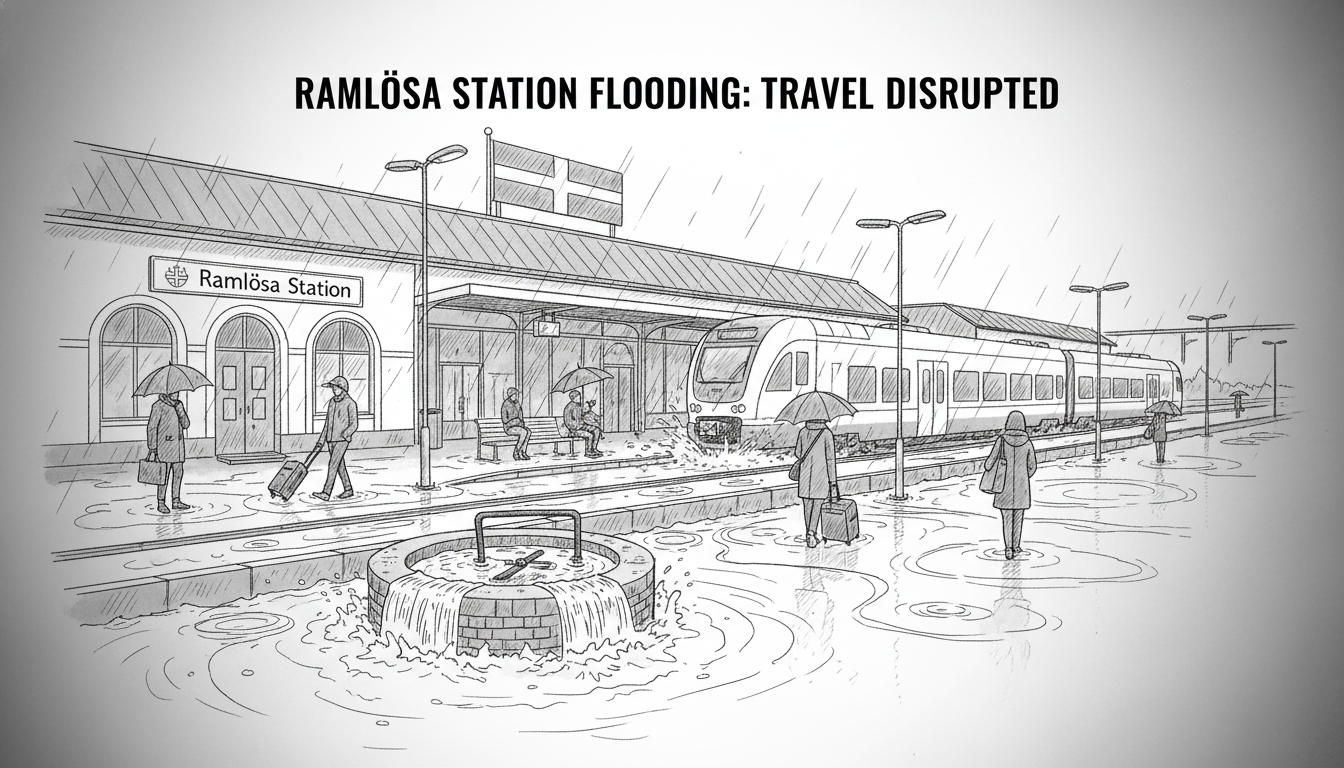
Commuters in southern Sweden faced unexpected disruptions today as Ramlösa station in Helsingborg experienced significant flooding. Large amounts of water poured into the station, cascading down staircases and rising to the level of the railway tracks. The water reportedly originated from a well on the property. Transport authorities are now investigating the cause of the incident.
Despite the dramatic scenes, rail operator Skånetrafiken and the national Transport Administration stated that train services continued to operate as usual. This quick adaptation prevented a full-scale transport collapse in the region. The incident highlights the vulnerability of public infrastructure to sudden, localized events.
For international readers and new residents, Ramlösa is a key commuter hub in Helsingborg, a major city in Sweden's Skåne county. This area is a vital corridor connecting residential neighborhoods with the city center and industrial zones. Disruptions here ripple through the daily lives of thousands, from students to shift workers.
Sweden's public transport system is generally praised for its reliability, making such events particularly jarring. The country invests heavily in maintenance, but aging infrastructure, especially in stations built decades ago, can present unforeseen challenges. This is not the first time a Swedish station has faced water issues, often linked to underground pipe failures or extreme weather overwhelming drainage systems.
What does this mean for people living in Sweden? It's a reminder that even the most efficient systems can hiccup. For expats, it underscores the importance of having flexible plans. While services ran, the visual of a flooded station likely caused anxiety and delays for those with mobility issues or young children.
The response from authorities was typical of Swedish crisis management: pragmatic and communication-focused. They assessed the situation, kept services running where safe, and launched an investigation. The priority was clear: maintain mobility while solving the problem. This approach generally builds public trust, even in frustrating situations.
Looking ahead, the investigation will determine liability and necessary repairs. The cost will likely be borne by the public through transport budgets. For now, commuters are advised to check real-time travel updates. The event, while contained, serves as a small stress test for the region's infrastructure resilience.