
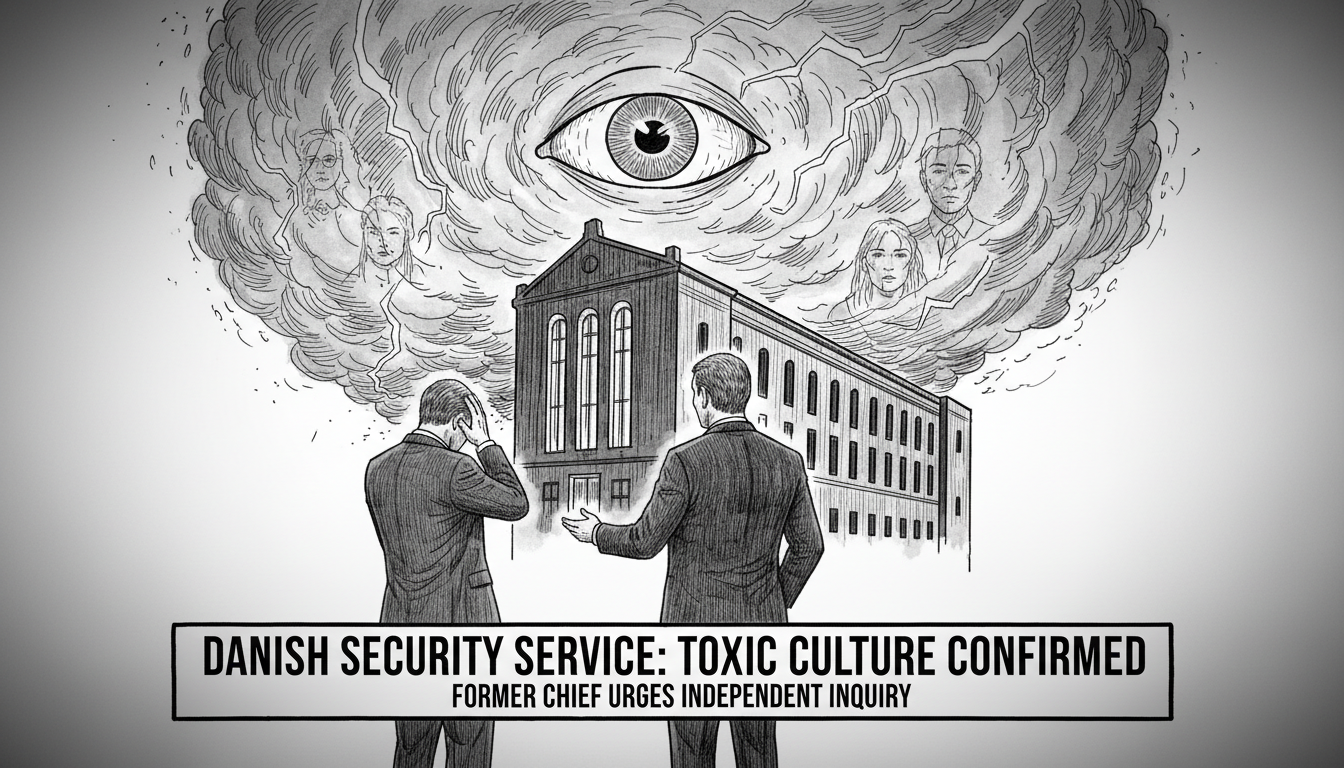
A former high-ranking leader within Denmark's Defense Intelligence Service has stepped forward to confirm shocking allegations of a toxic and abusive internal investigation culture. Gorm Martin Larsen, who served as head of preventive security until the Third Quarter, publicly supported an anonymous female colleague's account of being driven to a PTSD diagnosis by her own workplace. This revelation exposes deep fractures within one of Denmark's most sensitive institutions and raises urgent questions about oversight and employee rights, even within the secretive world of national security.
Larsen described the period as chaotic and burdensome. He stated the anonymous employee was deeply pressured, intimidated, and even threatened. The treatment she endured was, in his view, deeply offensive and contrary to any sense of justice. His statements confirm a podcast's description of a manipulative work environment at the agency. The core issue involves so-called internal security interviews, conducted by colleagues on colleagues, which Larsen himself underwent. He labeled these interviews as bizarre and conducted without the proper legal guarantees typically afforded to a suspect.
The crisis began when a whistleblower provided information leading to the suspension of then-chief Lars Findsen and four other leaders. This triggered a frantic internal hunt for leaks under new acting chief Svend Larsen. Gorm Martin Larsen says the new leadership operated from a place of marked distrust from day one. The culture shifted from one of professionalism, trust, and respect to one defined by mistrust, attempts at control, and pressure that was difficult for staff at all levels to navigate. Other employees approached him, some in tears, to describe their experiences, feeling that basic democratic rights were not being upheld.
Larsen argues the leadership was acting blindly. Decisions appeared panicked rather than balanced, primarily because the agency used inexperienced colleagues without the necessary mandate or proper jurisdiction to conduct these interrogations. He is speaking out for two reasons. First, to support his former colleague, whom he describes as highly skilled and respected. Second, he hopes to convince politicians to launch a full-fledged commission of inquiry to investigate the entire episode thoroughly. He believes this is crucial for achieving justice for those affected and for allowing the intelligence service to find peace.
While a commission is already examining the circumstances around the police investigations of Lars Findsen and former defense minister Claus Hjort Frederiksen, Larsen stresses it does not cover the internal security interview process. Without a full uncovering of what really happened, many will be left without justice or the necessary cleanup, he warns. It is critical to clarify whether actions were taken that could be criminal or incur liability. The Defense Intelligence Service has declined to comment on Larsen's specific criticism. In a prior response to the anonymous woman's story, the service emphasized that, like all intelligence agencies, it has an internal security department that investigates possible leaks.
This scandal touches on broader themes in Danish society news, where the balance between security and civil liberties is constantly negotiated. For international observers, it reveals that even Denmark's renowned welfare system and social policy frameworks can be strained by institutional secrecy. The events in Copenhagen highlight a critical integration challenge within powerful state institutions themselves, questioning how democratic values are upheld behind closed doors. The call for transparency, even in the shadows of national security, underscores a fundamental Danish commitment to accountability, now being tested at its very core.