
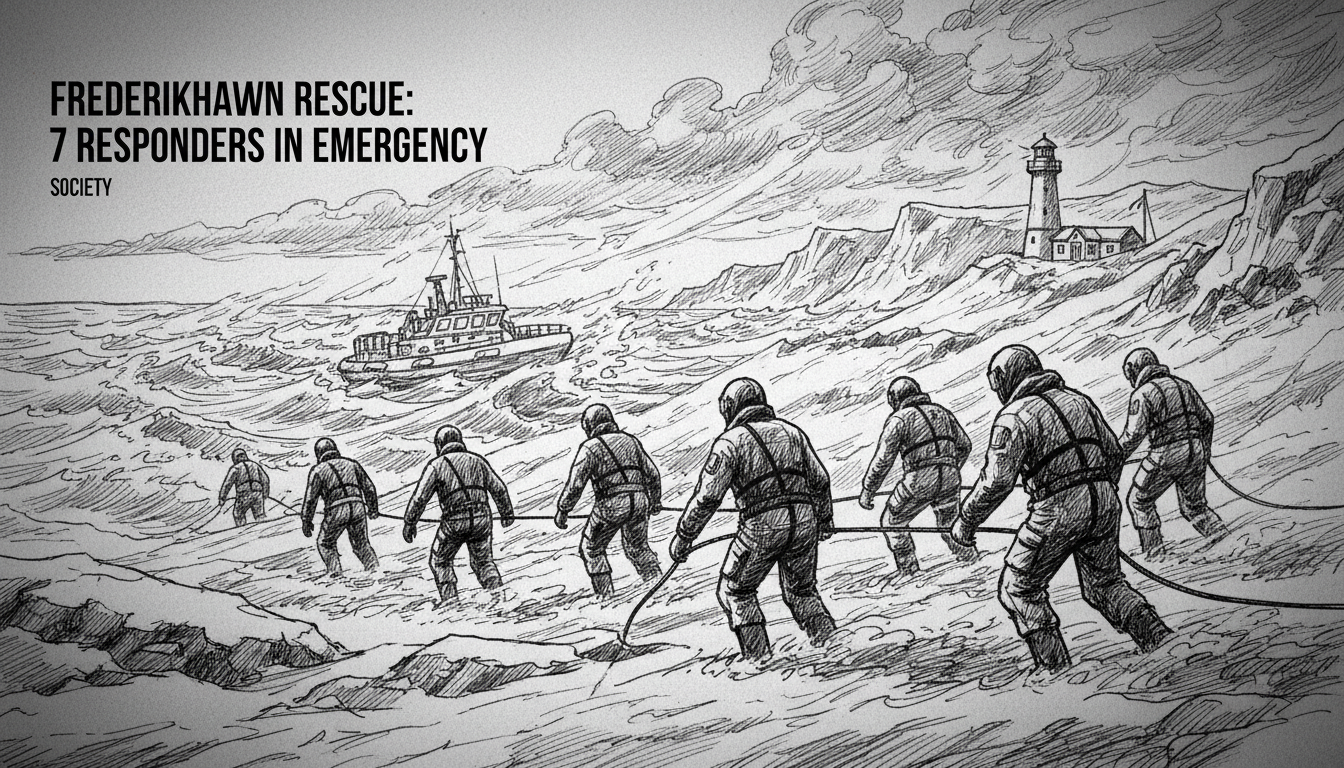
Denmark’s Nordjyllands Beredskab deployed seven personnel to a rescue operation in southern Frederikshavn. The emergency services responded with three vehicles to an address in the port city on Tuesday, confirming the mission was a 'rescue task.' All further details were immediately referred to the North Jutland Police, a standard protocol in ongoing Danish incidents. This coordinated response highlights the tightly managed system that defines Danish emergency operations, where clear roles aim to protect both victims and the integrity of an investigation.
For now, the nature of the emergency—whether a traffic accident, industrial incident, or medical crisis—remains publicly unknown. The police have not yet issued a statement. This silence is deliberate. In Denmark, initial communication during active emergencies is often restrained, prioritizing operational security and the privacy of those involved over immediate public disclosure. The scale of the response suggests a situation requiring significant manpower but not a full regional alert.
A System Built on Coordination
The Frederikshavn operation is a routine demonstration of a deeply integrated public safety model. Nordjyllands Beredskab, the regional fire and rescue authority, handles the immediate physical response: extraction, technical rescue, and hazard containment. The police then assume control for scene management, investigation, and public communication. This division of labor is designed to be efficient and clear-cut. ‘We train for this interoperability constantly,’ a former regional crisis manager, who asked not to be named, explained. ‘The goal is a unified command structure that avoids confusion during critical minutes.’
Danish emergency response is decentralized yet highly standardized. The country is divided into regions like North Jutland, each with its own Beredskab. These services are funded through municipal contributions and government grants, forming a cornerstone of the Danish welfare state’s promise of security. Statistics from the Danish Emergency Management Agency show response time targets are met in over 97% of cases across the country, a figure that includes rural areas like parts of North Jutland.
The Human Impact Behind the Headlines
While the facts from Frederikshavn are sparse, every such alert reverberates through a community. For residents, the sight of multiple emergency vehicles triggers immediate concern. In a close-knit society, the uncertainty before police release information can be a tense period. ‘People look out their windows, they check in on neighbors,’ says Annette Thorup, a community coordinator in Copenhagen with experience in crisis support. ‘There is a collective holding of breath. The Danish system is effective, but the human need for information is very real.’
This event also puts a spotlight on the responders themselves. The seven personnel from Nordjyllands Beredskab represent a profession facing changing demands. Beyond fighting fires, Danish rescue services now train extensively for complex technical rescues, chemical spills, and climate-related incidents like flooding. Recruitment and retention are ongoing challenges, with municipalities working to attract a diverse range of candidates to the field.
Integration and Public Trust in Crisis
Frederikshavn, like many Danish cities, has a diverse population. Effective emergency response hinges on universal trust in the system. Authorities work to ensure communication reaches all community segments. This includes liaising with local networks and cultural associations to build understanding of how the emergency response process works. ‘Trust is the operational currency in a crisis,’ notes Ali Khatib, an integration consultant in Aarhus. ‘When people believe the system will help them without bias, they are more likely to call for help immediately and follow instructions.’
The Danish model relies on public compliance and calm. The swift referral from the rescue service to the police is part of maintaining that order. It directs all inquiries to a single source, aiming to prevent the spread of speculation or misinformation. In an age of instant social media, this controlled approach is constantly tested. The police’s subsequent statement, when it comes, will be scrutinized for clarity and completeness.
What We Await and Why It Matters
The key details pending from North Jutland Police are fundamental: what happened, the condition of any individuals involved, and whether there is any ongoing risk to the public. The police may also indicate if any special investigations, such as by the Arbeitsilsynet (Danish Working Environment Authority) for a workplace incident, have been initiated. The lack of initial detail is not an indicator of severity but of procedure.
This Frederikshavn response, while currently a brief news item, is a microcosm of Danish societal infrastructure. It involves trained professionals, funded publicly, operating under a clear protocol, within a community that expects both efficiency and discretion. The system’s strength is tested not in major disasters, which are rare, but in these daily, unreported operations. Its success is measured in quiet resolutions, where incidents are managed without escalating into public crises. The coming hours will reveal how this particular event concludes, but the mechanism itself, today, functioned exactly as designed. The real story is often the machine working so smoothly you hardly hear it run.