
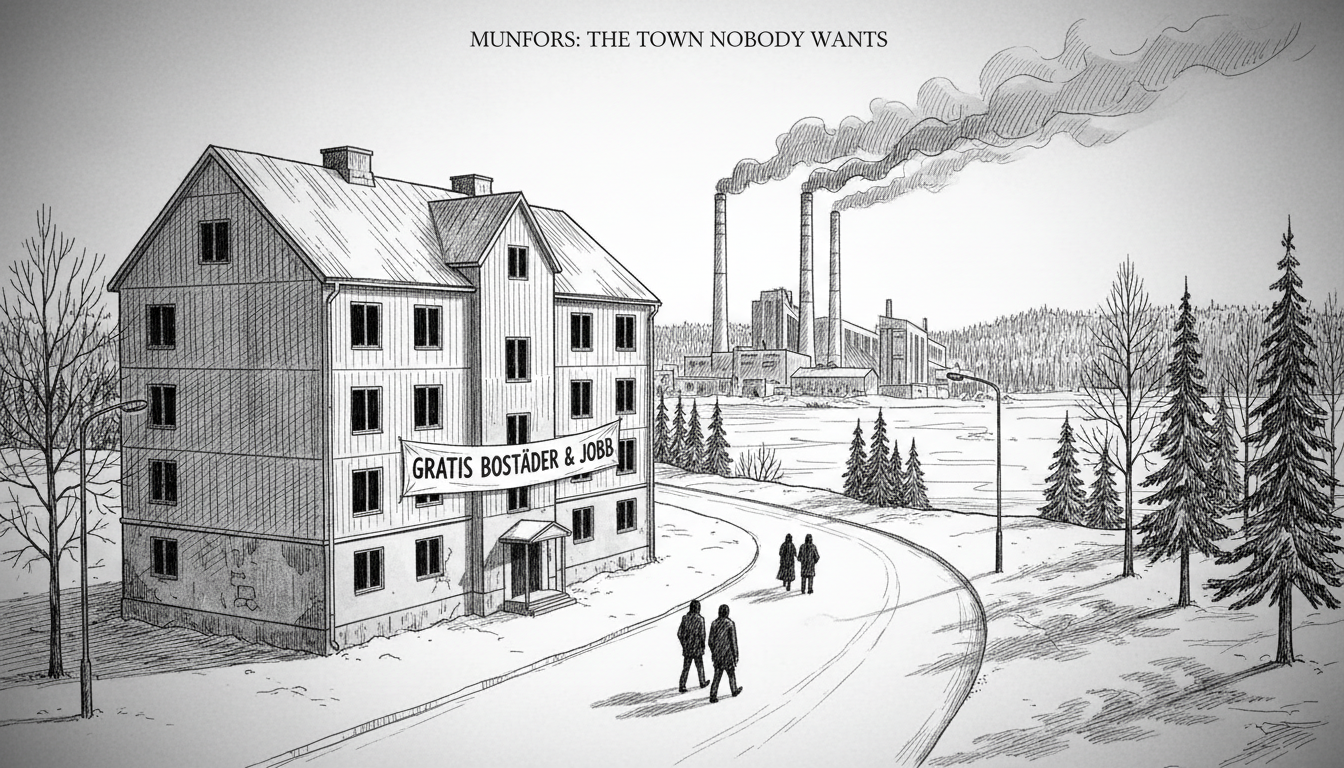
Imagine getting a three-room apartment with a glass-enclosed balcony for free. That exact offer awaits newcomers in Munkfors, a small town in Sweden's Värmland region. The community sits surrounded by mushroom-rich forests and swimming spots. Local employers actively seek workers. Yet people consistently choose not to move there.
This situation highlights a growing divide in Swedish society trends. Urban areas like Stockholm continue attracting residents despite housing shortages. Meanwhile rural communities struggle with population decline. Munkfors represents dozens of similar towns across Sweden facing this exact challenge.
I spoke with several longtime residents about daily life there. They describe tight-knit communities where neighbors truly know each other. Forest paths lead to hidden berry patches and quiet lakes. Local industries provide stable employment in manufacturing and forestry. The pace feels noticeably different from city living.
So what explains the reluctance to relocate? Cultural preferences play a major role. Younger Swedians increasingly prioritize urban amenities and social opportunities. They want access to diverse restaurants, cultural venues, and dating pools. Many fear isolation in smaller communities.
This connects to broader Swedish lifestyle patterns. The country maintains strong traditions of summer cottages and nature access. But permanent relocation decisions involve different calculations. Career networks, educational options, and cultural activities weigh heavily.
Municipal officials confirm the housing offer remains available. They hope international readers might consider the opportunity. The town welcomes both Swedish families and newcomers to Sweden. Language barriers present challenges but local schools offer support programs.
The story reflects complex Swedish immigration news patterns. New arrivals typically settle in major urban centers. Government redistribution efforts achieve limited success. This creates uneven development across regions.
What happens next for communities like Munkfors? Some may gradually shrink as older residents pass away. Others might discover niche revival strategies through tourism or remote work incentives. The coming years will test whether free housing alone can reverse demographic trends.
For now, the three-room apartments with glass balconies remain waiting. The mushroom forests continue growing. The swimming spots stay refreshingly cool in summer. And the jobs go unfilled while urban housing costs keep rising.