
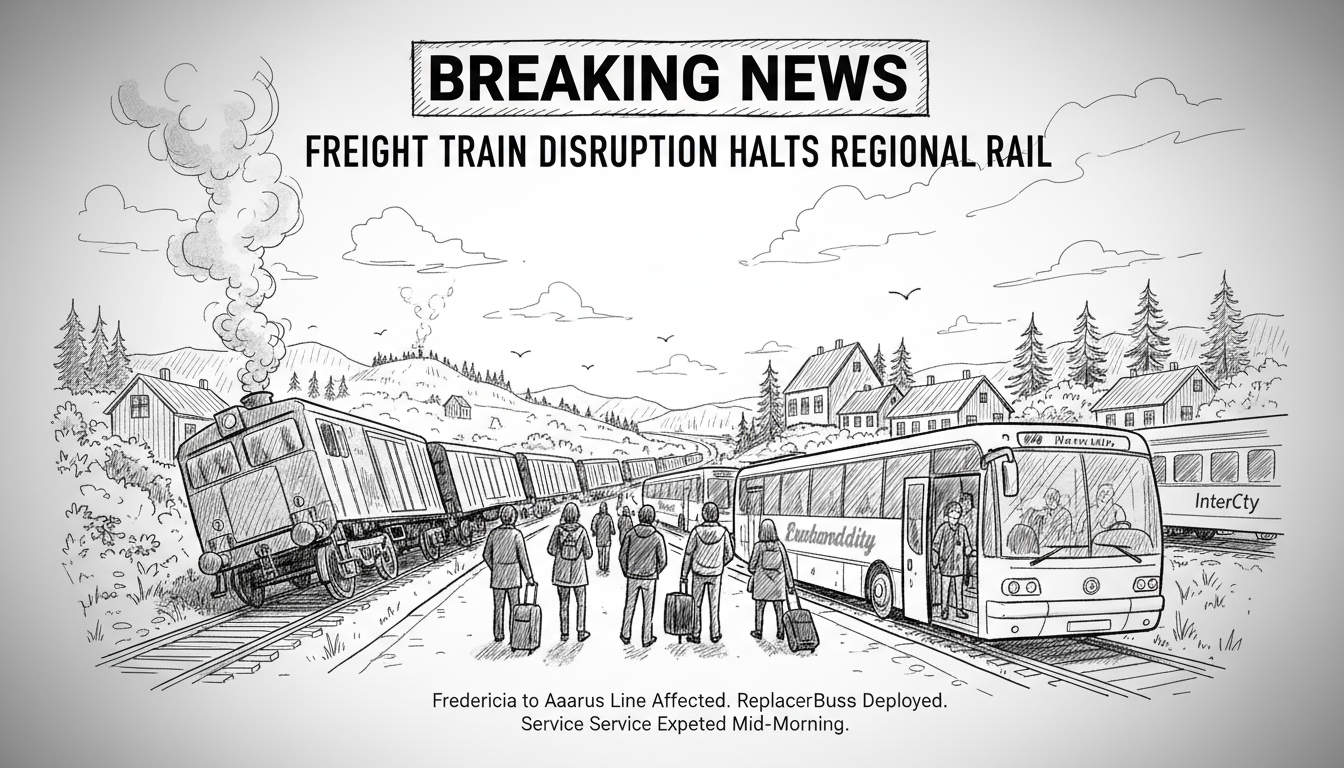
A freight train blockage caused major disruptions to Denmark's rail network Monday morning. The incident halted all regional train service between Fredericia and Aarhus during the busy morning commute.
Rail officials confirmed a freight train experienced technical failure and blocked a critical track section between Fredericia and Vejle. This forced the cancellation of regional train services connecting these important Jutland cities.
The national rail company announced the disruption at 5:28 AM, warning passengers that regional trains between Fredericia and Aarhus Central Station would remain suspended for several hours. InterCity and InterCityLyn express trains continued operating on the route, though likely with delays.
Emergency bus services were being arranged to cover the affected route between Fredericia and Vejle. These replacement buses will stop at Børkop and Brejning stations to accommodate stranded passengers.
Rail authorities provided an optimistic forecast, suggesting normal service could resume around 7:30 AM. This timing would help minimize disruption for the majority of morning commuters.
This incident highlights the vulnerability of Denmark's rail infrastructure to single points of failure. The Fredericia-Aarhus corridor serves as a crucial transportation artery connecting eastern and western Jutland. Any disruption along this route creates ripple effects throughout Denmark's public transportation network.
Denmark has invested heavily in its rail system in recent years, but technical failures still occur with noticeable frequency. The country's flat topography and concentrated population centers make rail transport particularly important for daily commutes and regional connectivity.
International visitors and expats should note that while Danish public transport is generally reliable, such disruptions do occur. Travelers are advised to check real-time updates through official rail apps and allow extra time for journeys during service interruptions.
The quick deployment of replacement buses demonstrates the contingency planning Danish transport authorities maintain. Still, the incident shows how dependent the system remains on uninterrupted operation of key infrastructure components.