
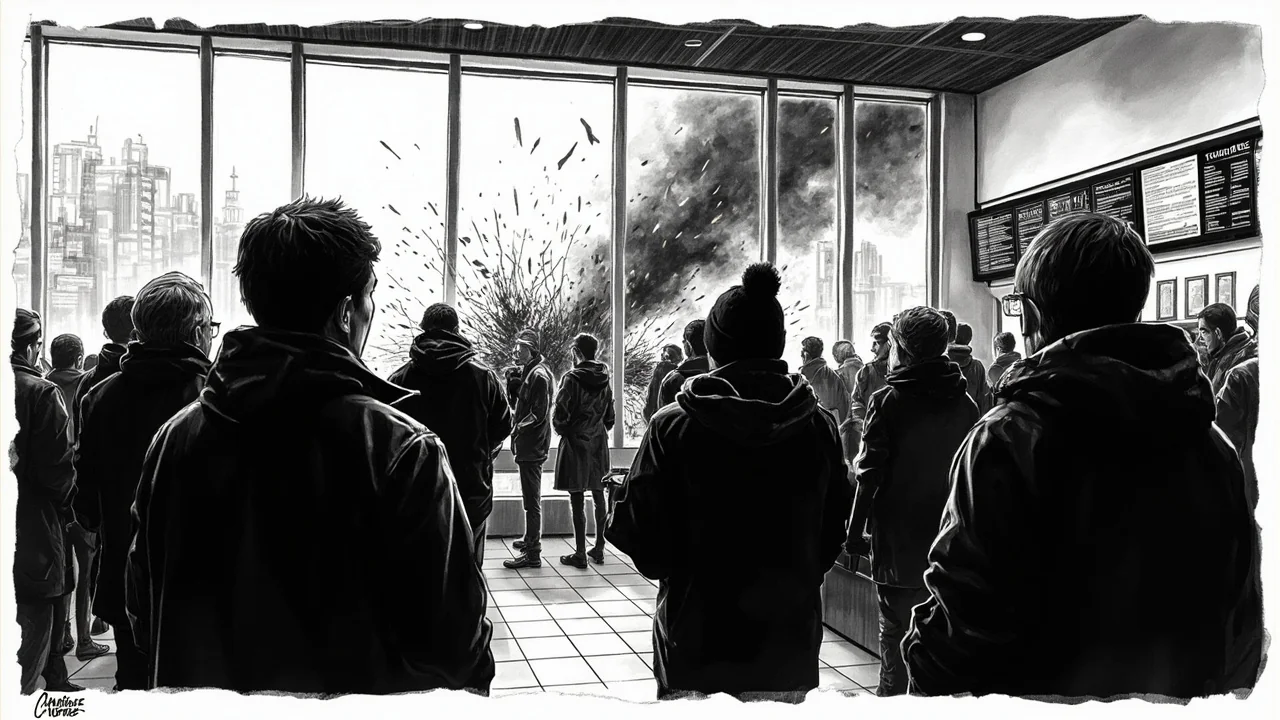
A brutal assault at McDonald's on Gothenburg's main shopping street has sparked uncomfortable questions about Swedish civic courage. While a man was beaten unconscious, roughly ten bystanders continued ordering food, laughing, and filming instead of helping. Source: Brå - Shootings and violence.
The incident has forced Sweden's famously community-minded society to confront an ugly reality: when violence erupts in public, Swedes are more likely to look the other way.
When lagom culture meets real violence
Surveillance footage from the Avenyn McDonald's tells a disturbing story. As fists flew, customers stepped around the victim with ice cream in hand. Some laughed. Others filmed for social media rather than evidence.
KrimPolisen Gothenburg issued an unusually blunt public criticism of the bystanders who failed to intervene. This cuts against Sweden's self-image as a society built on collective responsibility. The concept of lagom, doing just enough for the common good, apparently doesn't extend to physical intervention when strangers are in danger.
Max Olsson, Gothenburg's police area chief, admits he has no statistics proving Swedes have become less willing to help. But the McDonald's footage suggests something has shifted in Swedish society. The social contract that once made Swedish cities feel uniquely safe may be fraying.
Fear trumps civic duty
Readers responding to Göteborgs-Posten's coverage revealed the deeper problem: Swedes are scared to get involved. They worry about becoming targets themselves or facing legal consequences for intervening.
"It is deeply concerning that such a feeling exists," Olsson told GP. He's pushing for more anonymous police calls and group intervention rather than individual heroics.
The fear isn't entirely irrational. The bystander effect, where people assume someone else will act, gets worse when personal safety feels uncertain.
Swedish law does include duty to rescue provisions, meaning bystanders can face legal consequences for failing to help. But enforcement is rare, and most Swedes don't know their obligations.
Police are now coaching citizens on low-risk intervention: shout, throw water, call for help together. The message is clear: do something, even if it's not physical.
The new Swedish dilemma
This incident exposes a tension in modern Sweden. The country built its reputation on social solidarity and collective action. Yet when individual courage is needed most, that solidarity evaporates.
The McDonald's assault victim required hospitalization while a dozen people watched. In a country that prides itself on looking out for the vulnerable, this represents a cultural failure.
Sweden's integration challenges, rising crime rates, and growing social segregation are creating a more atomized society. People retreat into their own bubbles, even when violence erupts right in front of them.
If Swedes won't intervene for strangers being beaten, the social trust underlying universal healthcare and high-tax solidarity becomes unsustainable. You can't have Nordic-style collective responsibility without actual courage when it counts.
Read more: Swedish Healthcare Fraud Ring Exposes Weak Public Oversight.
Read more: Swedish Address Hijacking Exposes Skatteverket System Flaws.