
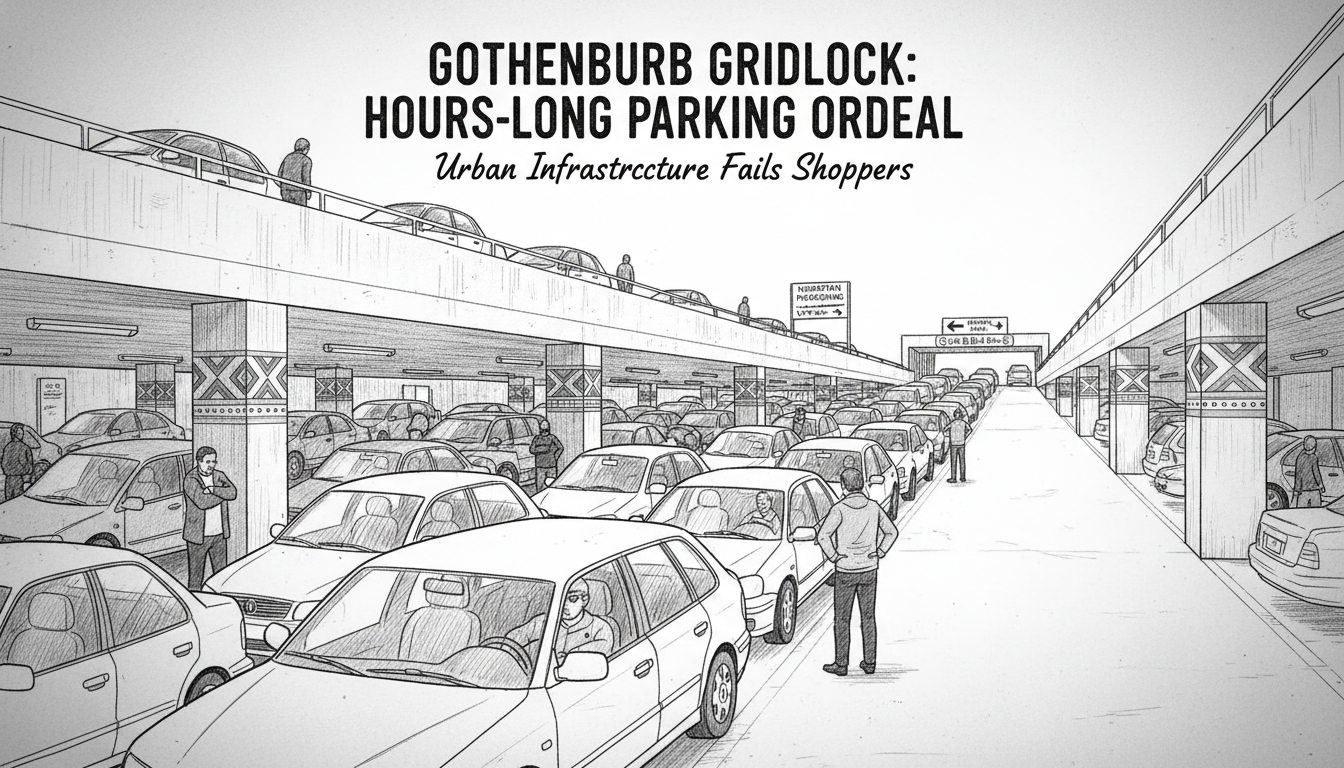
Gothenburg's Nordstan shopping center became the scene of a frustrating urban ordeal this weekend. Drivers found themselves trapped in the massive parking garage for hours, with queues stretching through multiple levels. The situation turned a routine shopping trip into a multi-hour standstill that tested everyone's patience.
Johanna Brahe experienced the gridlock firsthand. She spent two and a half hours waiting to exit. "I'm going completely crazy," she reported during the evening hours. "In an hour and a half, we've moved just seven meters." Her experience reflects the growing challenges of urban mobility in Swedish cities.
This incident highlights broader questions about Swedish infrastructure planning. Gothenburg, as Sweden's second-largest city, faces increasing pressure on its transportation systems. The Nordstan complex serves as one of Scandinavia's largest shopping centers, attracting thousands of visitors daily. When systems fail here, the effects ripple through the entire city center.
Parking garage congestion represents more than just an inconvenience. It reveals the delicate balance Swedish cities maintain between commercial development and functional infrastructure. Many international visitors might not realize that Swedish urban planning typically emphasizes efficiency and smooth traffic flow. Events like Saturday's breakdown challenge that reputation.
Local residents understand that Gothenburg's layout presents unique challenges. The city's network of canals and waterways creates natural bottlenecks. Combine this with weekend shopping crowds, and you have a recipe for potential gridlock. Still, delays of this magnitude remain unusual for a city known for its orderly transportation systems.
What does this mean for Sweden's growing urban centers? As cities expand and populations increase, pressure on existing infrastructure grows. International observers often praise Swedish urban planning, but incidents like Saturday's parking garage crisis show that even well-designed systems have their limits. The question becomes how cities adapt when their carefully planned systems face unexpected stresses.
The human impact extends beyond mere inconvenience. Families with young children, elderly shoppers, and people with evening commitments all found their plans disrupted. For international visitors unfamiliar with Swedish cities, such experiences can shape their perception of Swedish efficiency. The reality is that even in well-organized societies, unexpected breakdowns occur.
Looking forward, city planners and commercial developers will need to reconsider how major facilities handle peak traffic flows. The Nordstan incident serves as a valuable case study in urban management. It reminds us that as Swedish cities grow and evolve, their infrastructure must keep pace with increasing demands.