
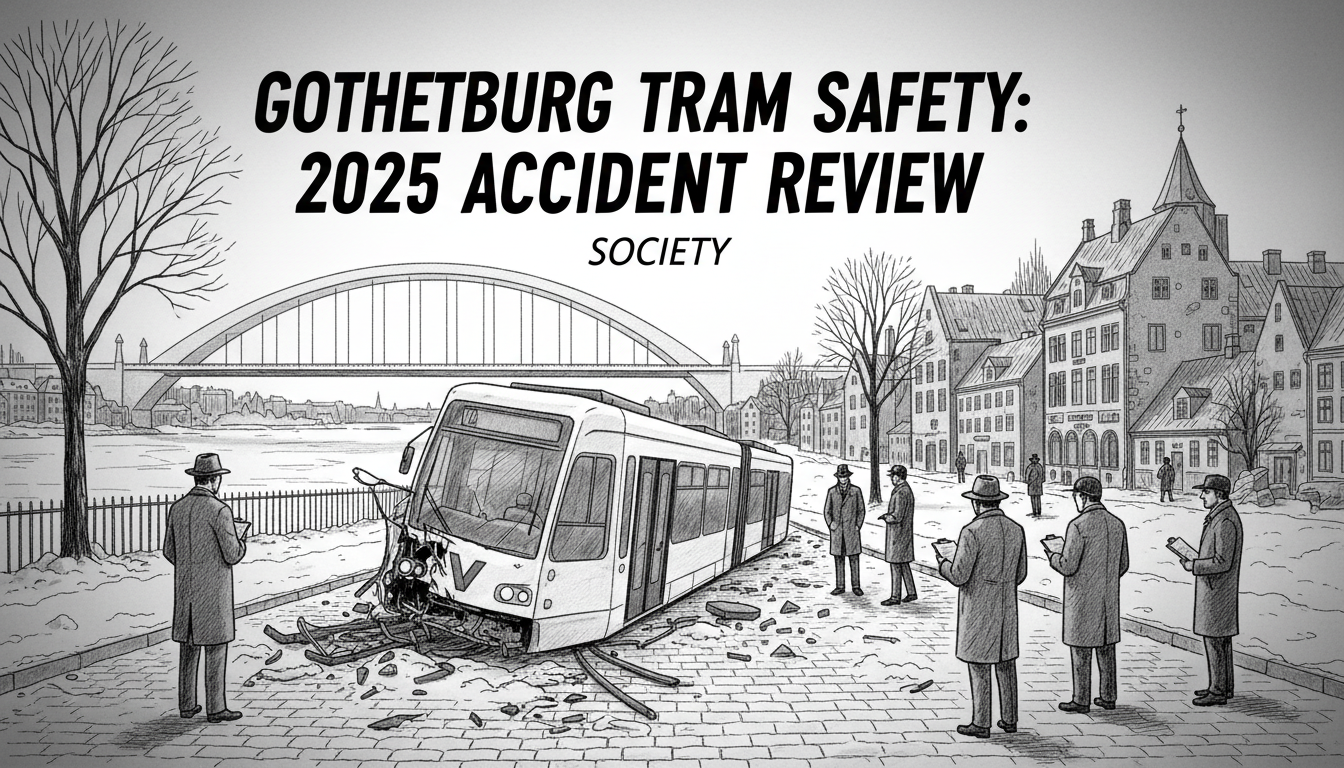
Gothenburg tram accidents have surged in 2025, marking the worst year for fatalities and serious injuries in recent memory. The city's tram operator, Göteborgs Spårvägar, reports dark statistics that summarize a troubling trend. Carin Oleryd, a representative, stated their commitment to prevention. 'We want to do everything to prevent accidents,' she said. This spike has shaken confidence in one of Scandinavia's most extensive tram networks, prompting an urgent review of tram carriages and safety protocols. For residents, the trams are not just transport; they are the rhythmic pulse of daily life in Sweden's second-largest city. From the cobbled streets of Haga to the bustling avenues of Avenyn, these blue and white carriages symbolize Gothenburg's identity. Now, that symbol is under scrutiny after a year no one expected.
A Year of Tragic Numbers
The numbers from 2025 are stark. While specific figures are not detailed in public reports, authorities confirm it as the peak for serious incidents in several years. This rise contrasts sharply with Sweden's reputation for safe public transport. In a nation where punctuality and safety are often taken for granted, the news has sparked concern. The increase involves both fatalities and life-altering injuries, affecting passengers, pedestrians, and cyclists. Each statistic represents a personal story—a morning commute turned tragic, a quiet evening disrupted. Gothenburg's tram system, which carries over 200,000 passengers daily, is integral to the city's flow. The aftermath of these accidents leaves families grieving and communities questioning what went wrong. Transport officials are quick to note that overall, Swedish trams remain safe compared to global standards. Yet, the local spike demands explanation and action.
The Human Cost Behind the Statistics
Behind every accident report lies a human narrative. Take the case of a student in the Linnéstaden neighborhood, who witnessed a collision near a tram stop. 'It happened so fast,' she shared, preferring anonymity. 'One moment people were waiting, the next there was chaos.' Such stories echo across districts like Majorna and Olivedal, where trams weave through residential areas. The emotional toll extends beyond immediate victims to drivers and first responders. Many drivers, trained under rigorous Swedish standards, now face increased pressure. Carin Oleryd emphasized the operator's focus on supporting both victims and staff. 'Our thoughts are with those affected, and we are strengthening our crisis response,' she said. This human impact underscores why the new safety measures are not just technical fixes. They are about restoring trust in a system that should protect every citizen, from elderly shoppers in Nordstan to tourists heading to Liseberg amusement park.
Gothenburg's Tram Legacy: From 1879 to Today
Gothenburg's tram network has a storied history, dating back to 1879 when horse-drawn carriages first clattered along the streets. Today, it spans over 160 kilometers, serving as a backbone for the city's sustainable transport goals. The trams are more than vehicles; they are cultural icons, featured in local art and festivals like the Göteborgsvarvet half-marathon. Over decades, the system evolved with Sweden's commitment to innovation and safety. Regular upgrades and maintenance have been routine. However, the 2025 accident spike suggests potential gaps in this legacy. Some older carriages still operate alongside modern models, raising questions about ageing fleets. The review will focus on these carriages, examining everything from braking systems to door mechanisms. For historians and transit enthusiasts, this moment is a poignant reminder that even beloved institutions must adapt to ensure safety.
New Measures on the Tracks
In response, Göteborgs Spårvägar is rolling out a multi-pronged strategy. The centerpiece is a comprehensive review of all tram carriages, prioritizing those involved in incidents. This includes enhanced inspections and potential retrofits with newer safety technology. Additionally, the operator is boosting driver training programs, emphasizing situational awareness in mixed traffic zones. Public awareness campaigns will target pedestrians and cyclists, who often share spaces with trams in areas like Järntorget and Brunnsparken. Carin Oleryd highlighted that these steps are part of a broader effort. 'We're looking at infrastructure too, such as better lighting and signage at crossings,' she said. The goal is clear: prevent accidents before they happen. These measures align with Sweden's Vision Zero policy, which aims to eliminate traffic fatalities. Yet, implementing them quickly poses challenges, from budget constraints to logistical hurdles in a busy urban network.
Expert Insights: Beyond the Carriages
Transport safety experts stress that accident prevention requires a holistic approach. Professor Lena Strömberg, a Swedish transport researcher, explains, 'Focusing solely on vehicles is insufficient. You need to consider infrastructure, human behavior, and operational protocols.' She points to examples from other European cities where integrated safety systems reduced incidents. In Gothenburg's case, factors like increased urban density and distracted smartphone use might contribute. The tram lines cross bustling squares and quiet suburbs, each with unique risks. Experts recommend data analysis to identify accident hotspots, perhaps near schools in Göteborg's Vasastan or shopping areas in Frölunda. Then, targeted interventions like speed reductions or separated lanes can follow. This expert perspective adds depth to the operator's plans. It suggests that while carriage reviews are crucial, long-term safety will depend on adapting the entire transport ecosystem to modern demands.
Culture on Rails: Trams in Swedish Life
In Sweden, trams are woven into the cultural fabric. In Gothenburg, they symbolize the city's egalitarian spirit—affordable, reliable, and green. Locals often chat with drivers, and seasonal decorations during Christmas or Midsummer add charm. The trams connect cultural venues like the Gothenburg Museum of Art and the Universeum science center. For many, a tram ride through the city offers a sense of community, passing by fika cafes and design boutiques. The recent accidents threaten this cultural comfort. 'It feels personal when something you trust daily has issues,' said a longtime resident in the Stampen area. This emotional connection makes the safety review not just a technical exercise but a cultural moment. It reflects Sweden's broader societal values: a commitment to collective well-being and continuous improvement. As the city addresses the crisis, it must balance modernisation with preserving the trust built over generations.
Looking Ahead: A Safer Journey?
The coming months will be critical for Gothenburg's tram system. The carriage review is expected to yield initial findings by late 2025, with implementation phases stretching into 2026. Public transparency will be key to maintaining confidence. Carin Oleryd assures that updates will be shared regularly. 'We owe it to our passengers to be open about our progress,' she said. Beyond Gothenburg, this situation offers lessons for other Swedish cities with tram networks, like Stockholm and Norrköping. It highlights the ongoing need for vigilance in public transport, even in nations known for safety. As the blue trams continue their routes, from the industrial ports to the leafy suburbs, the hope is for a return to normalcy—where the sound of bells signals not alarm, but reliable passage. In a country that prizes lagom—balance—this crisis may ultimately strengthen the systems that keep Sweden moving. Can Gothenburg turn its worst accident year into a catalyst for lasting safety? Only time, and careful action, will tell.