
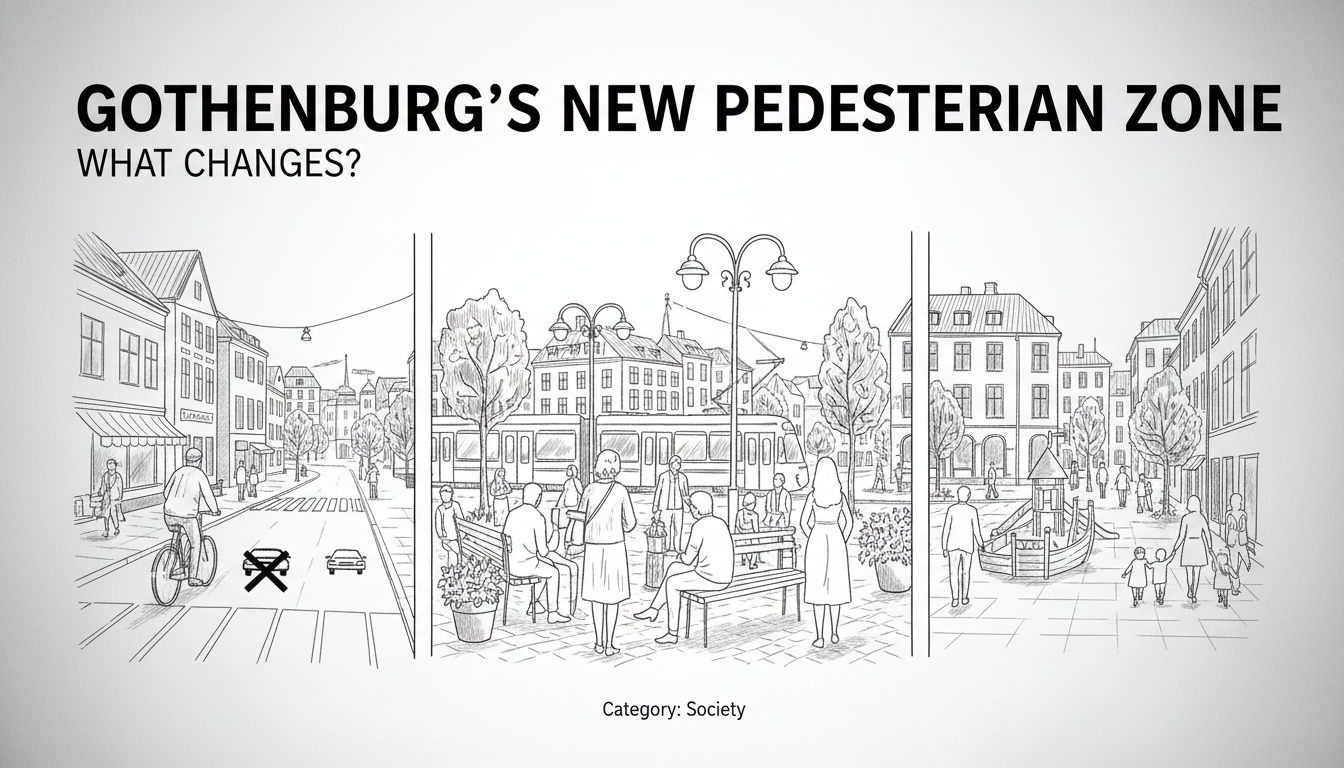
Gothenburg is transforming another key city street into a permanent pedestrian zone, sparking both excitement and logistical headaches. Construction work at Järntorget began this week, with Tredje Långgatan set to become a car-free street by next spring. The project represents the latest step in the city's long-term shift toward people-centered urban design, a trend reshaping Swedish city life.
Walking down Tredje Långgatan today means navigating construction barriers and altered traffic patterns. For Maria Lindström, who has run a small ceramic shop on the street for fifteen years, the disruption is a necessary pain. "We've waited years for this," she says, wiping dust from her display window. "The noise and the closures are tough now. But I remember when the first Långgatan went pedestrian. It brought life, conversations, people staying for coffee instead of just driving past." Her sentiment captures the local ambivalence: short-term inconvenience traded for a long-term vision of a quieter, more sociable neighborhood.
The Heart of the Långgatorna
The Långgatorna—First, Second, and Third 'Long Street'—are the historic arteries of Gothenburg's Majorna district. Järntorget, or 'Iron Square,' has been a bustling hub since the 1600s, historically a marketplace for iron and goods. Converting Tredje Långgatan completes the pedestrianization of this iconic trio. It is more than a traffic change. It is a cultural redesign of a classic Gothenburg community. "These streets are where the city's soul is most visible," explains local historian Jens Bergman. "They were built for commerce and connection. Removing cars is, in a way, returning them to their original purpose. It’s about reclaiming public space for the public."
The Business Calculus: Anxiety and Hope
For business owners, the calculation is practical. Short-term loss for long-term gain is the theory. A 2022 study by the University of Gothenburg on similar pedestrianization projects in the city showed a common pattern. Retail and hospitality businesses often see a 10-20% dip in revenue during construction. However, within two years of completion, over 60% reported higher foot traffic and increased sales. "The data shows a clear adjustment curve," says urban economist Dr. Elin Vårdal. "The initial shock is real. But sustained foot traffic creates a different type of customer economy. People linger, explore side alleys, visit multiple shops. It fosters a complete neighborhood ecosystem, not just a drive-through corridor."
At a nearby café, construction workers in high-vis vests take their fika break. The manager, Tomas, brings them an extra plate of kanelbullar. "They're my best customers right now," he laughs. "But seriously, we're all in this together. The city has promised better signage to direct people here during the work. We're trying to stay positive. Come next summer, imagine this street full of tables, flowers, people strolling without watching for cars. That's the goal."
Navigating the Disruption
The partial street closures present a classic Gothenburg puzzle: how to reroute the city's intricate web of trams, buses, and cars. The local transport authority has issued detailed maps. Key bus lines are temporarily redirected, and delivery windows for businesses are strictly enforced to early mornings. Resident parking in adjacent areas has become even more competitive, a perennial issue in Majorna. "It's a four-month logistical challenge," admits project manager Petra Karlsson. "We're in constant dialogue with every affected stakeholder—residents, shops, emergency services, waste collection. The coordination is immense. But the end result, a safer and more attractive public space, aligns with our city's environmental and social goals."
A Wider Swedish Urban Trend
Gothenburg's move is not isolated. It reflects a powerful trend in Swedish urban planning. Stockholm's recent overhaul of Sergels Torg and the expansion of pedestrian zones in Södermalm follow similar principles. Malmö has aggressively reduced car access in its city center. The philosophy prioritizes reducing emissions, increasing safety, and strengthening community bonds. Critics, however, point to potential downsides. They argue it can push traffic and emissions into other residential areas, complicate access for disabled residents, and sometimes homogenize neighborhoods by increasing commercial rent prices. "It's a powerful tool," says planning expert Dr. Vårdal. "But it must be part of a complete strategy with excellent public transport. You cannot just remove cars without providing reliable alternatives."
The Spring Vision
By next spring, the vision is clear. Cobblestones will be cleaned and repaired. New lighting, benches, and bicycle racks will be installed. The space once dominated by parked cars will host pop-up markets, cultural events, and the simple, valuable act of people watching. For Maria, the ceramic shop owner, she already knows what she'll do first. "I will put my biggest, most beautiful vase right there on the street," she says, pointing to the asphalt soon to be liberated from traffic. "A celebration. This street isn't just a route anymore. It's becoming a destination, a living room for our city. That's worth a few months of dust."
The transformation of Tredje Långgatan is a single project in a single neighborhood. Yet, it speaks to a fundamental question facing Swedish cities today. How do we want to use our shared spaces? The answer, increasingly, is for people, not just for vehicles. As the barriers at Järntorget eventually come down, Gothenburg will have another chapter in its urban story—one written not by engineers of traffic flow, but by the footsteps of its citizens.