
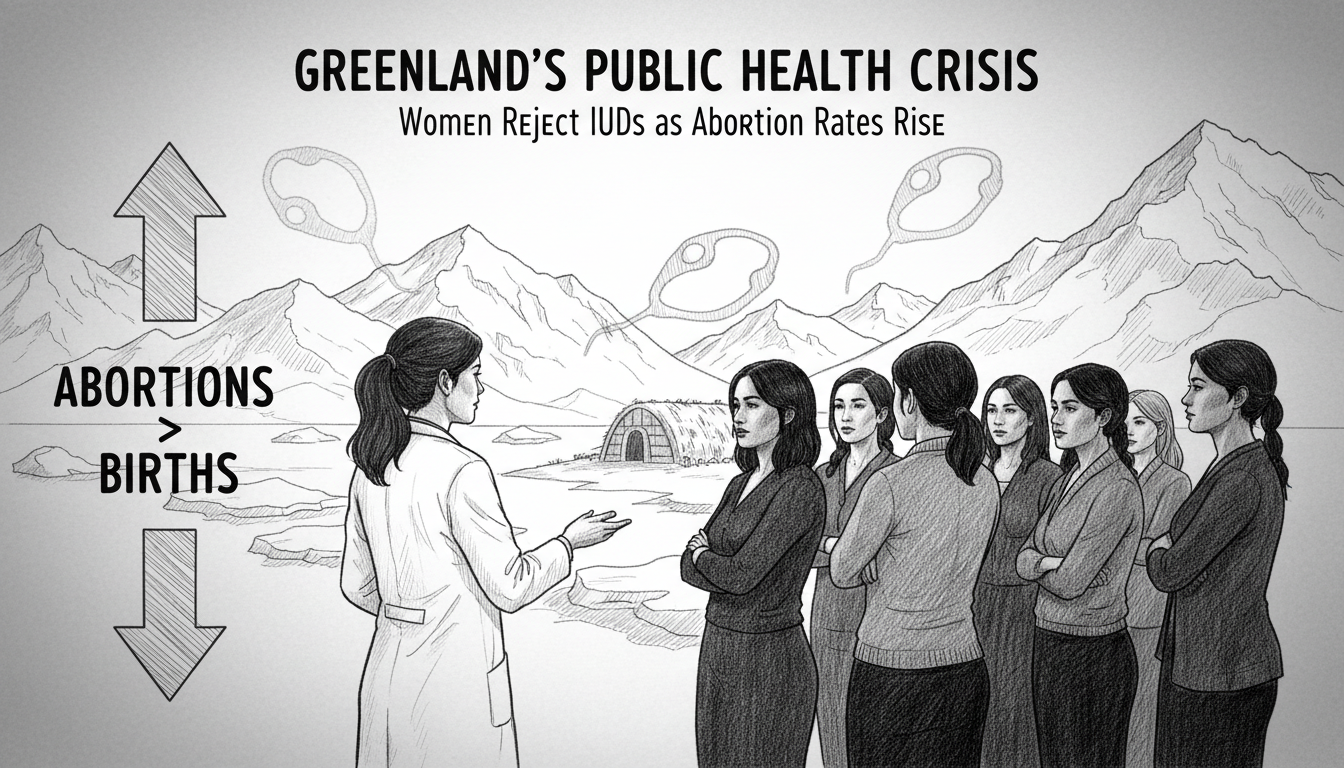
A leading medical official in Greenland is raising a public health alarm. The official says many women are now rejecting intrauterine devices, or IUDs, as a form of contraception. This trend follows a controversial case that damaged the device's reputation across the autonomous Danish territory. The regional chief physician views the development with deep concern. The worry stems from current statistics showing abortions now outnumber live births in Greenland. This situation presents a complex challenge for Danish society news and public health policy in the Arctic region.
For international observers, this story touches on core themes of Copenhagen integration and the reach of the Danish welfare system. Greenland, while self-governing, remains part of the Kingdom of Denmark. Its healthcare and social services are deeply intertwined with Danish systems and funding. The territory faces unique demographic and social pressures. These include a relatively young population and geographic isolation. Access to consistent healthcare and education across scattered communities is a constant logistical challenge. The current debate over contraceptive choice and reproductive health outcomes sits at this difficult intersection.
Community health centers in towns like Nuuk and Ilulissat are on the front lines. They provide counseling and family planning services. A local social worker in Nuuk, who asked not to be named, shared her perspective. She said trust in medical recommendations has been fragile since the controversial case became public. Women are making choices based on fear and community gossip, not clinical advice. This erodes years of public health work. The regional chief physician confirmed this assessment in a recent statement. The official said the declining use of long-acting reversible contraception like IUDs is a direct factor in the rising abortion rate. The physician called for renewed educational efforts and transparent communication from health authorities.
This issue has clear implications for Denmark social policy. It tests how national frameworks adapt to the distinct cultural and social realities of Greenland. Danish immigration policy and integration models are often debated for mainland municipalities. Yet the integration of health messaging and social services within the Kingdom's diverse territories is equally critical. The data is stark. When abortions exceed births, it signals a profound societal shift. It points to potential gaps in sexual education, access to a range of contraceptive options, and support for young women. Some analysts see a parallel to challenges in certain Danish municipalities with diverse populations. In those areas, cultural norms and mistrust of institutions can also create barriers to healthcare utilization.
The path forward requires sensitive, localized strategies. Greenlandic women must feel confident in their healthcare choices. This demands rebuilding trust between communities and medical providers. It also requires ensuring that women have access to full information about all contraceptive methods. The Danish welfare system is designed to support such public health goals. Its effectiveness in Greenland's context is now under a spotlight. The situation calls for a collaborative response. This response must involve Greenland's own government, Danish health authorities, and community leaders. The goal is to address immediate health concerns while respecting local autonomy and cultural understanding. The outcome will be a telling case study in the practical application of social policy across the Kingdom's varied landscape.