
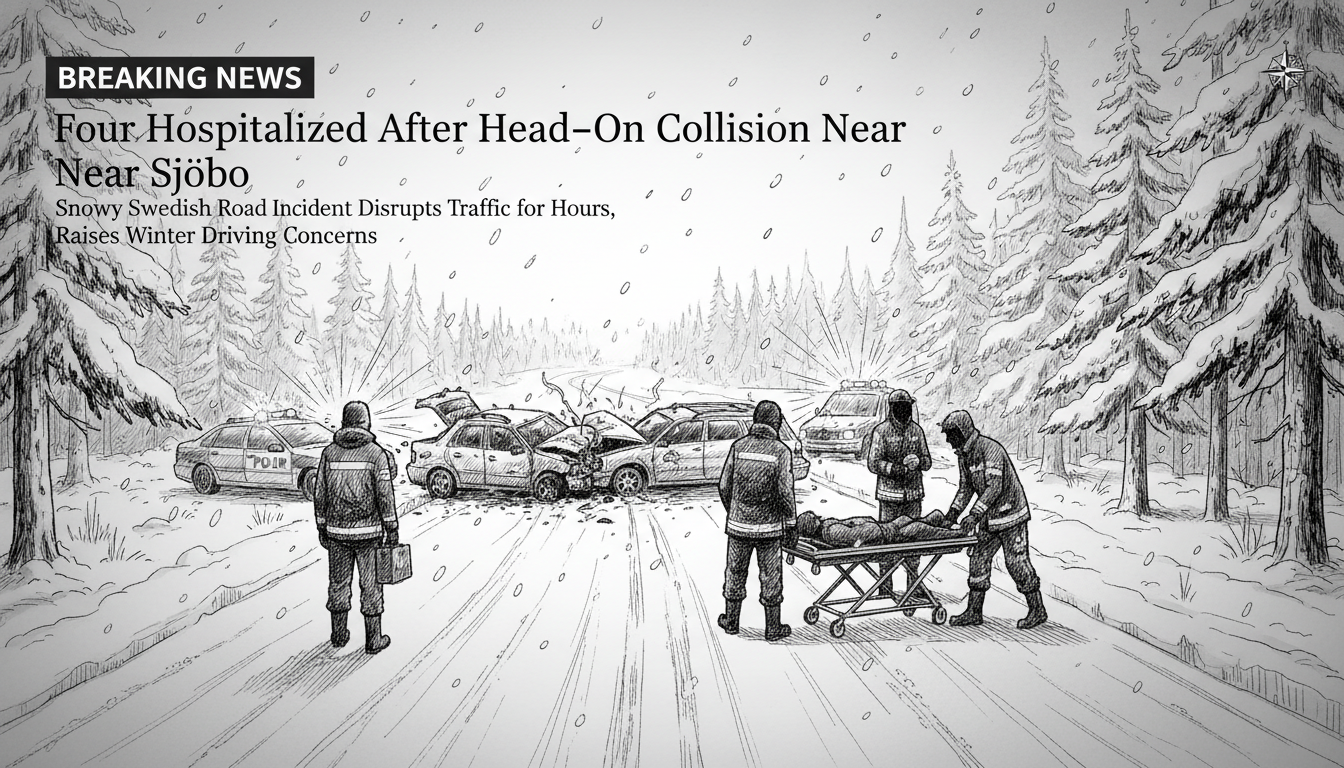
Four adults were rushed to hospital following a serious head-on collision on a rural road outside Sjöbo in southern Sweden. The accident occurred during afternoon hours when two vehicles collided on a snow-covered roadway with slippery conditions.
Police spokesperson Leif Fransson confirmed the incident in an official statement. "Two cars collided on a country road with snow and ice," Fransson said. "All four adults were transported by ambulance to hospital for treatment."
Initial reports indicated all victims were conscious and able to speak at the scene. However, two men aged between 30 and 35 sustained serious injuries and required extensive medical care. The other two occupants received treatment for less severe wounds.
The collision caused significant traffic disruptions in the area, with police closing sections of the road for several hours. Authorities began removing barriers and reopening the route by early evening, though investigations continued at the scene.
Both vehicles involved in the crash were impounded for further investigation into potential traffic violations. The examination will determine whether weather conditions, driver error, or mechanical issues contributed to the accident.
This incident highlights the ongoing challenges of winter driving in Sweden's countryside. Southern Sweden has experienced particularly difficult road conditions this season with frequent snow and ice creating hazardous driving environments. Many rural roads lack the frequent maintenance and salting that major highways receive, creating unexpected dangers for motorists.
Swedish transportation authorities consistently emphasize winter driving preparedness during these months. They recommend winter tires, reduced speeds, and increased following distances on rural routes. Yet accidents like this one near Sjöbo demonstrate how quickly conditions can change on country roads where visibility may be limited and help farther away.
Local emergency services responded promptly to the collision, demonstrating Sweden's well-coordinated emergency response system. The country's distributed hospital network ensures that even rural accidents can access trauma care within reasonable timeframes, though serious cases may require transfer to larger regional facilities.
For international readers and newer residents, this accident serves as a sobering reminder about adapting to Swedish winter conditions. The transition to winter driving requires more than just vehicle preparation—it demands adjusting expectations and understanding that journey times may increase significantly during poor weather.
What does this mean for Sweden's ongoing traffic safety efforts? The country maintains one of Europe's best road safety records, but winter months always bring increased risks. This collision near Sjöbo represents the type of accident that safety campaigns work to prevent through education and infrastructure improvements.
The investigation continues as authorities work to determine the exact sequence of events that led to this serious collision on a snowy country road.