
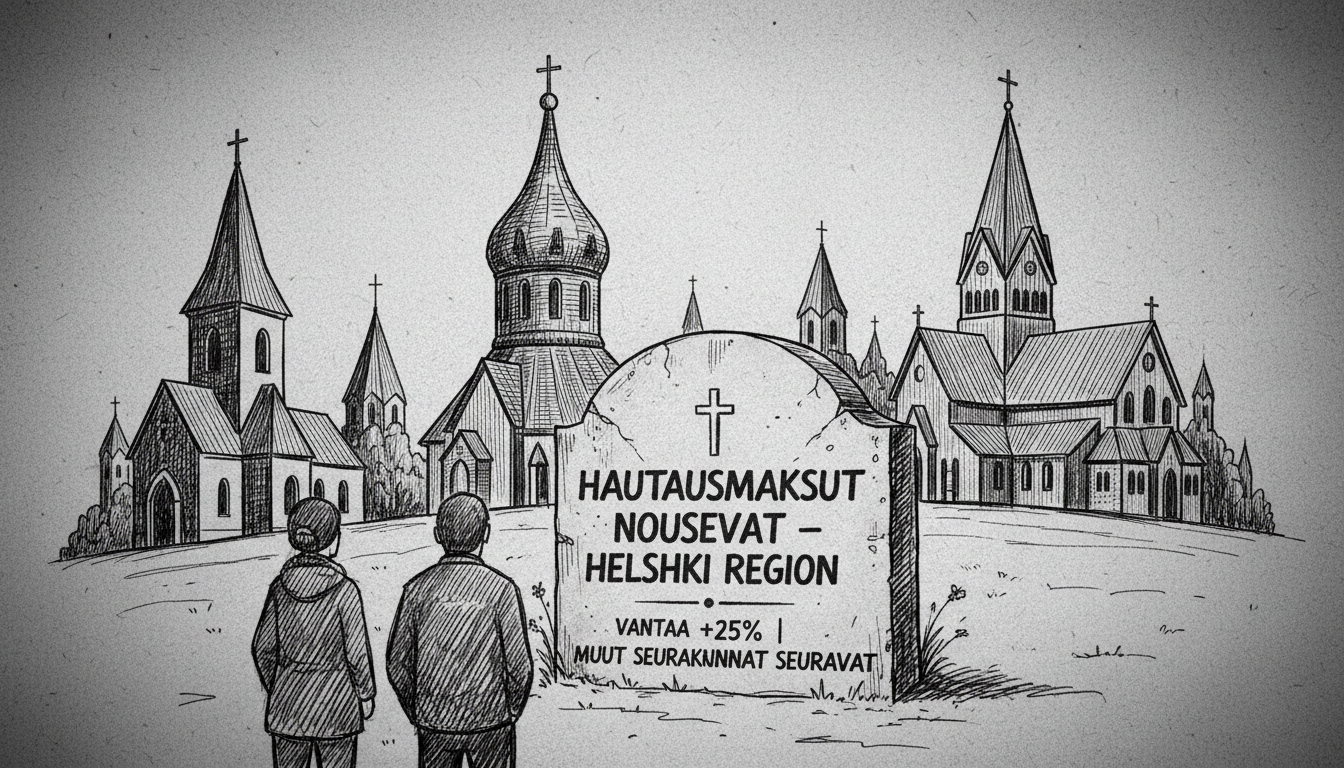
Metropolitan Helsinki area churches face pressure to raise burial fees. The Vantaa Parish Union says cremation and burial costs will increase across Espoo, Helsinki and Vantaa municipalities.
Cremation services need the largest price adjustments in Vantaa. Ash interment costs will rise approximately 25 percent in 2026.
Vantaa's joint church council proposes raising columbarium niche fees from €422 to €528. Urn grave purchases would increase from €607 to €751. Scattering and vault niche costs would jump from €356 to €446.
Non-residents face higher fees than local inhabitants under the proposed pricing structure.
These changes stem from reduced state funding to churches. They also reflect church assembly decisions about distributing remaining funds among parishes.
Burial service principles require equal treatment for all city residents regardless of church membership. Both members and non-members pay identical fees.
Frontline veterans and their spouses receive complete exemption from grave purchase costs.
Parish unions may charge for grave plot allocation, burial services, and grave maintenance. Combined fees and state funding cannot exceed actual service delivery costs. Burial services operate on a non-profit basis.
Churches previously implemented cost-control measures for burial operations. During 2026, officials will explore additional savings options if needed.
Metropolitan Helsinki churches anticipate possible further adjustments in 2027 if planned state funding distribution changes materialize.
State funding for churches has decreased substantially in recent years. Helsinki region Lutheran parish unions face total reductions of approximately €9.6 million between 2024 and 2026. This represents about 39 percent less funding.
Church assembly changes to funding distribution affect all parish economies. Large parish unions experience the most significant reductions.
Espoo, Helsinki and Vantaa parish unions will prepare and process decisions about fee increases during November-December 2025. Vantaa expects to make its decisions first.
This situation highlights how reduced public funding directly impacts essential community services, even those traditionally seen as stable institutions.