
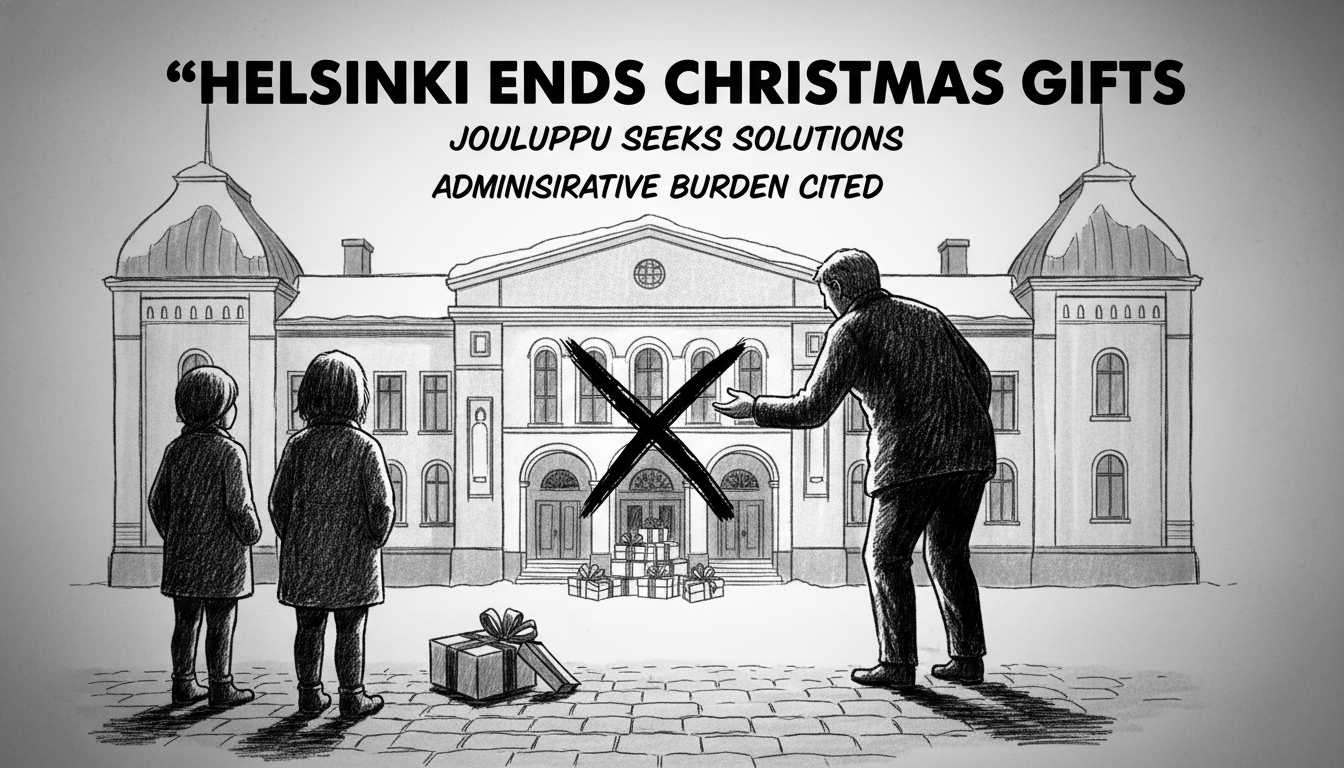
Helsinki city administration has terminated its two-decade partnership with the Joulupuu charity for distributing Christmas gifts to underprivileged children. The municipal government confirmed social workers can no longer manage the logistics of delivering approximately 10,000 gift packages during the holiday season. Family and Social Services Director Maarit Sulavuori stated in an official communication that professional staff must prioritize direct client work over gift distribution. The decision marks a fundamental shift in Helsinki's approach to seasonal charity operations.
The Joulupuu initiative began in 2003 and has grown substantially over recent years. City social workers previously identified children in vulnerable circumstances and coordinated gift deliveries through postal services and home visits. Sulavuori acknowledged the program's success while explaining the administrative burden. Gift quantities have increased steadily creating logistical challenges that now require hundreds of volunteer hours. The director expressed gratitude to donors while emphasizing the need for operational changes.
Finland's capital faces broader questions about municipal responsibility for seasonal traditions. The Nordic welfare state typically maintains strong social safety nets while encouraging civil society partnerships. This decision reflects ongoing tension between direct service provision and administrative efficiency. Helsinki currently examines how to balance humanitarian traditions with contemporary resource allocation. The city government must navigate public expectations while managing practical constraints.
Joulupuu proposed transitioning to QR code distribution where clients could collect gifts from designated locations. This system operates successfully in another major Finnish urban center. Initial implementation faced challenges as social workers struggled to distribute codes within original November timelines. Both parties extended the distribution period to accommodate practical realities. The organization now seeks either a return to previous arrangements or new partnership models from 2026 onward.
The charity requires several hundred volunteers for this year's modified distribution system. Joulupuu coordinates similar programs across more than one hundred Finnish municipalities through donor-funded operations. Helsinki's situation highlights how even successful charitable programs face sustainability questions when scaling operations. The city's resolution will likely influence seasonal charity approaches throughout other Nordic municipalities facing similar logistical challenges.
This development raises important questions about municipal responsibility during holiday periods. Should city governments directly facilitate gift distribution or focus exclusively on core services? Helsinki's decision reflects practical constraints but may leave some children without traditional Christmas experiences. The situation demonstrates how even prosperous Nordic societies must make difficult choices about resource allocation during periods of high demand for social services.