
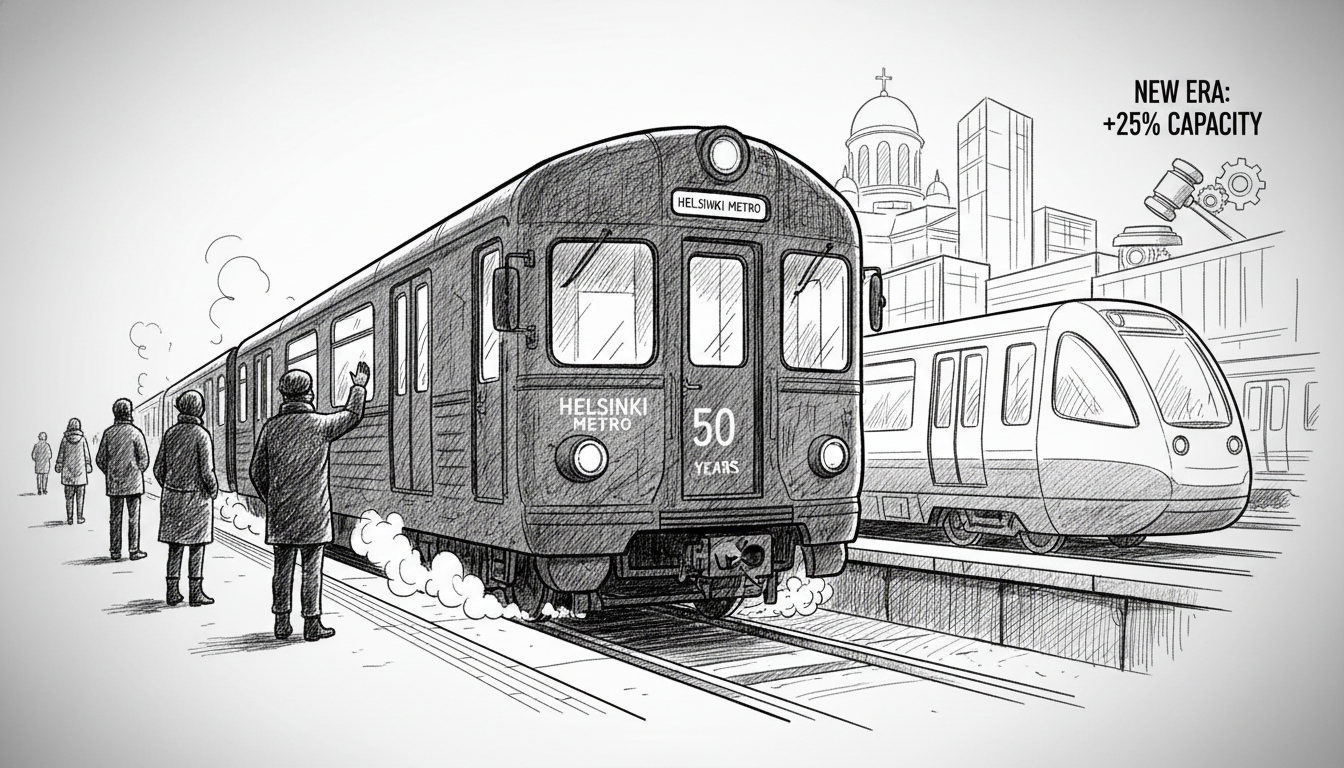
Helsinki's original metro trains will soon retire after nearly five decades of service. The fleet replacement and new traffic control system will cost over €400 million.
The metro system first opened in August 1982 between Rautatientori and Itäkeskus stations. The oldest M100 and M200 series trains have served passengers since the system's early days.
New trains will enable more frequent service with intervals of 120-160 seconds between trains. This represents a 25% increase in passenger capacity.
The capacity boost equals adding three new light rail lines, ten frequent bus routes, or an extra motorway lane.
Traffic control upgrades will cost €155.9 million, with Helsinki paying €103 million and Espoo covering the remainder. The new train purchase will cost approximately €250 million for 25 units.
First new trains could begin operation in the early 2030s. The oldest trains received refurbishments allowing service until at least 2032.
"When Helsinki's original metro trains reach 50 years of service, they will be replaced. While metro trains cost a lot, they have long lifespans," said Eetu Kinnunen, chairman of the city transport board.
The train purchases will proceed after the new traffic control system is confirmed. The system will determine train specifications according to Heidi Heikkilä, fleet services manager.
A tender for traffic control has concluded. Parties can sign procurement contracts if Helsinki and Espoo approve a €31.8 million budget increase.
Current traffic forecasts indicate 160-second intervals will suffice until 2032. After that, congestion may require 120-second intervals west of Tapiola.
Market discussions have begun with six train manufacturers about the new metro trains. Helsinki's newest M300 series trains came from Spanish manufacturer CAF.
Meanwhile, supplier Siemens and Helsinki City Transport continue their legal dispute over an automated metro project in Helsinki Court of Appeal.
The case began over a year ago. The court expects the contract dispute to resolve next year with compensation claims possibly concluding in June 2027.
A district court ordered Siemens to pay HKL €8.1 million in 2021. The court found HKL had right to terminate the contract because delays, especially a three-year installation delay for old trains, were largely Siemens' fault.
Both Siemens and HKL appealed. HKL sought €190 million in compensation with Länsimetro Oy but received far less because the court found HKL also shared responsibility for project failures.
The lengthy service life of Helsinki's metro trains shows good value for money, but the simultaneous legal battles over previous automation attempts reveal the complexities of modernizing aging transit systems.