
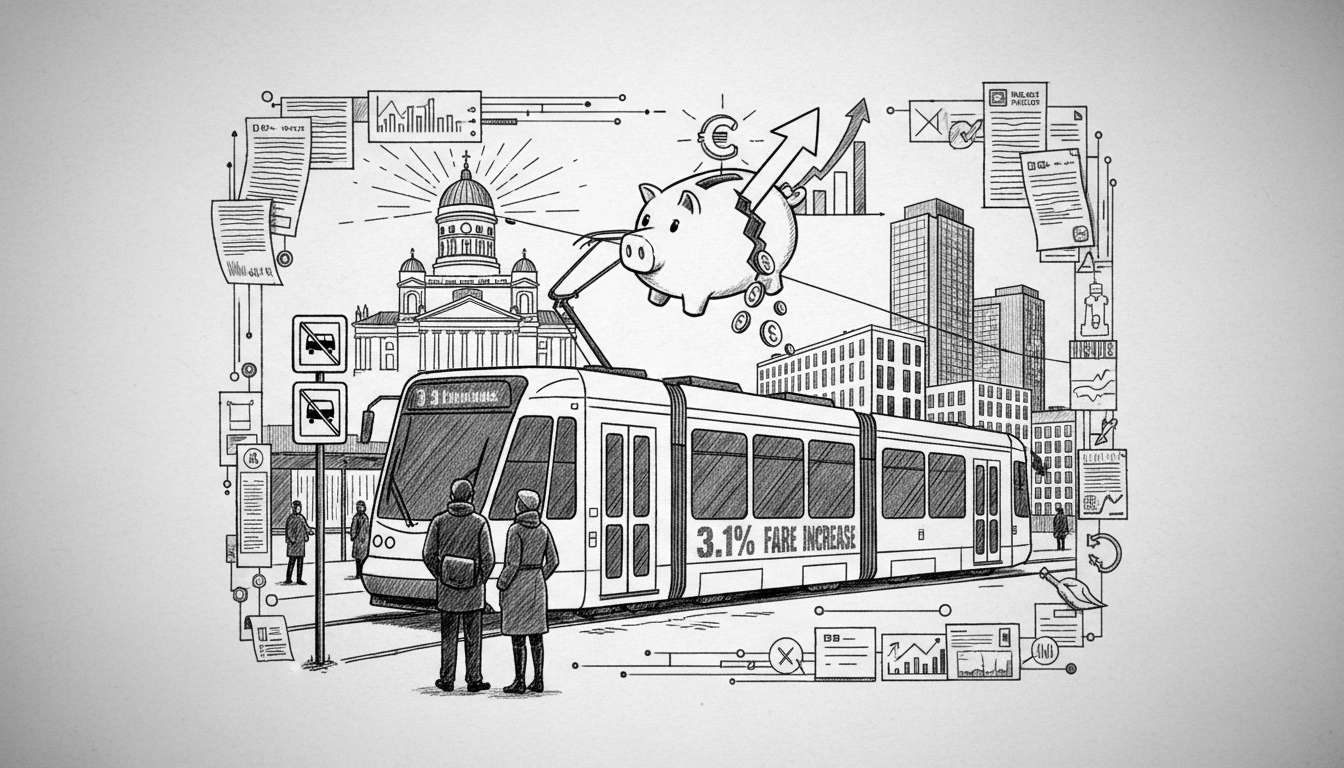
Public transport fares in the Helsinki metropolitan area will rise by 3.1% starting next year. The Helsinki Region Transport board approved the increase to cover rising operational costs.
The fare hike represents half of the originally proposed 6.4% increase. Politicians negotiated the lower rate despite none wanting increases initially.
Nine member municipalities must cover the funding gap. Some unprofitable routes will face cuts as a result.
What will the fare increases look like? A single adult ticket could rise from €3.20 to €3.50 when purchased individually. For app and travel card users, the price may increase by just ten cents to €3.30.
The fare adjustment covers basic cost increases but doesn't account for impacts from the national government's tax decisions. This leaves additional financial pressure on the transport system.
Before the board meeting, Green and Left Alliance representatives pushed for zero increases. This would have meant deeper route cuts, particularly in suburban areas of Vantaa and Espoo.
Parties generally agree the infrastructure compensation system needs reform. Unlike most systems worldwide, HSL passengers help fund new rail projects through their ticket prices.
Smaller municipalities' financial struggles influenced the decision. They warned of difficulties covering cost increases from their own tax revenues.
Member municipalities cover about 57% of HSL's expenses. The remainder comes from ticket sales.
Construction disruptions pose additional challenges. Railway and tram line closures are expected to reduce revenue by approximately €2 million next year.
Major track renewals will halt rail traffic on the western ring rail line for two months next summer. A three-month tram service disruption will occur due to Mäkelänkatu street renovations.
Despite these challenges, HSL aims to achieve around €400 million in ticket revenue next year.
The transport authority will introduce a daily price cap for single tickets next year. This will benefit both tourists and residents using public transport frequently.
HSL will also eliminate additional zone tickets that passengers used when traveling outside their core area. A new E-zone will be established for the outer metropolitan region.
The fare increases reflect the difficult balance between maintaining service quality and keeping public transport affordable. Regular price adjustments have become necessary as costs rise across the transport sector.