
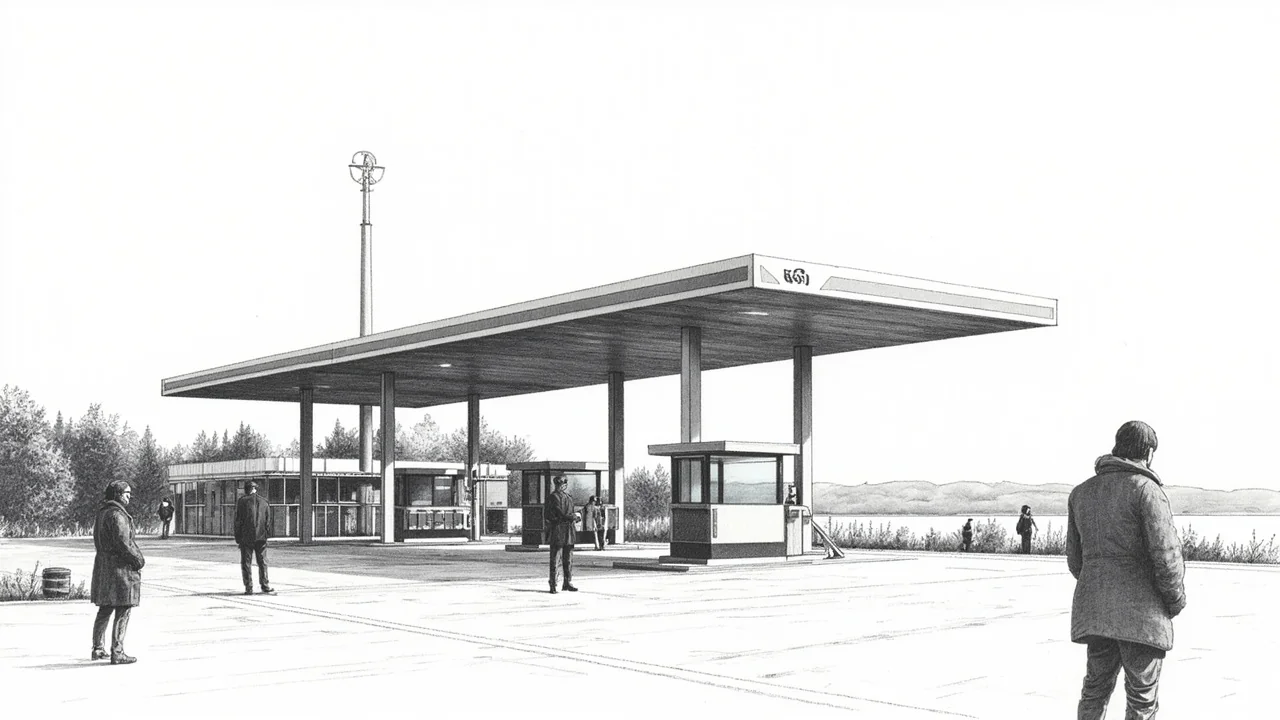
Finland's architectural preservation system faces a critical test as St1 seeks to demolish a protected 1955 Shell station in Helsinki's South Haaga district. The case exposes fundamental tensions between heritage conservation and property economics in Finnish society, where building protection laws may prove powerless against structural decay and contamination costs.
Ruusuvuori Legacy Meets Economic Reality
The threatened building represents architect Aarno Ruusuvuori's first major independent work, designed when he was just 30 years old after graduating from Helsinki University of technology. Ruusuvuori later became one of Finland's most celebrated modernist architects, designing major works including Hyvinkää Church and the WeeGee cultural center.
Originally built for Volkswagen as both a dealership and service center, the structure pioneered modular construction techniques that became Ruusuvuori's trademark. The building's open, pillar-free service hall and consistent overhead lighting system were revolutionary for 1950s Finnish architecture, according to Rakennuslehti.
Contamination Overrides Protection Laws
St1's property manager Juha Iivonen cited structural contamination as the decisive factor driving demolition plans. A 2019 condition survey revealed the building requires 100 percent renovation, with no guarantee that indoor air safety could be achieved even after complete reconstruction. Contaminated soil cannot be remediated without first demolishing the entire structure.
The city granted the building protected status in 2013, declaring it "architecturally and historically valuable" and prohibiting demolition. Yet environmental safety requirements directly conflict with preservation mandates. St1 must first petition Museovirasto (Finnish Heritage Agency) to remove protected status before applying for demolition permits, according to Iltalehti.
The building's deteriorated steel-concrete frame structures require external supports, while contaminated soil poses ongoing health risks that standard renovation cannot address. St1 plans to convert the site to an unmanned fuel station, eliminating the architectural and social functions that made the original building notable.
Precedent for Industrial Heritage
This case will establish precedent for how Finnish authorities balance rakennussuojelu (building preservation) against environmental safety requirements. Similar contamination issues affect numerous post-war industrial and commercial buildings across Finland's urban centers.
If authorities approve this demolition, expect similar contamination cases to override heritage protection across Finland's industrial districts. The Shell station's fate signals whether environmental remediation will systematically trump architectural preservation when the two goals prove incompatible.
Read more: Finnish Fashion Brand Voglia Files for Bankruptcy After 41 Y....
Read more: 20 Finnish Teens Get Summer Entrepreneurship Vouchers in Lau....
Read more: Finnish Fashion Brand Voglia Files for Bankruptcy After 41 Y....