
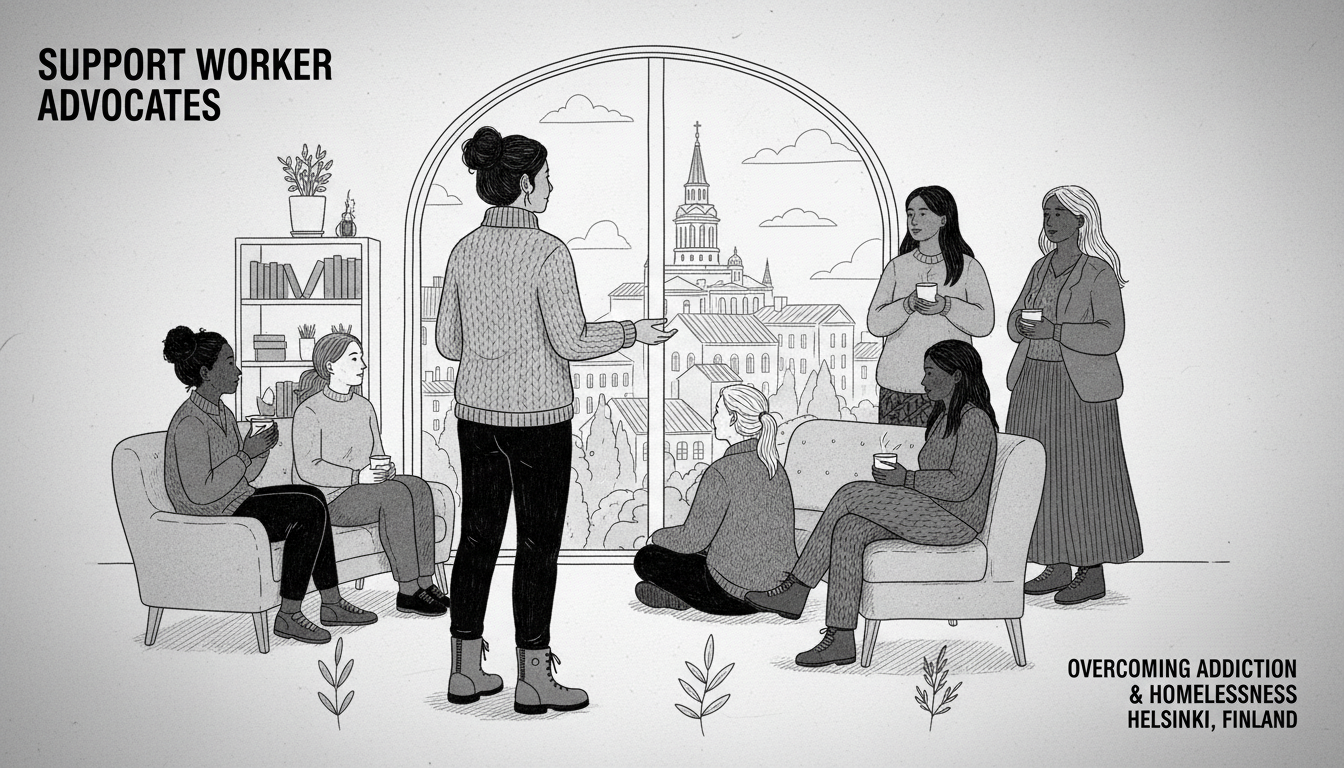
Raili Autioniemi helps women experiencing homelessness and substance use in Helsinki. Many people question her career choice. She finds their reactions disappointing.
Raili works as a guide at Aurora House, a supported housing facility. Residents have faced long-term homelessness and struggle with addiction or mental health issues.
Her daily tasks include assisting with practical matters. She helps residents establish routines, use laundry facilities, and complete benefit applications. Many arrive severely undernourished with depleted energy reserves.
Raili notes residents are getting younger, with some in their early twenties. Many sleep on mattresses instead of beds because floors feel safer after living on streets.
About a quarter of people with substance problems in Europe are women. Raili emphasizes these women often carry significant trauma from violent experiences and subordinate positions in male-dominated environments.
Building trust forms the core of her work. This process requires consistency and patience. She maintains her authentic self even during residents' difficult moments.
Raili specifically requested 12-hour shifts despite their intensity. Longer days allow her to identify optimal times for meaningful conversations with different residents.
While social work salaries are modest, Raili values her work's deeper rewards. She considers supporting others through their journeys an immense privilege.
The spread of synthetic drugs like alpha-PVP has introduced new safety challenges at Aurora House. Staff and residents jointly implemented visitor restrictions to enhance security.
Raili never feels unsafe despite frequent contact with intoxicated individuals. She always carries a personal alarm and carefully assesses situations before entering confined spaces with visitors.
Her approach centers on treating residents with full humanity. She encourages emotional expression and respects differing opinions.
Raili organizes art workshops, cooking groups, and self-care activities like manicures. Shared experiences help build confidence and practice voicing personal preferences.
Small moments mark significant progress. A first smile, a street greeting from previously withdrawn residents, or someone choosing nail polish color independently all represent breakthroughs.
To manage stress, Raili spends free time in pine forests where the stable environment calms her mind. Her work hasn't changed her fundamental belief that addiction is an illness rather than a choice.
She observes systemic barriers complicate access to mental health services for people with substance use history. Even those maintaining long-term sobriety face discrimination based on past records.
Raili believes society intervenes inadequately in violence against women who use substances. She advocates for more low-threshold services and faster response mechanisms. Secure housing remains another critical need.
Many women approach services with defensive anger born from repeated stigmatizing experiences. Raili's mission involves helping them recognize their inherent worth regardless of circumstances.
Public discussion often focuses on fears about addiction rather than supporting recovery. Raili maintains human dignity shouldn't require earning through perfect behavior.
The social care sector faces chronic staffing shortages across Finland. Raili acknowledges this reality while emphasizing meaningful human connection doesn't always require extensive time investment.
Supportive colleagues and understanding supervisors help her process difficult cases. They share similar humanistic values about their work's purpose.
Raili plans to continue this work indefinitely. Walking alongside people during their most challenging periods provides profound professional fulfillment that transcends financial compensation.