
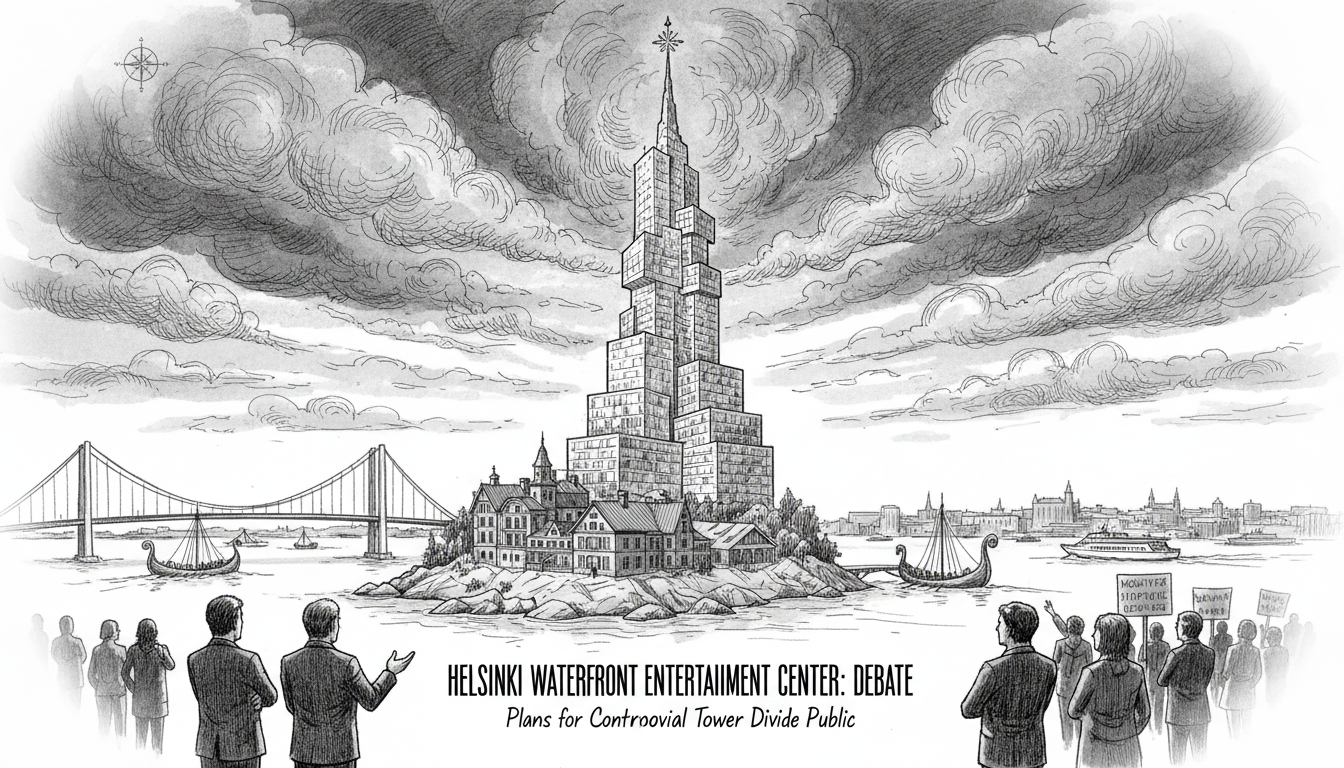
A proposed entertainment complex on Hylkysaari island near Helsinki's city center is generating mixed reactions among residents. The development plan includes a year-round tourism facility featuring a hotel, spa, and restaurant services adjacent to Helsinki Zoo. The project's most controversial element is an upward-flaring tower that has drawn sharp criticism on social media platforms.
Helsinki's chief architect Jari Huhtaniemi defended the design in public statements. He explained that the tower aims to create a recognizable landmark for the area. The structure would form part of a new hotel building connected to the existing pilot station, not sit directly atop the historic building as some initial impressions suggested.
The tower design specifically references a 1970s-era watchtower that previously stood on the site before demolition. Plans call for restaurant facilities in the tower's two uppermost floors. The project also involves restoring the 1910 pilot station building closer to its original appearance by removing later modifications.
Huhtaniemi addressed public skepticism by drawing parallels with other initially controversial landmarks. He noted that Paris's Eiffel Tower faced similar public resistance when first constructed. The architect suggested that distinctive architecture often requires an adjustment period before gaining public acceptance.
This private development by Valo Group, which owns Hylkysaari island, represents a significant expansion of marine services available to Helsinki residents. The project must navigate careful balance between modernization and preservation. City planning requirements mandate minimal alterations to the historic pilot station facade.
Construction plans call for connecting old and new structures through glass walls and a high atrium space. This approach preserves views of the original building's exterior from multiple angles. Rooftop areas may incorporate terraces, green roofs, and pool facilities pending final approval.
Environmental considerations factor heavily into planning discussions. City officials have worked to minimize tree removal during development. The architectural team claims the new addition will remain largely invisible from the city when viewed from behind the existing pilot station.
The Helsinki Urban Environment Committee begins formal review of the zoning changes this week. Final approval authority rests with the city board. If approved, the project could substantially transform recreational opportunities on Helsinki's waterfront.
This development reflects broader tensions in Nordic urban planning between preserving historical character and accommodating modern tourism needs. The debate highlights how Scandinavian cities balance architectural innovation with public sentiment. Similar controversies have emerged in Stockholm and Copenhagen waterfront developments in recent years.
Local residents and heritage advocates will closely watch the approval process. The outcome may set precedents for future development on Helsinki's archipelago islands. Project developers target completion of new facilities within the next several years.