
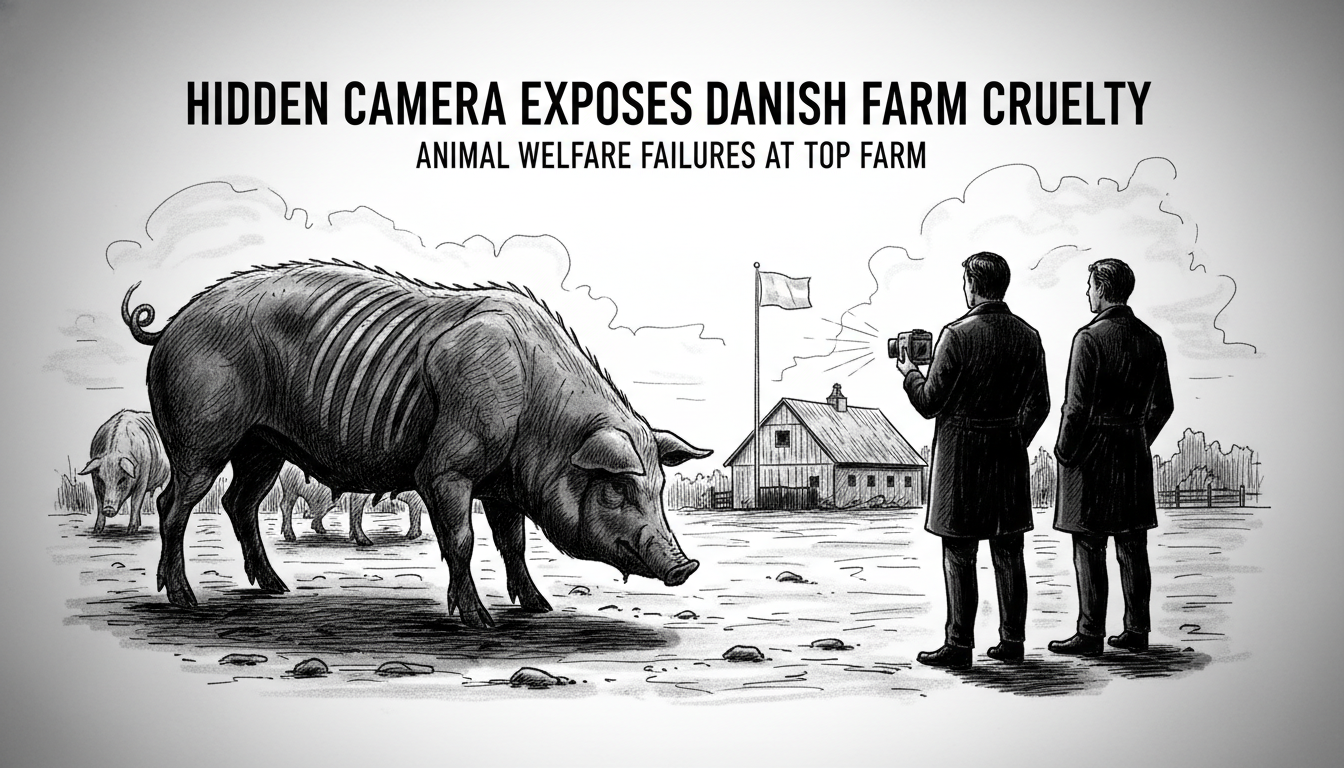
A major Danish agricultural leader faces serious allegations after hidden camera footage showed malnourished and suffering pigs at his facilities. The investigation reveals pigs trapped in equipment, unable to walk, and suffering from dehydration at Ulrik Bremholm's swine farm on Langeland. Bremholm holds multiple leadership positions including vice chairman of Agriculture & Food and chairman of Danish Slaughterhouses.
Veterinary experts who reviewed the footage stated at least three conditions at the farm violated Danish animal welfare laws. John Haugegaard, speaking for the Danish Veterinary Association's Pig Group, described seeing pigs that should have been euthanized days earlier. He emphasized that current regulations require constant monitoring of animal health and timely intervention when animals are dying.
At least four pigs were already dead when activists documented the conditions during February and March. The footage was collected by animal rights activists using concealed cameras in the farm's weaning stable, where piglets separated from their mothers are housed.
Bremholm declined interview requests but responded in writing through his website. He acknowledged seeing five clips from his stables and expressed regret about the conditions shown. He wrote that the situations were serious and unacceptable, failing to meet his own animal welfare standards. He stated he had taken action to address the problems.
The case triggered legal action when the Danish Swine Producers' chairman filed a police report against the media outlet and production company. A court in Odense issued an injunction preventing broadcast of some hidden recordings, ruling on whether specific footage could air. The media organization has appealed this decision.
This incident highlights ongoing tensions between agricultural transparency and production practices in Denmark's farming sector. As a country that exports substantial pork products globally, Denmark maintains strict animal welfare regulations on paper. Yet enforcement challenges persist when violations occur within established operations.
The documentary airs in a revised version after the court's partial restrictions. The media outlet states it had no prior knowledge of or involvement in creating the hidden recordings. This case emerges amid growing consumer awareness about food production methods and increasing scrutiny of large-scale farming operations across Scandinavia.
Danish agriculture represents a cornerstone of the national economy, with pork exports generating billions annually. Recent years have seen multiple animal welfare controversies within the industry, prompting calls for stronger oversight and more transparent farming practices. The current situation raises questions about self-regulation effectiveness within agricultural leadership structures.
International markets increasingly demand ethical production standards, creating economic incentives for improved animal welfare. This investigation may influence both domestic policy discussions and Denmark's reputation as a food exporter. The case demonstrates how hidden documentation continues to reveal gaps between official standards and actual farming conditions.