
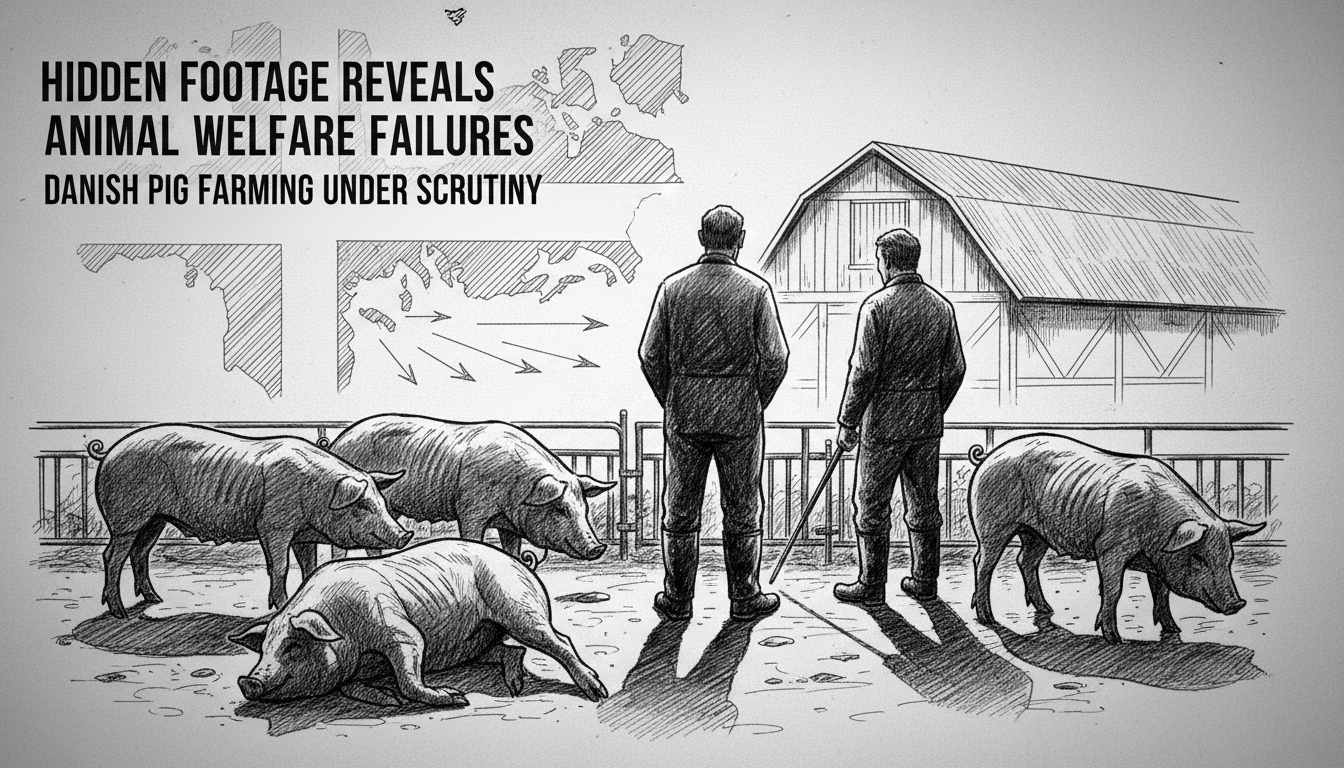
Shocking hidden footage has exposed sick, injured, and dead piglets in facilities operated by Danish agricultural leaders. The Animal Protection Society describes massive gaps in oversight that have shaken even industry veterans.
Veterinarian John Haugegaard felt the revelations deep in his stomach. He has worked as an inspector in Danish pig herds for nearly two decades. He also chairs the veterinary association's pig specialist group. The veteran professional expressed how these conditions crossed all acceptable boundaries.
Danish agriculture maintains strict animal welfare standards on paper. The reality appears different according to these latest findings. This situation raises serious questions about enforcement and monitoring systems. Denmark exports pork products worldwide while promoting high welfare standards internationally.
The pig farming sector represents a cornerstone of Danish agricultural exports. Recent statistics show Denmark produces approximately 28 million pigs annually. About 90% of these products go to international markets. The industry employs thousands across rural communities. This makes proper oversight crucial for both animal welfare and economic stability.
Animal welfare inspections typically involve announced visits. This allows farmers to prepare facilities beforehand. Hidden cameras reveal what happens between official inspections. The footage shows conditions that would never pass formal veterinary checks.
Local municipalities share responsibility for animal welfare enforcement. They work alongside national veterinary authorities. This layered system sometimes creates gaps in consistent oversight. Rural areas with limited resources face particular challenges maintaining regular inspection schedules.
International consumers increasingly consider animal welfare when making purchasing decisions. Scandinavian countries generally enjoy strong reputations for ethical food production. These revelations could damage that hard-earned trust. Export markets might reconsider Danish pork products if welfare concerns persist.
The agricultural ministry has acknowledged the need for improved oversight. Officials promise thorough investigations into the documented violations. They emphasize Denmark's commitment to high animal welfare standards. Concrete actions beyond statements remain unclear at this stage.
Farm industry representatives express concern about the footage. They recognize the potential damage to Denmark's agricultural reputation. Some call for stronger self-regulation within the industry. Others question whether current regulations provide sufficient enforcement power.
This situation mirrors previous animal welfare controversies in Nordic agriculture. Similar issues emerged in Swedish dairy farming last year. Norwegian chicken producers faced comparable scrutiny during the previous winter. The pattern suggests systemic challenges across Scandinavian food production.
Consumer advocacy groups demand immediate reforms. They want unannounced inspections becoming standard practice. Random spot checks could prevent preparation before official visits. Transparent reporting of violations would help rebuild public trust.
The economic implications extend beyond individual farms. Denmark's agricultural brand suffers when welfare standards appear compromised. International competitors might capitalize on these revelations. Danish farmers could face price pressures if buyers question their production methods.
This case highlights the tension between economic efficiency and ethical practices. Intensive farming methods sometimes prioritize productivity over welfare. Finding the right balance remains challenging for producers and regulators alike. The Danish model traditionally emphasizes both quality and ethics.
Moving forward requires honest assessment from all stakeholders. Farmers need practical support to maintain high standards. Regulators require adequate resources for proper oversight. Consumers deserve transparency about their food's origins. The entire system must work together to restore confidence in Danish pork production.