
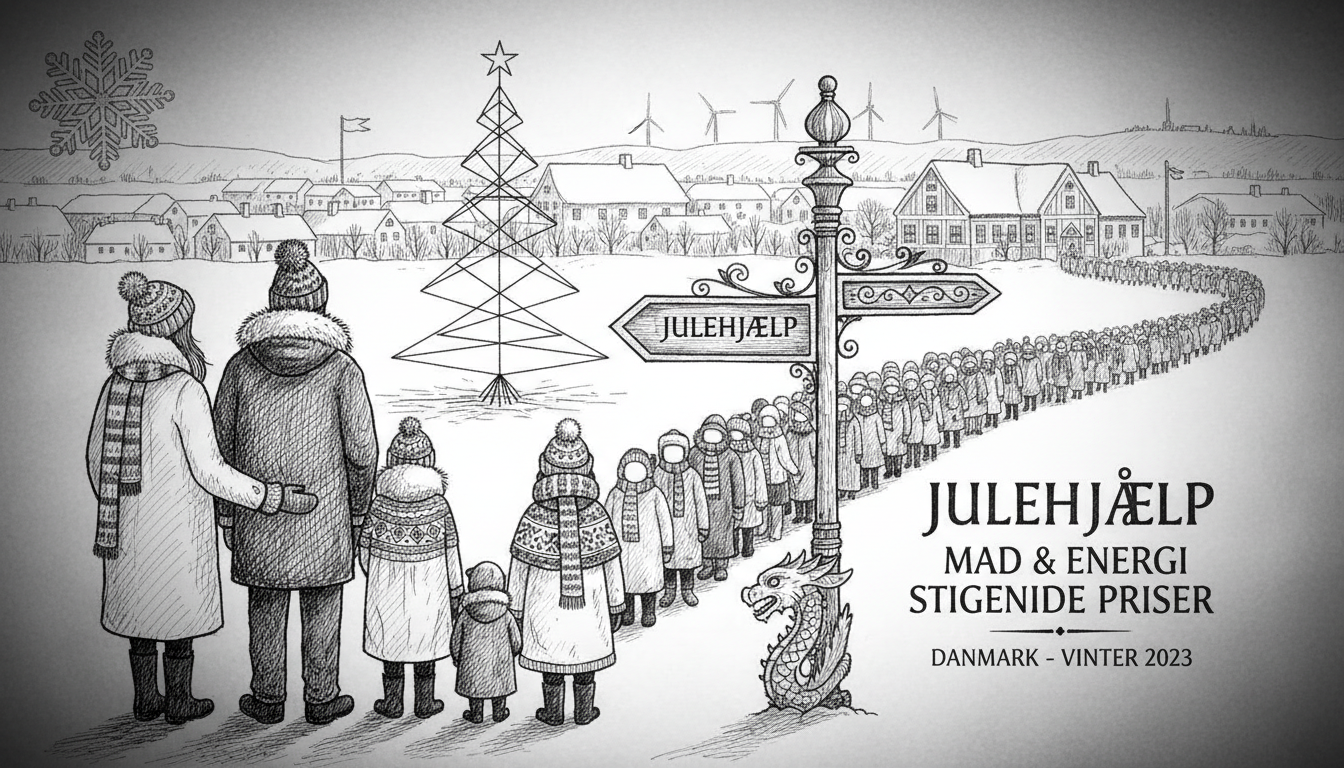
Soaring prices for groceries and electricity are forcing thousands of Danish families with children to apply for financial assistance this Christmas. The charity Mødrehjælpen reports receiving nearly 25,000 applications for its holiday aid program. This figure matches the high volume seen in the previous year. Three out of four applicants cite rising costs for daily essentials, heating, and power as the primary reason for seeking help.
Ninna Thomsen, the director of Mødrehjælpen, stated that every child deserves a Christmas filled with joy and tradition. She noted the immense pressure on vulnerable families. Thomsen explained that parents in financially strained households often fear the holiday season long before it arrives. They face a daily struggle where funds for clothing or medicine are scarce, creating both economic and emotional strain.
The organization's Christmas aid provides 550 Danish kroner per child. Eligibility requires having children living at home or a fixed custody agreement. Last year, the charity distributed aid to over 31,000 children. Mødrehjælpen is not alone in this effort. Dansk Folkehjælp has received applications from 18,458 families this season, representing 33,922 children. Another major organization, Blå Kors Danmark, closed applications after receiving a record number of requests, nearly 2,000 more than the prior period.
This situation highlights a critical social challenge beneath Denmark's strong economic indicators. While the Copenhagen Stock Exchange lists thriving companies and exports remain robust, a significant segment of the population faces acute cost-of-living pressures. The data reveals a disconnect between macroeconomic stability and household financial security for many. The concentration of applications in urban centers like Copenhagen and across the Øresund region points to the high cost of living in major metropolitan areas.
The reliance on private charities for basic holiday support also raises questions about the social safety net's reach. Denmark is renowned for its comprehensive welfare system, yet these figures suggest gaps that voluntary organizations are filling. The consistent year-on-year demand indicates this is not a temporary crisis but a structural issue for low-income families. The situation calls for a clear-eyed assessment of disposable income and purchasing power for average citizens, factors that ultimately influence domestic consumption and social cohesion.
Looking ahead, the sustained demand for holiday aid serves as a barometer for household economic stress. It suggests that despite national economic strength, inflationary pressures on essentials continue to bite deeply for those on modest incomes. The response from civil society is significant, but the scale of need underscores a persistent challenge in one of the world's most developed economies.