
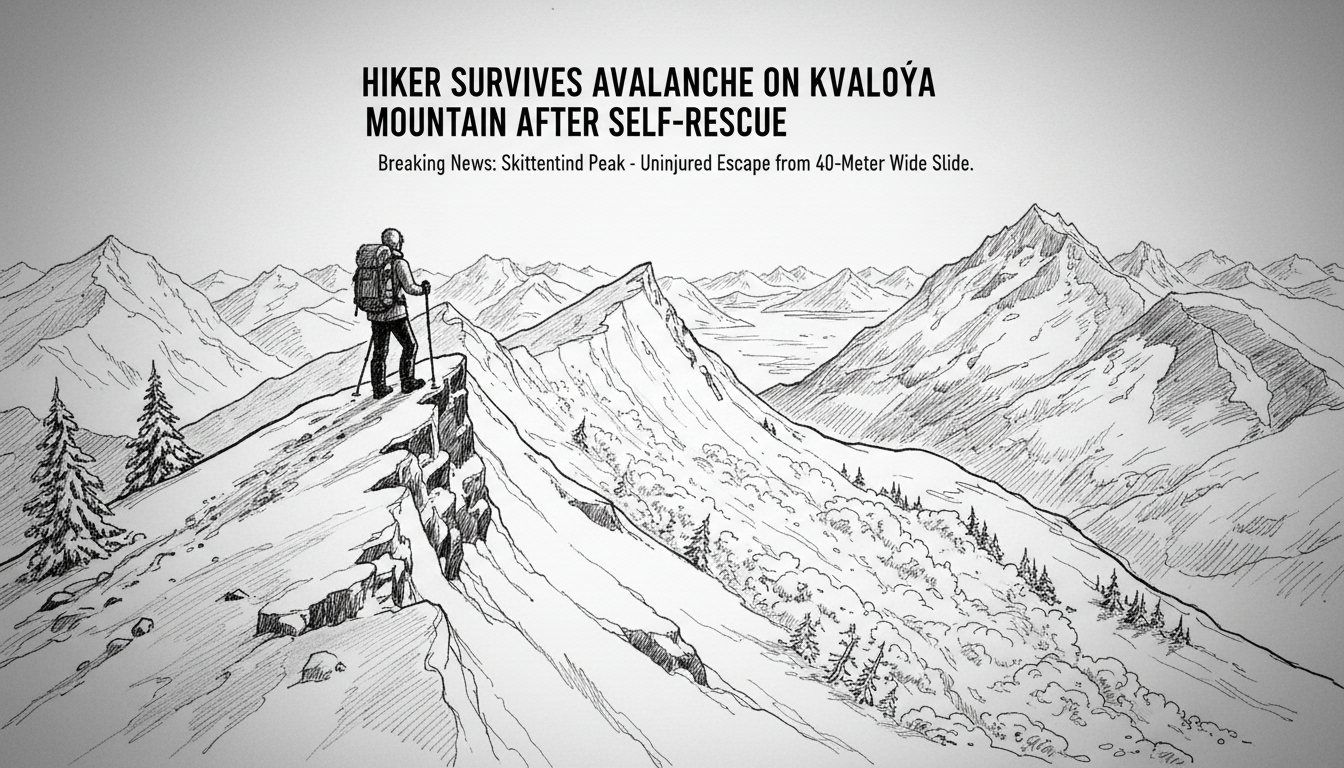
A hiker survived a dramatic avalanche on Skittentind peak in Kvaløya after digging themselves out from under the snow. The incident occurred around 6:00 PM on Monday but was reported to authorities later that evening. Police confirmed the individual escaped without injuries despite being caught in the massive snow slide.
The avalanche measured approximately 40 meters wide and 150 meters long, covering a substantial area of the mountainside. The hiker was part of a group of three people exploring the popular Norwegian hiking destination. All members of the hiking party remained safe following the incident.
Norwegian mountain safety experts emphasize that this successful self-rescue demonstrates crucial survival skills. Avalanche safety training and proper equipment can mean the difference between life and death in such situations. The hiker's ability to remain calm and dig themselves out prevented what could have become a tragedy.
This incident highlights the ongoing avalanche risks in Norwegian mountains during winter months. Kvaløya, located near Tromsø in northern Norway, features challenging terrain that attracts experienced hikers and mountaineers. The area's popularity requires visitors to maintain constant awareness of changing weather conditions and snow stability.
Norwegian rescue services recommend that all mountain travelers carry avalanche safety equipment including transceivers, probes, and shovels. They also advise checking daily avalanche forecasts from the Norwegian Water Resources and Energy Directorate before any mountain excursion. The fact that this incident occurred in a group setting provided additional safety through numbers.
What does this near-miss mean for mountain safety in Norway? The successful outcome reflects both individual preparedness and the importance of hiking in groups. Norwegian authorities continue to emphasize avalanche education as climate change creates more unpredictable snow conditions across Nordic mountain regions.
International visitors to Norway should note that mountain safety responsibility lies primarily with individuals. The country's right to roam philosophy comes with personal responsibility for safety decisions. This incident serves as both a warning and an inspiration for proper preparation in challenging environments.