
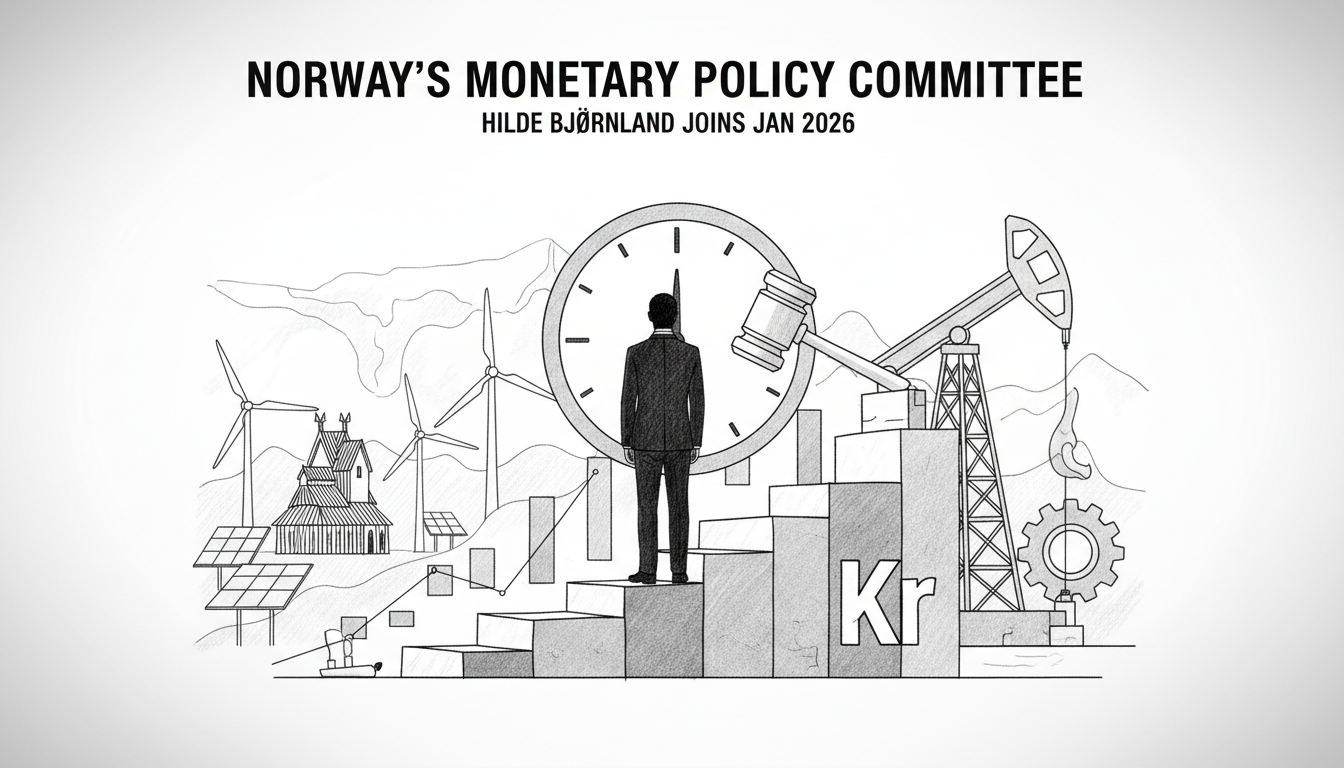
Economics professor Hilde Bjørnland has secured a pivotal appointment to Norway's monetary policy committee. This body determines the nation's benchmark interest rate eight times annually. Bjørnland replaces outgoing member Ingvild Almås, whose final term concludes on December 31. The new committee member will serve from January 2026 through December 2029. Bjørnland brings substantial academic credentials as an economics professor at BI Norwegian Business School. Her research specializes in applied macroeconomics and time series analysis. The committee maintains crucial oversight over Norway's financial stability and currency valuation.
The monetary policy committee represents a powerful force in Norwegian economic governance. It comprises Central Bank Governor Ida Wolden Bache as chairperson alongside two deputy governors. External members include Professor Steinar Holden and incoming member Bjørnland. This five-person committee wields direct influence over Norway's economic trajectory through interest rate decisions. Their determinations affect everything from mortgage rates to business investment climate. The committee's regular rate-setting meetings occur against the backdrop of Norway's complex energy-driven economy.
Bjørnland's appointment carries particular significance given Norway's current economic landscape. The nation balances substantial oil and gas revenues against growing renewable energy investments. Committee decisions must navigate between controlling inflation and supporting economic growth. Norway's petroleum industry contributes significantly to government revenues through its sovereign wealth fund. The world's largest such fund exceeds $1 trillion in assets. Committee members must consider how interest rates affect both traditional energy sectors and emerging green industries.
Norwegian monetary policy operates within unique Arctic and North Sea contexts. Energy installations from the Troll field to Johan Sverdrup platform generate substantial export income. Committee decisions influence investment in both offshore projects and coastal communities. The Storting building in Oslo houses parliamentary debates that ultimately shape banking regulations. Norway's fjord regions host major industrial facilities sensitive to financing costs. The committee's work connects directly to regional development across northern Norway and coastal areas.
This appointment comes during ongoing debates about Norway's economic direction. The Storting continues evaluating balance between petroleum extraction and environmental sustainability. Bjørnland's academic focus on macroeconomic applications positions her ideally for these complex deliberations. Her research background suggests data-driven approaches to monetary policy challenges. The committee faces persistent questions about managing Norway's transition from fossil fuel dominance. Their interest rate decisions will either accelerate or moderate this economic evolution.
International observers monitor Norwegian monetary policy for broader market signals. Norway's petroleum exports influence global energy prices and shipping routes. The committee's interest rate determinations affect krone valuation and international investment flows. Norway's sovereign wealth fund investments span global markets and industries. Committee decisions thus carry implications beyond national borders. Bjørnland's appointment signals continuity in Norway's methodical economic stewardship approach.
The incoming member joins during heightened attention to Nordic economic models. Norway maintains distinctive approaches to wealth management and social welfare. The committee's interest rate settings interact with these broader policy frameworks. Norway's government balances resource revenues against long-term sustainability concerns. The monetary policy committee operates within this complex economic ecosystem. Bjørnland's expertise will contribute to navigating these multidimensional challenges through coming years.