
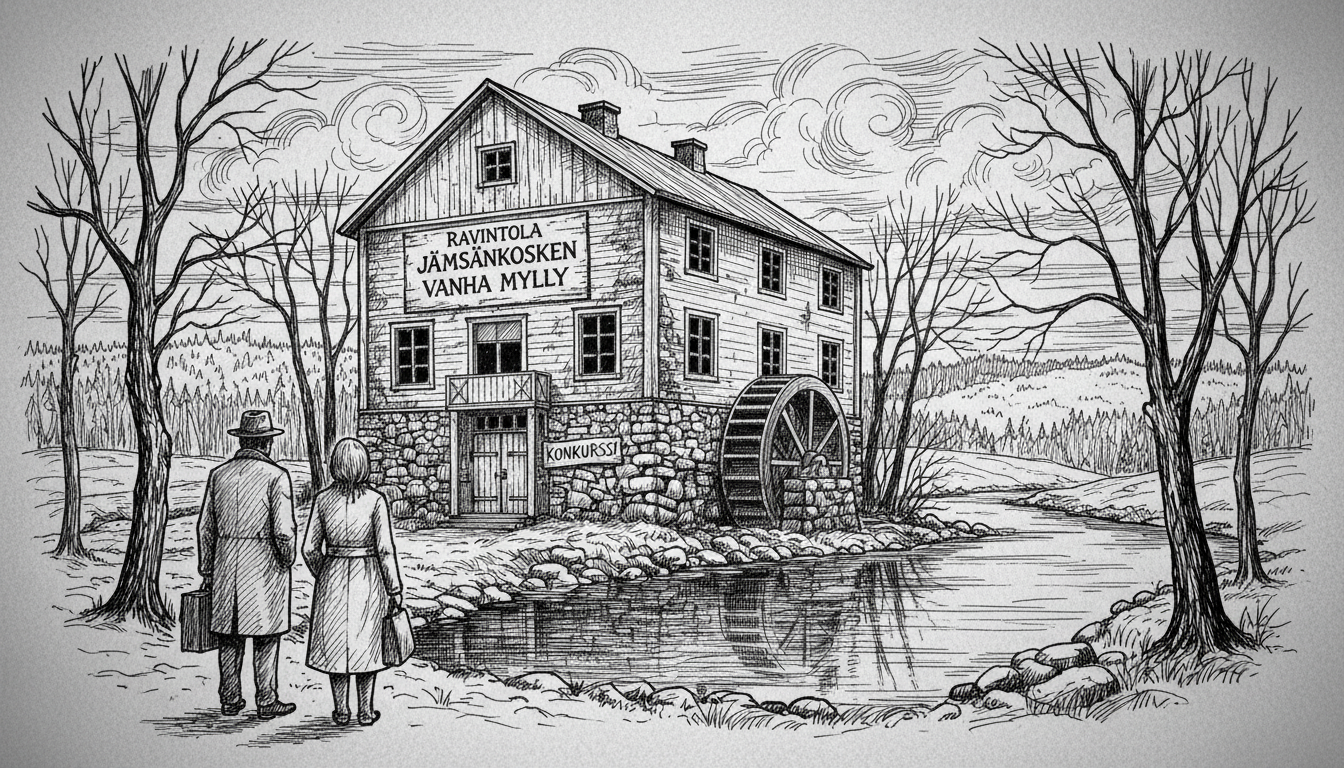
The company operating the historic Ravintola Jämsänkosken Vanha Mylly restaurant in Central Finland has been declared bankrupt by the local district court. Menucat Oy, based in Jämsänkoski, was placed into bankruptcy proceedings due to insolvency. The Finnish Tax Administration filed the bankruptcy petition, claiming approximately 26,000 euros in outstanding debts. The restaurant, located along the Koskenväylä road, has now ceased operations. This development highlights the persistent challenges facing Finland's regional hospitality sector, particularly for establishments outside major urban centers.
The bankruptcy of a long-standing local institution like Vanha Mylly represents more than a simple business failure. It signals deeper economic pressures in Finland's smaller municipalities. The restaurant industry across the country faces a complex mix of rising operational costs, changing consumer habits, and demographic shifts. Many traditional eateries struggle to adapt to modern tourism patterns and increased competition from larger chains. The loss of such venues also diminishes local cultural heritage and reduces social gathering points in communities.
From a policy perspective, this bankruptcy occurs against a backdrop of ongoing government discussions about regional development and SME support. The Finnish Parliament, the Eduskunta, has recently debated measures to bolster rural economies. Several coalition government ministers have emphasized the need for targeted aid. Yet concrete legislative packages often face delays in the complex Helsinki political landscape. The closure of local businesses directly impacts municipal tax bases and employment, creating a cycle that further strains public services in these areas.
The role of the Finnish Tax Administration as the petitioner is notable. It reflects the strict enforcement of tax compliance, even for struggling small businesses. This approach aims to maintain a level playing field but can have severe consequences for cash-strapped enterprises. Other Nordic countries sometimes employ different models, with more graduated payment plans or temporary relief during restructuring. The Finnish system's rigidity in this case led to a definitive end for the company rather than a potential recovery period.
What does the future hold for similar establishments? The trend suggests continued consolidation in the hospitality sector. Independent restaurants in rural Finland require innovative business models to survive. Some may pivot towards event hosting or niche culinary tourism. Others might seek cooperative ownership structures within their communities. Without adaptive strategies and potentially revised support frameworks from Helsinki, more historic local venues could face the same fate as Vanha Mylly. The story of this Jämsänkoski restaurant serves as a cautionary tale for policymakers and business owners alike across the Nordic region.