
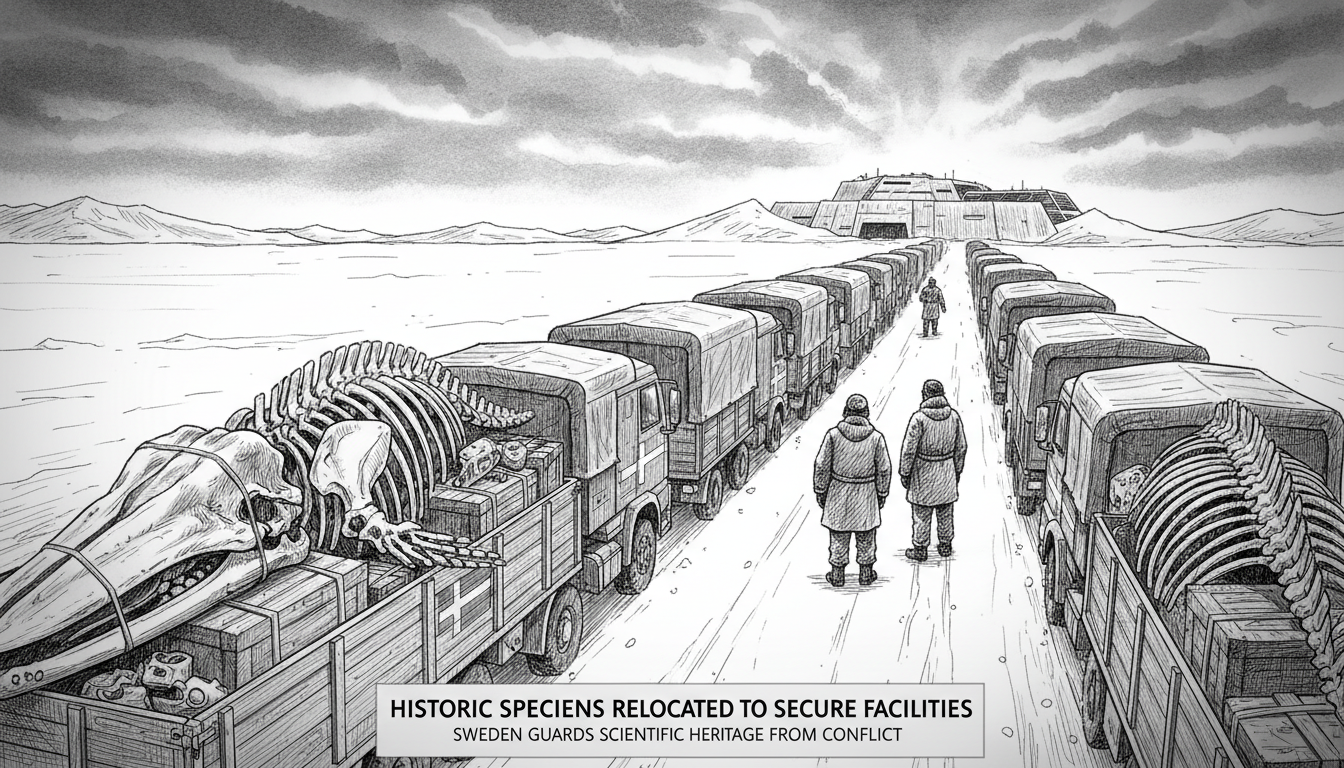
Approximately 600 museum specimens have been transferred from Stockholm to secure facilities in Morgongåva, Heby municipality. The collection includes whale skeletons, orca remains, turtles, and ostriches. This strategic relocation addresses growing security concerns about cultural preservation during geopolitical tensions.
The Swedish government has quietly supported this preservation initiative through cultural protection funding. The move reflects broader Riksdag decisions about safeguarding national heritage assets. Stockholm politics increasingly prioritizes protecting scientific collections alongside traditional security measures.
Daniela Kalthoff, mammal curator overseeing the transfer, described the operation's challenges. 'I've had nightmares every night, but nothing has broken,' she said in a statement. When a forklift moved a humpback whale skeleton, the structure creaked loudly. 'That sound gives me heart palpitations,' Kalthoff noted, visibly startled.
The relocation process involved freezing specimens to minus 40 degrees Celsius to eliminate pests. Workers then carefully unpacked the items from transport containers that traveled by truck from the capital. The new Morgongåva facility offers superior protection compared to the previous Frihamnen location.
Climate control represents a major advancement at the new site. 'We can maintain 15 degrees Celsius with 50 percent humidity,' officials explained. 'Pests that threaten collections cannot thrive in these conditions.' These preservation measures ensure the specimens remain available for current and future scientific research.
This relocation demonstrates how Swedish Parliament priorities extend beyond immediate political concerns to long-term cultural preservation. The government policy Sweden has implemented reflects recognition that scientific heritage requires the same protection as historical artifacts. The operation proceeded without public announcement, suggesting officials view such transfers as sensitive security matters.
The move from government districts in Stockholm to rural Morgongåva follows similar cultural protection strategies employed during previous European conflicts. Sweden maintains extensive procedures for securing national treasures, though such operations rarely receive public attention. The seamless transfer of these delicate specimens shows considerable planning and coordination between multiple agencies.
These collections serve vital scientific purposes beyond their cultural value. Researchers study whale skeletons to understand marine ecosystems and environmental changes. The specimens represent irreplaceable scientific data that could inform conservation efforts for decades. Their protection aligns with Sweden's commitment to both scientific advancement and cultural preservation.
Future research depends on maintaining these physical specimens despite evolving security challenges. The Swedish government's proactive approach sets a precedent for other nations facing similar preservation dilemmas during uncertain times.