
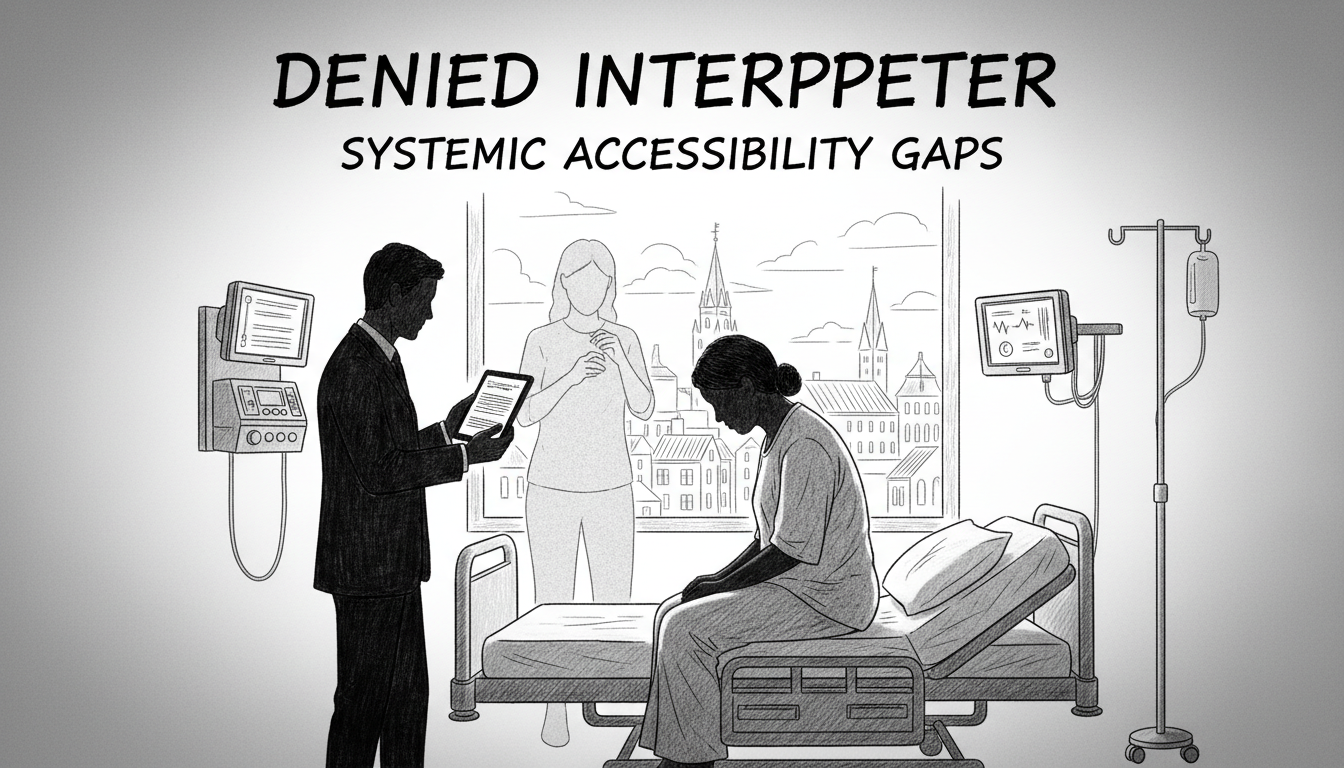
Jessica Ahlinder experienced uncontrolled shaking and blue lips for months before doctors discovered life-threatening bacteria in her heart. She underwent emergency admission at Uppsala's Academic Hospital in Sweden, expecting to stay for several weeks. Despite repeated requests, hospital staff denied her a sign language interpreter during her first days of treatment.
"They thought I was being silly and said 'but you write so well'," Ahlinder recalled in a statement.
Medical staff inserted tubes into her body without explaining their purpose. One tube delivered medication that multiple hospital employees later confirmed was equivalent to chemotherapy drugs.
"I experienced all the side effects and no one warned me they were coming," she said.
Sweden's Discrimination Ombudsman ordered the hospital to pay 40,000 kronor ($3,800) in compensation. Hospital management initially contested the decision but ultimately accepted the fine.
Johan Lugnegård, the hospital's chief physician, acknowledged procedural failures. "We deviated from our routines," he said. "It's quite clear that possibility exists."
Hospital staff claimed they lacked knowledge about booking interpreters during weekend admissions. After several days, the hospital finally provided sign language interpreters for Ahlinder.
This case reflects broader systemic issues for deaf patients in Swedish healthcare. Another patient reported waking to find a trainee inserting a catheter without explanation. The trainee then shouted at the deaf patient to breathe, causing the patient to faint from pain.
Hospital officials initially dismissed interpreter access as a "resource question" rather than a patient right.
"We have no such routines that say we should skimp on interpreters," Lugnegård stated, adding that management has now distributed interpreter booking procedures hospital-wide.
The situation highlights how healthcare systems sometimes prioritize administrative convenience over fundamental patient rights, particularly for those with communication disabilities.