
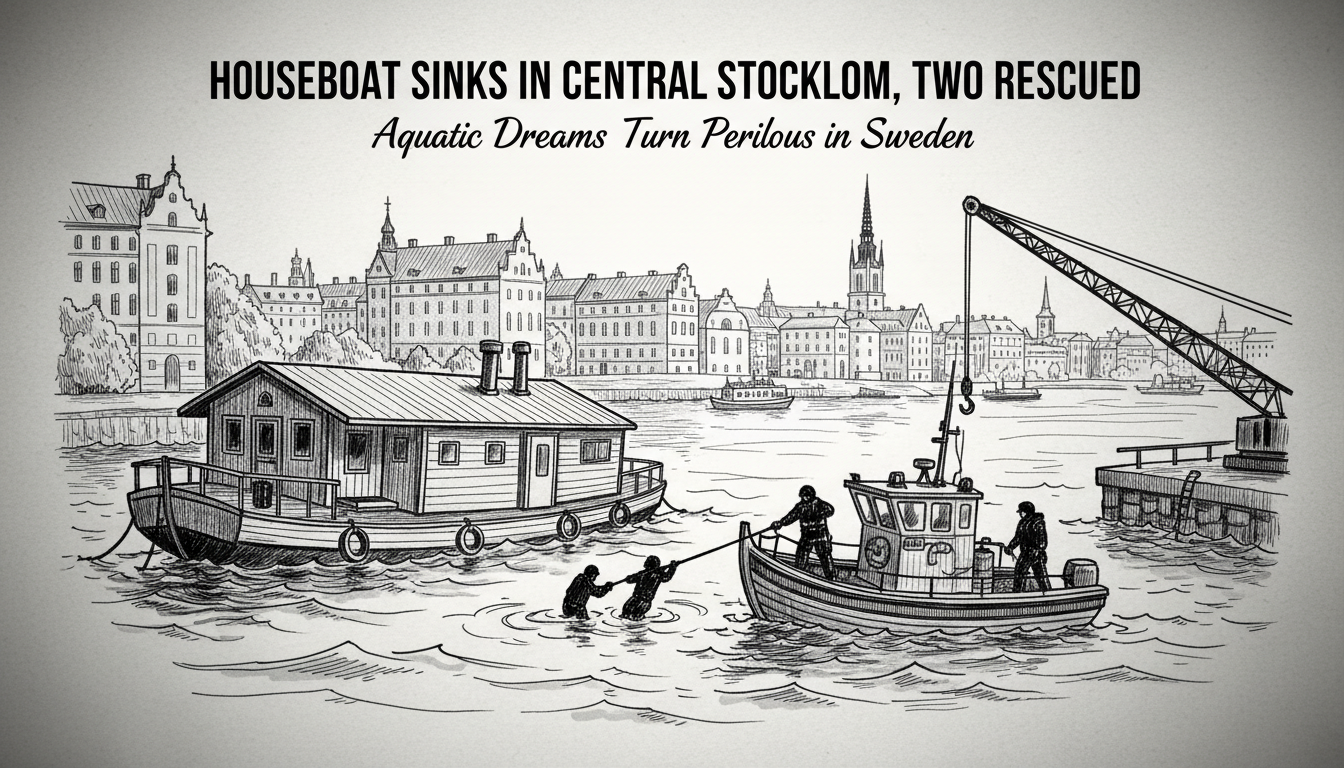
A houseboat sank in central Stockholm this morning. Two people were on board. Emergency services received the alarm just before 8 a.m. The vessel now sits partially submerged. Only its bow remains visible above the waterline. The incident occurred in the heart of the city. The exact location is not yet public. Police and rescue teams responded quickly. They pulled both individuals from the chilly water. Officials confirm the two are safe. They received medical checks on the scene. Neither person suffered serious injury. The boat, however, was not so fortunate. A police spokesperson described the scene. Rebecca Landberg spoke about the sinking. She said surveillance cameras show the bow sticking up. The rest of the vessel is underwater. The cause of the sinking remains unknown. An investigation is now underway.
This event highlights a unique aspect of Swedish culture. Living on the water is a cherished tradition here. Stockholm's archipelago is home to thousands of houseboats. These floating homes range from simple cabins to luxurious villas. They are moored in neighborhoods like Södermalm and Kungsholmen. Residents enjoy a direct connection to nature. They also face unique risks. Winter ice, spring storms, and maintenance issues pose constant challenges. A sinking, while dramatic, is not entirely unheard of. It serves as a stark reminder. Life on the water demands vigilance and respect for the elements.
The response showcases Sweden's efficient emergency protocols. The coordinated effort between police and rescue services is standard. Their rapid deployment likely prevented a worse outcome. For the international community in Stockholm, this news hits close to home. Many expats and tourists are drawn to the city's maritime charm. They take boat tours and visit waterfront cafes. They might not consider the practical realities of aquatic living. This incident provides that context. It also raises questions about regulations and safety for these dwellings. Are inspections rigorous enough? Who is responsible when a floating home becomes a hazard? The local authorities will need to address these points. The sunken boat now becomes a navigation obstacle and an environmental concern. Its removal will be a complex, costly operation.
Looking forward, the boat's owners face a difficult recovery. Salvaging a sunken houseboat is a major undertaking. It involves specialized marine companies and significant expense. The community of liveaboards will watch this process closely. They often share a strong sense of camaraderie. It is likely they will offer support. This story is more than a simple accident report. It is a snapshot of a specific Swedish lifestyle. It touches on urban planning, environmental stewardship, and cultural identity. The image of a houseboat's bow pointing skyward in the city center is a powerful one. It symbolizes a clash between a peaceful domestic ideal and the unforgiving power of water. The outcome today was thankfully not tragic. It was a close call that will resonate across Stockholm's waterfront communities for some time.