
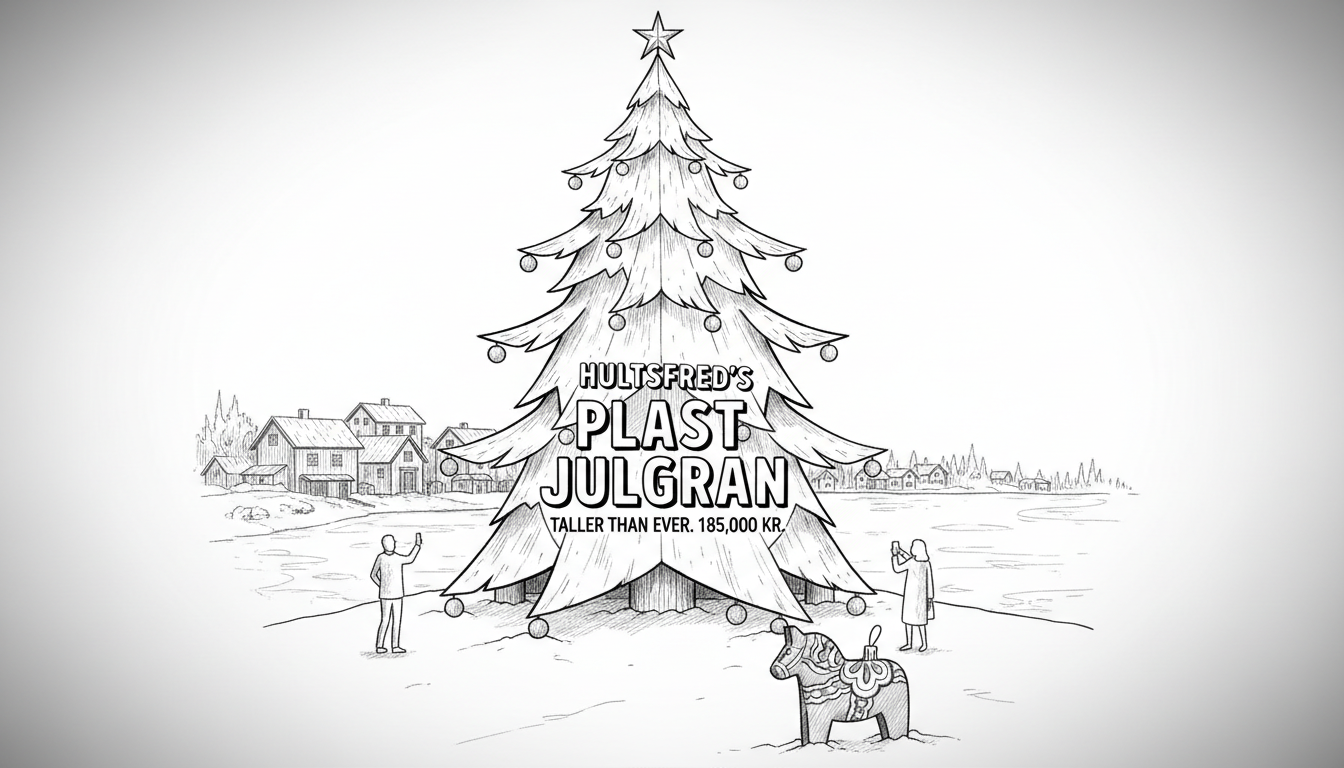
While Swedish towns traditionally scramble for perfect Christmas trees each December, Hultsfred municipality takes a different approach. They simply retrieve their reusable plastic tree from storage. This practical solution eliminates the annual hunt for natural trees that challenges many communities.
Martin Edén, a local official, acknowledges initial public reaction. "The first year brought many reactions, but things have calmed down since then," he said in a statement. The artificial tree first appeared three years ago and has grown taller each holiday season. With recent additions, it now stands one meter higher than before.
The municipality invested approximately 185,000 Swedish kronor in their synthetic evergreen. While substantial, this cost spreads across multiple years of use. Edén suggests other towns might consider similar approaches as natural options diminish. "It depends how easy communities find sourcing real trees," he noted. "Beautiful public square trees become harder to find each year since most forests now focus on production timber."
This shift reflects broader Swedish society trends toward sustainability and practicality. The plastic tree debate touches on tradition versus innovation in Swedish culture. Many towns maintain century-old Christmas customs while adapting to modern realities. Hultsfred's solution represents how communities balance heritage with contemporary challenges.
Stockholmers might recognize similar discussions in neighborhoods like Södermalm or Östermalm during holiday planning. The annual Christmas market in Skansen open-air museum showcases traditional Swedish celebrations, while modern adaptations appear across the city. Sweden immigration patterns bring new perspectives to these cultural conversations as well.
The plastic tree controversy reveals deeper questions about Swedish lifestyle values. Are communities willing to modify traditions for practical benefits? How do environmental considerations weigh against cultural preservation? These questions resonate beyond Hultsfred as Sweden navigates changing social norms.
Local residents express mixed feelings about their synthetic centerpiece. Some appreciate the reliability and cost savings over time. Others miss the authentic pine scent and irregular beauty of natural trees. This division reflects broader Swedish society trends where practical solutions sometimes challenge emotional connections to tradition.
As climate patterns shift and forestry practices evolve, more municipalities may follow Hultsfred's example. The town's experience demonstrates how communities can maintain holiday spirit while adapting to new realities. Their plastic tree continues to spark conversations about what matters most in Swedish Christmas traditions.