
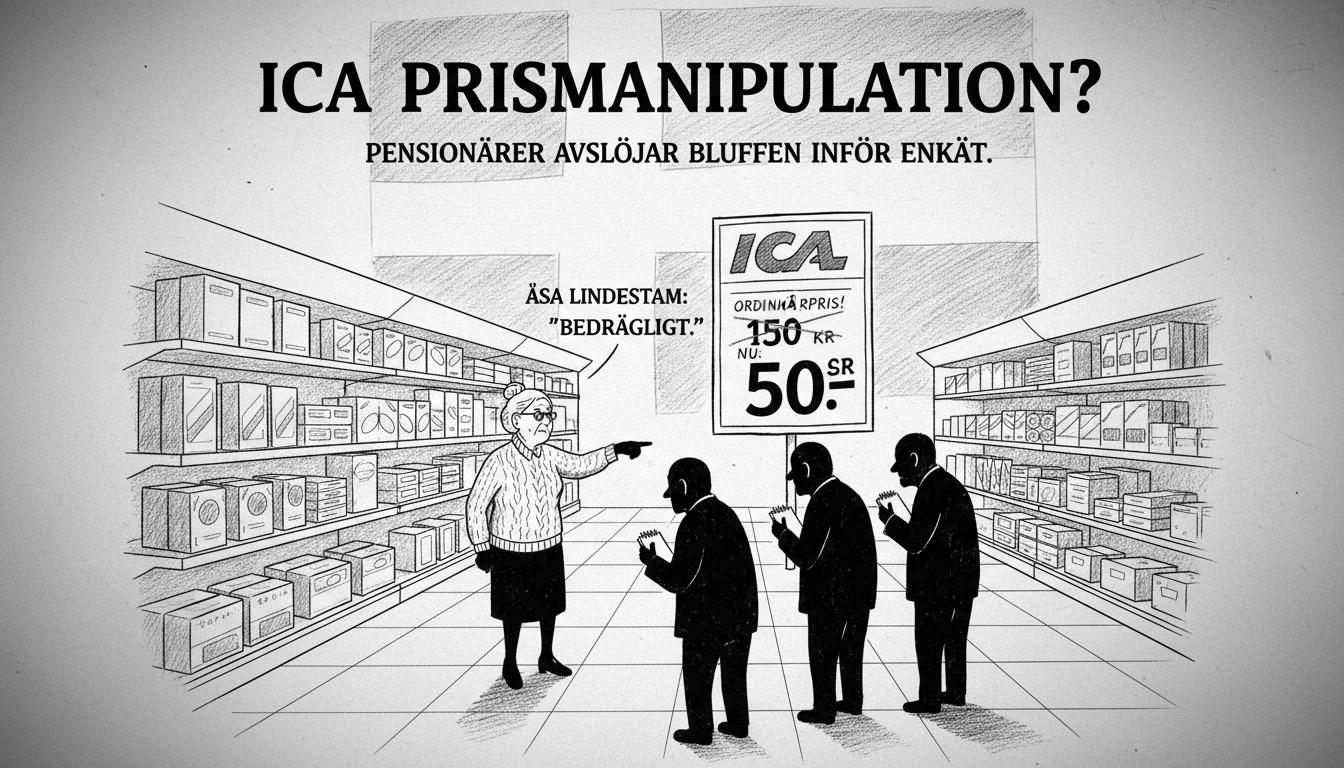
A major consumer watchdog report has revealed a troubling pattern in Swedish grocery retail. At least 23 Ica Maxi stores have temporarily lowered prices on numerous items during a specific annual monitoring period, only to raise them again shortly after. This practice directly coincides with the nationwide price survey conducted by the Swedish Pensioners' National Organization, known as PRO. The findings suggest a coordinated effort to appear more competitive during public scrutiny, raising serious questions about market transparency and consumer trust in Sweden's dominant food retail chain.
The annual PRO survey is a cornerstone of consumer advocacy in Sweden. For two weeks each year, pensioner volunteers visit various supermarkets across the country. They purchase identical baskets of goods to compare prices over time and between different retailers. The explicit goal is to increase price awareness among shoppers and apply downward pressure on grocery costs. The revelation that stores may be gaming this system strikes at the heart of its credibility. For many elderly Swedes on fixed incomes, these surveys are a critical tool for managing household budgets amidst persistent inflation.
PRO's chairperson, former Social Democratic Riksdag member Åsa Lindestam, expressed profound outrage at the alleged tactics. 'They lower prices to trick and deceive us,' Lindestam stated bluntly. She accused the involved retailers of undermining a vital civic monitoring effort. In response to the allegations, Magnus Stadig, head of hypermarkets for Ica Sweden, issued a written comment. He emphasized that individual Ica retailers are responsible for setting prices on their local markets, suggesting a decentralized pricing model. This statement places accountability on franchise holders rather than the corporate entity, a distinction that will likely feature in subsequent debates.
The implications of this report extend beyond a single retailer. It touches on broader concerns about market concentration and price-setting power within the Swedish food sector. Ica holds a commanding market share, making its pricing behavior a matter of significant public interest. The Swedish government and relevant agencies have long monitored food prices, considering them a key component of household economic security. This incident may prompt renewed calls for stricter oversight or new legislative measures from the Riksdag to prevent such manipulation. Past discussions in Stockholm politics have often circled around strengthening consumer protection laws, and this case provides fresh ammunition for those efforts.
Lindestam confirmed that PRO will not cease its surveys. Instead, the organization will alter its methodology to prevent stores from having time to adjust prices reactively. 'We are very eager and will continue to check prices,' she declared, signaling a new phase in the cat-and-mouse game between auditors and retailers. This development poses a direct challenge to Ica's public reputation. The company frequently promotes its community roots and customer focus. Evidence of strategic price manipulation during a pensioner-led survey contradicts that image and could influence shopper loyalty.
From a policy perspective, this situation tests the current regulatory framework. Sweden typically relies on strong consumer organizations and market competition to regulate prices, rather than heavy-handed state intervention. If voluntary monitoring systems can be systematically gamed, it weakens this model. Officials in relevant government districts may now be compelled to review whether existing laws are sufficient. The coming weeks will show if this remains a controversy between a retailer and an advocacy group, or if it escalates into a matter for parliamentary committees and potential government policy review in Sweden. The core issue is one of fairness. When large chains with immense market power engage in opaque pricing, it erodes the level playing field essential for a functioning market.