
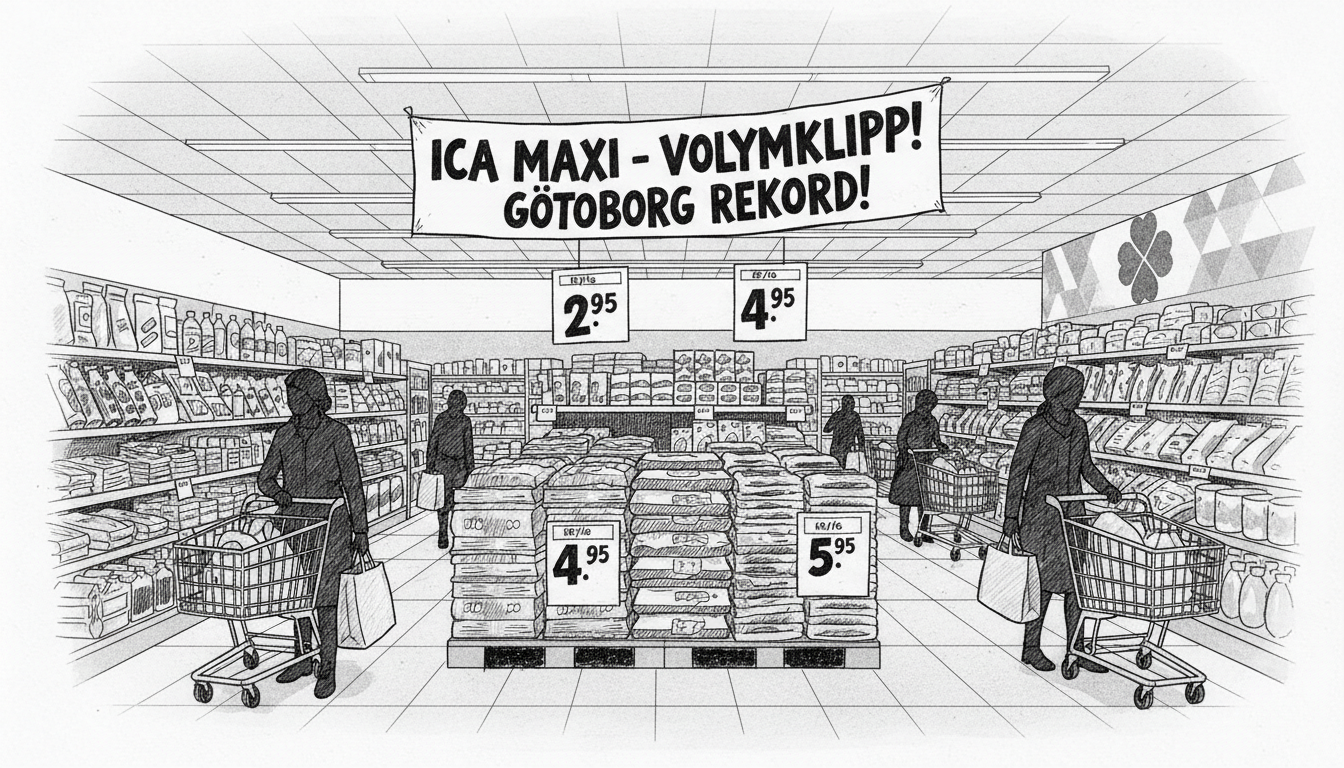
Walking through ICA Maxi Högsbo in Gothenburg, you see families filling their carts despite Sweden's grocery price concerns. Store manager Martin Ekgrund watches customers choose between premium and budget options. His supermarket recently broke sales records while others struggle.
Swedish shoppers initially turned away from ICA during price surges. They sought cheaper alternatives to manage household budgets. Many families changed their shopping routines entirely.
Then something shifted in the third quarter. ICA regained market share through their Maxi stores. These massive supermarkets continue earning millions of kronor while keeping prices competitive.
Martin Ekgrund explains their approach clearly. "We never profit from high prices," he states. "We make money through large volumes at low prices." This philosophy resonates with Swedish values of fairness and practicality.
The Swedish grocery landscape reflects broader society trends. Consumers want value without compromising quality. They appreciate transparency about business practices too.
ICA's success comes during challenging economic times. Many Swedes feel the pinch at the checkout counter. Yet they return to familiar stores that demonstrate commitment to fair pricing.
Gothenburg's Högsbo neighborhood typifies this balancing act. Residents support local businesses while watching their spending. They appreciate when companies acknowledge economic realities.
Swedish immigration patterns influence shopping habits too. New residents often seek familiar products alongside Swedish staples. Large supermarkets accommodate these diverse preferences within their aisles.
This retail story reveals much about Swedish consumer behavior. People respond positively to honest business approaches. They reward companies that prioritize customer needs over excessive profits.
The grocery sector's evolution continues shaping Swedish lifestyle choices. How people shop reflects their values and economic circumstances. Stores that understand this dynamic position themselves for lasting success.
Martin's store represents a broader trend in Swedish retail. Large-format stores serve multiple community needs under one roof. They become destinations rather than mere shopping stops.
Swedish society increasingly values convenience alongside affordability. Busy families appreciate one-stop shopping solutions. They balance traditional preferences with modern practicalities.
This retail resilience demonstrates Swedish adaptability. Businesses and consumers navigate economic challenges together. Their cooperation creates sustainable models for uncertain times.