
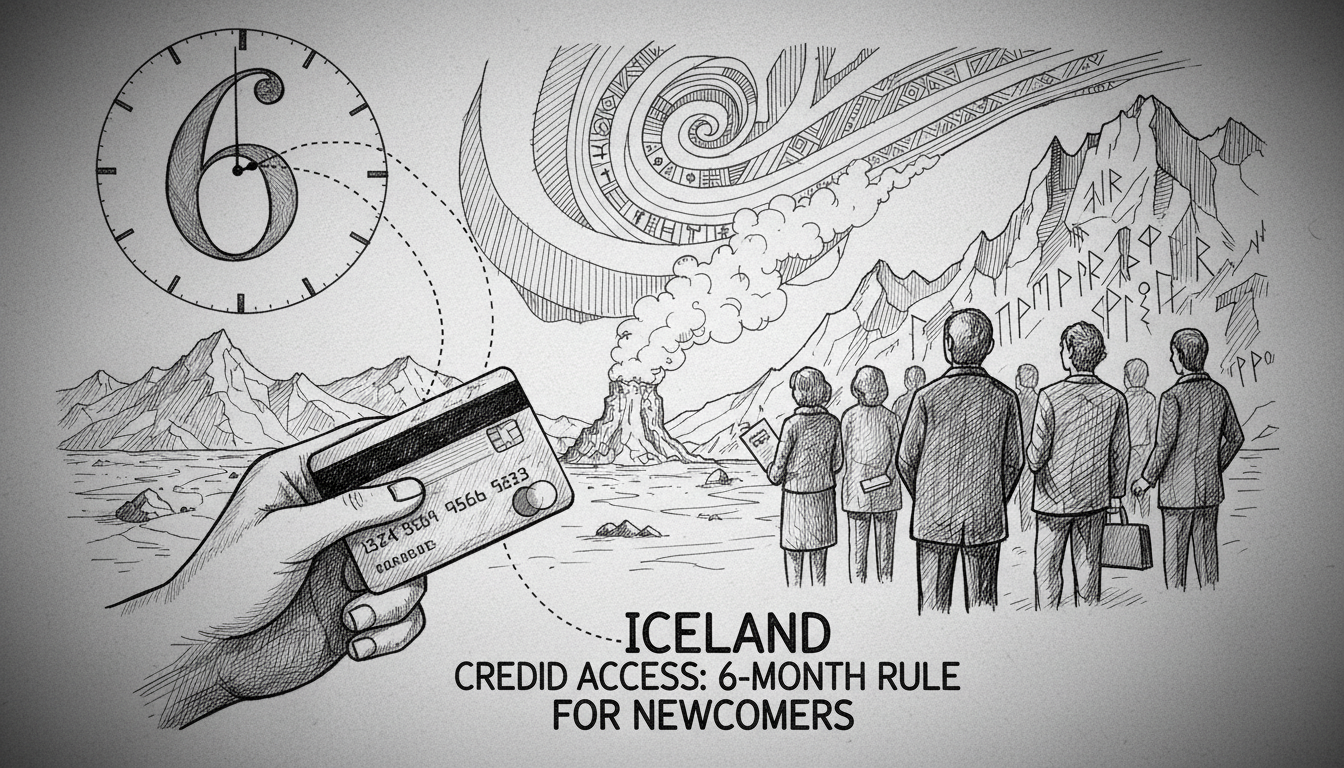
Icelandic store credit card approval rates exceed 70% after six months of residency. This statistic highlights a system where patience is mandatory for new residents seeking financial integration. The process contrasts sharply with the swift opening of a basic bank account, revealing a cautious banking culture forged in crisis.
Maria Fernández, a Spanish engineer who moved to Reykjavik's 101 district, experienced this firsthand. She secured a job in Iceland's geothermal sector within weeks but waited eight months for a credit card. "My excellent credit history in Madrid meant nothing here," Fernández said. "I used my debit card for everything, from groceries in Kringlan to heating bills, to prove my reliability."
The 2008 Crisis Legacy: Conservative Lending Returns
Iceland's banking collapse during the 2008 financial crisis triggered a regulatory overhaul. The Althing, Iceland's parliament, implemented stricter financial oversight to prevent future meltdowns. This political shift ingrained deep caution in credit issuance. Banks now prioritize domestic stability over global credit histories.
"The system is designed to protect both the consumer and the national economy," said Althing member Sigríður Á. Andersen, who sits on the economic affairs committee. "We learned that rapid credit expansion carries systemic risks. Today, we build resilience from the ground up, starting with each resident's local financial footprint." This approach means foreign scores from Experian or Equifax hold no weight. Icelandic banks rely solely on the centralized Creditinfo Iceland system.
Building a Credit File From Zero: A Practical Guide
New residents must start with a debit card. Íslandsbanki's basic Visa Debit, with no monthly fee, is a common first step. Use it for all daily transactions in Reykjavik and beyond. Consistent spending and on-time bill payments for utilities like Reykjavik Energy are crucial. They form the baseline of your Icelandic credit score.
After three to four months, consider a store credit card. Retailers like Elko and IKEA offer entry-level cards with limits around 50,000 ISK and annual fees of 990 ISK. These cards report to Creditinfo Iceland monthly. Approval rates climb above 70% for applicants with six months of local employment history and three consecutive pay slips.
Monitoring your report is essential. Creditinfo Iceland provides individual reports for 1,290 ISK. Check quarterly for errors and dispute inaccuracies within 30 days. A single late payment can slash your score by 40 points and linger for three years.
Graduating to Major Banks: Income and Interview Hurdles
Major banks impose higher barriers. Arion Bank's Visa Classic requires proof of 400,000 ISK monthly income and typically an eight-month residency history. It offers a 300,000 ISK limit for a 2,990 ISK monthly fee. Landsbankinn's Mastercard Gold demands one year of residency and 500,000 ISK monthly income, with a 5,990 ISK annual fee for benefits like airport lounge access.
Applications should be made in person at bank branches. Bring your kennitala (national ID), passport, employment contract, and three latest pay slips. Prepare for a detailed 20-minute interview on spending habits and financial planning. Self-employed individuals face stricter scrutiny, needing two years of audited accounts.
Nordic Context: Iceland's Unique Financial Landscape
Compared to neighbors like Norway or Denmark, Iceland's credit system is notably more insular. While Nordic cooperation flourishes in environmental projects, finance remains fiercely domestic. Sweden's banking sector, for instance, often recognizes Nordic credit histories more readily. Iceland's isolation stems from its crisis experience and the dominance of local banks like Arion Bank and Landsbankinn.
Financial analyst Þórarinn Þ. Pétursson links this to broader economic strategy. "Iceland's conservative lending supports stability, which underpins our green transition," he said. "Reliable credit systems help fund geothermal expansions in the Hengill area or sustainable fishing ventures in Akureyri. It's about long-term security over short-term convenience."
Regional Realities: Access Across Iceland
Credit access can vary outside the capital. In smaller regions like the Westfjords, branch presence is limited, and bankers may prioritize longstanding community ties. However, digital banking has eased some disparities. The consistent requirement nationwide is proof of steady income, often from sectors like tourism or fisheries.
New residents in Reykjavik districts like Hafnarfjörður or Kópavogur benefit from more bank branches but face the same core rules. The system does not discriminate by location but by proven financial behavior within Iceland.
Future Outlook: Will the System Evolve?
Pressure from an growing international workforce in tech and green industries may prompt gradual change. Some Althing members debate whether to recognize certain EU credit data, but no legislation is imminent. The priority remains maintaining the hard-won stability of Iceland's financial system.
For now, newcomers must navigate this deliberate process. Building credit in Iceland is a test of patience and fiscal discipline. It reflects a nation still mindful of past upheavals, prioritizing economic resilience above all else. Can this model balance security with the needs of a globalizing economy? The answer will shape Iceland's financial frontier for years to come.