
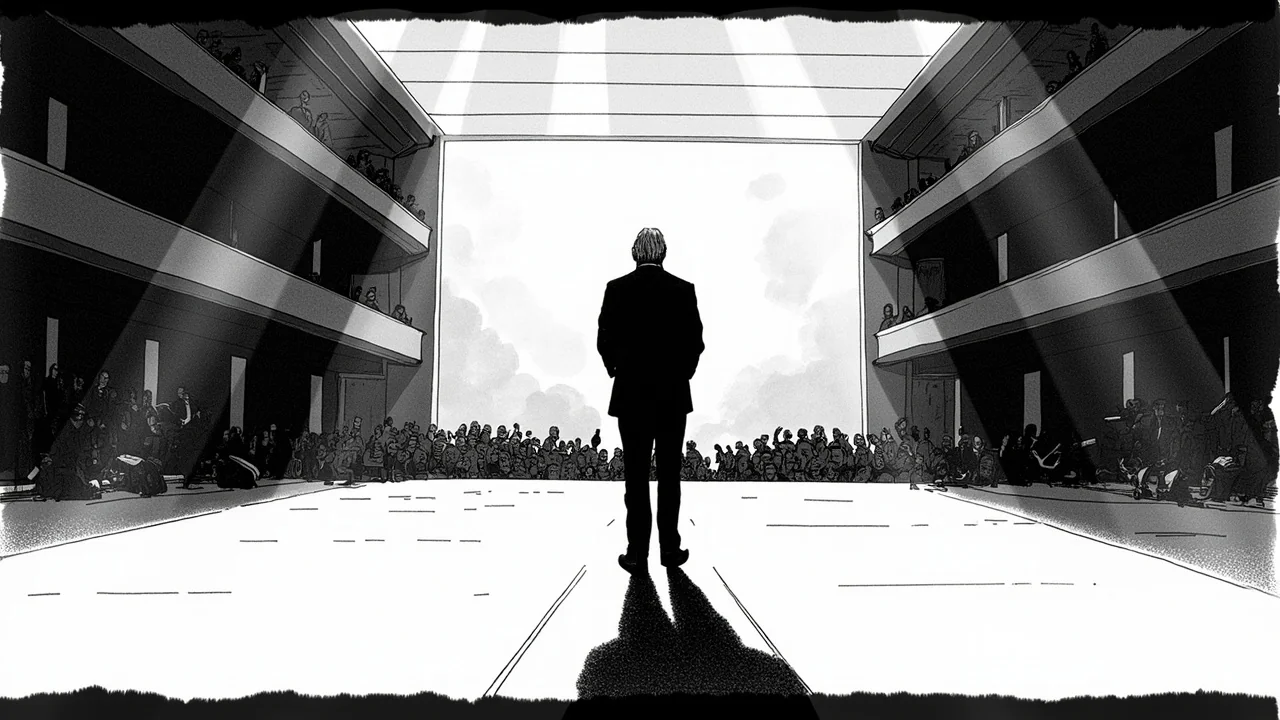
Iceland's first national opera director will take the stage in January. Finnur Bjarnason has been appointed to lead the newly established National Opera under the umbrella of the National Theatre. His five-year appointment marks a significant milestone following the Althing's passage of new legislation creating the institution.
Environment, Energy, and Climate Minister Jóhann Páll Jóhannsson made the appointment, effective January 15th. He took over the hiring process in December from former Culture Minister Logi Einarsson. Logi recused himself, citing a conflict of interest as Finnur had worked closely within his ministry.
"Finnur Bjarnason has been appointed opera director at the National Opera in the National Theatre," the government's announcement stated. The decision followed a rigorous selection process. A qualifications committee reviewed eleven applicants, shortlisting four for final interviews with the minister.
Finnur Bjarnason is no stranger to the project. He was hired as project manager for the opera's establishment by the Ministry of Culture two years ago. His deep involvement in crafting the institution's framework made him a leading candidate. This insider knowledge presents both advantages and challenges for the new director.
A Political and Cultural Landmark
The creation of a formal National Opera is a major cultural policy achievement for Iceland. For decades, opera productions have been staged by various companies and the Icelandic Opera, a privately-run organization. The new law, passed by the Althing, centralizes state support and establishes a permanent national company.
This move aligns Iceland with its Nordic neighbors, all of which have long-standing, state-supported national operas. The Norwegian Opera & Ballet in Oslo and the Royal Swedish Opera in Stockholm are prominent examples. Finland's national opera, also in Helsinki, is a key cultural institution.
"This is about securing the art form's future," said a Reykjavik-based cultural policy analyst who requested anonymity. "It provides stable funding and a clear mandate. But it also places immense pressure on the first director to define what 'Icelandic national opera' means in the 21st century."
The opera will operate from the National Theatre (Þjóðleikhúsið) in Reykjavik's bustling downtown area. This co-location raises questions about resource sharing and artistic independence. It also offers potential synergies in staging, technical crew, and administrative functions.
The Selection Process and Its Implications
Minister Jóhann Páll's decision followed the committee's recommendation. Sources indicate the committee deemed Finnur Bjarnason, Bjarni Thor Kristinsson, and Þorleifur Örn as the most qualified candidates. The identity of the fourth shortlisted candidate remains undisclosed.
The transfer of the appointment process between ministries is unusual. It underscores the delicate intersection of arts administration and politics in a small nation. Culture Minister Logi Einarsson's recusal was seen as a necessary ethical step, given Finnur's prior role as a ministry project manager.
"The minister followed due process, relying on the committee's expertise," a government spokesperson said. "The final interviews ensured the candidate's vision aligned with the government's cultural strategy."
Some within Reykjavik's arts community have quietly questioned whether an external, international search would have been beneficial. Others argue that Finnur's intimate knowledge of the legislative groundwork and local landscape is precisely what the nascent institution needs.
His mandate is clear: build an opera company from the legal framework upwards. This involves artistic programming, hiring permanent staff and singers, securing additional production funding, and developing an audience. The five-year term provides a realistic timeline for this foundational work.
Environmental Minister's Cultural Role
The appointment by the Environment, Energy, and Climate Minister adds an intriguing layer. Jóhann Páll Jóhannsson's portfolio is dominated by issues like geothermal energy expansion, carbon neutrality, and sustainable fisheries. Overseeing a major cultural appointment is a departure from his usual brief.
This anomaly occurred due to the specific conflict in the Culture Ministry. It highlights how ministerial responsibilities can shift in Iceland's coalition government system. It also, perhaps unintentionally, draws a symbolic connection between Iceland's natural resources and its cultural output.
Iceland's energy-intensive data centers and aluminum smelters are often debated in terms of environmental impact versus economic benefit. The arts, particularly a state-funded opera, enter a similar conversation about public spending and national identity. The minister now has a direct hand in both domains.
Challenges on the Horizon for the New Director
Finnur Bjarnason faces immediate and long-term challenges. Budgetary constraints are a perennial issue for Icelandic arts institutions. The National Opera must compete for funding with the National Theatre, the Symphony Orchestra, and visual arts museums.
Developing a distinct repertoire is another key task. Will the company focus on classic works, contemporary Icelandic compositions, or a mix? How will it collaborate with other Nordic opera houses, potentially sharing productions or singers? These artistic decisions will define its character.
Infrastructure is also a question. While using the National Theatre's stage is a practical start, opera often has specific acoustic and technical demands. Long-term plans may involve discussions about a dedicated venue, a costly proposition that would require significant political and public support.
Furthermore, he must navigate the expectations of a small, interconnected community. Icelandic musicians, singers, directors, and stage technicians are a tight-knit group. His decisions on hiring and contracting will be closely scrutinized in Reykjavik's cultural circles.
A Nordic Perspective on Cultural Investment
Iceland's investment in a national opera comes at a time when Nordic cultural funding models are being re-examined. Sweden and Denmark have ongoing debates about the balance between elite institutions and grassroots arts funding. Norway continues to heavily fund its cultural sector as part of its national identity project.
As the newest and smallest Nordic country to establish a national opera, Iceland has a chance to learn from its neighbors' experiences. It can potentially avoid bureaucratic bloat and create a lean, innovative institution. The focus could be on digital outreach, touring productions to towns like Akureyri and Ísafjörður, and nurturing local talent.
"The Nordic model is not one-size-fits-all," the cultural analyst noted. "Iceland has a unique opportunity to build something that reflects its scale and creative ethos. The success won't be measured by staging Wagner's Ring Cycle, but by creating a sustainable, vibrant home for operatic art that resonates with Icelanders."
The appointment of Finnur Bjarnason is just the opening act. The real work—of building an institution, cultivating an audience, and contributing to Iceland's cultural legacy—begins in January. His tenure will be a critical test of whether a state-backed national opera can find its voice and secure its place in the nation's artistic landscape.