
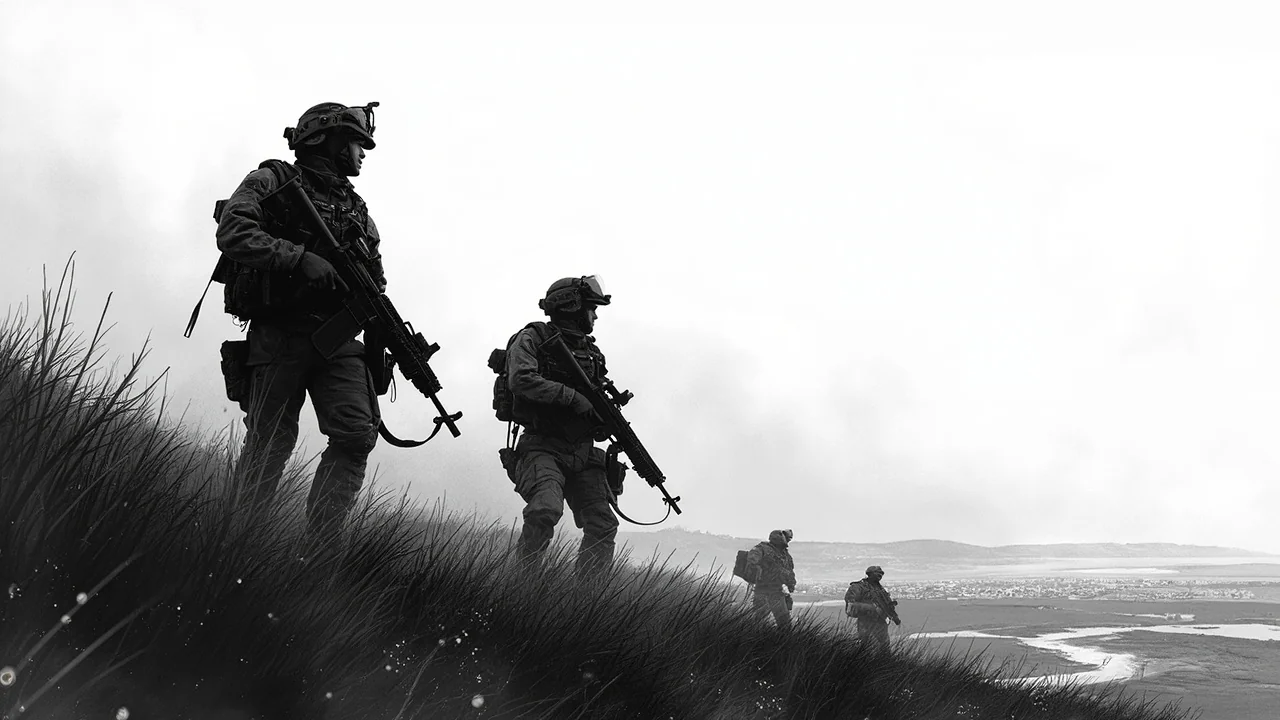
Iceland's elite National Police Commissioner's Special Unit is conducting an operation in Selfoss. The deployment follows a formal request from police in the Southern Region. The operation began on Wednesday evening, with three special unit vehicles seen traveling east over Hellisheiði pass around 5:30 PM.
"Operations are underway, and the special unit is at work. I cannot say more at this stage," said Jón Gunnar Þórhallsson, Chief Inspector of Police in Selfoss. His brief statement confirms a significant police action but leaves the nature and target of the operation undisclosed. The deployment of the Sérsveit is a rare event, reserved for high-risk situations beyond the capacity of standard police forces.
A Rare and Significant Deployment
The Sérsveit, or Special Unit, is Iceland's top-tier tactical police force. It is analogous to SWAT teams in other nations. Its members undergo rigorous training for scenarios involving armed suspects, hostage situations, and counter-terrorism. A public deployment in a town like Selfoss, a key service center of South Iceland with a population of around 10,000, is highly unusual and indicates a serious perceived threat.
"The activation of the Special Unit is never done lightly," says political analyst Eva Jónsdóttir, who follows security matters at the Althing. "It signifies that local commanders have assessed a situation as containing a level of danger or complexity that requires the highest level of trained response. The silence from authorities is standard protocol but inevitably fuels public concern."
The Scene in South Iceland
Selfoss is the largest town in the agricultural region of Árnessýsla. It sits on the banks of the Ölfusá river, a major salmon river, and is a hub for surrounding farming communities. The town is a short drive from key geothermal areas and the popular Golden Circle tourist route. A major police operation here disrupts the quiet rhythm of regional life and places the incident within a stone's throw of Iceland's vital tourism and agricultural sectors.
Witness reports of three armored vehicles moving from the capital region towards Selfoss suggest a coordinated, planned action. The route over Hellisheiði connects Reykjavík to the South, passing the massive Hellisheiði geothermal power plant. The movement of such a convoy would be conspicuous on the main highway.
Local residents reported increased police presence but no audible disturbances like gunfire or explosions through the evening. The operation appears to be contained, but the perimeter and focus remain a mystery to the public. Schools and businesses in the town center operated normally, but a palpable tension was reported by those near the police activity.
Protocol and Public Information in a Crisis
The police's current media strategy follows a standard playbook for ongoing tactical operations: confirm the event, affirm control, and withhold details that could compromise operational security or endanger officers and the public. This creates an information vacuum, which in the digital age is quickly filled by speculation on social media.
"There is a fundamental tension between the public's right to know and the operational need for secrecy during a live event," explains Professor Arnar Þórsson, who teaches media law at the University of Iceland. "Icelandic authorities generally err on the side of caution, releasing details only after the immediate threat is neutralized. This can be frustrating but is rooted in safety protocols."
Comparisons are being drawn to previous Sérsveit deployments, such as the 2013 operation in Breiðholt, Reykjavík, which involved a barricaded suspect. Each instance is reviewed by the National Police Commissioner, and the unit's actions are subject to oversight. The Icelandic model of policing emphasizes de-escalation, and the mere presence of the unit is often intended as a show of force to compel a peaceful resolution.
The Nordic Context of Policing
This incident offers a point of contrast with Iceland's Nordic neighbors. While Sweden and Denmark have seen increased deployments of national task forces against gang violence, Iceland's use of such units remains infrequent and is typically tied to isolated, acute incidents rather than organized crime sweeps. Norway and Finland also maintain similar elite units, with their deployments making national news due to their rarity.
"The Nordic countries share intelligence and best practices for tactical policing," notes Eva Jónsdóttir. "However, the operational triggers differ. In Iceland, the threshold for deploying the Sérsveit is extremely high, precisely because violent crime rates are low. This makes tonight's events in Selfoss all the more noteworthy for policymakers across the region."
The operation also tests Iceland's integrated emergency response framework, where local police, the special unit, and potentially the Icelandic Coast Guard's air support unit must coordinate seamlessly. This interoperability is a key focus of Nordic defense and security cooperation, even for a nation without a standing army.
Awaiting Answers in Selfoss
As night falls on South Iceland, the situation remains unresolved in the public eye. The community of Selfoss is left waiting for answers. The economic and social impact, though likely short-term, is real for local businesses and families near the police cordon.
The coming hours will be critical. A peaceful resolution will lead to a detailed press conference, explaining the reasons for the massive police response. Other outcomes would have deeper, more tragic repercussions for the small, tightly-knit town. The operation puts Iceland's generally tranquil reputation into sharp relief, reminding both citizens and the world that no society is immune to incidents that require its most formidable tools of law enforcement.
The ultimate measure of this event will be in its conclusion and the transparency that follows. How authorities communicate the nature of the threat and their response will influence public trust. For now, the people of Selfoss, and all of Iceland, watch and wait, hoping the special unit's presence alone is enough to ensure a safe end to a dangerous situation.