
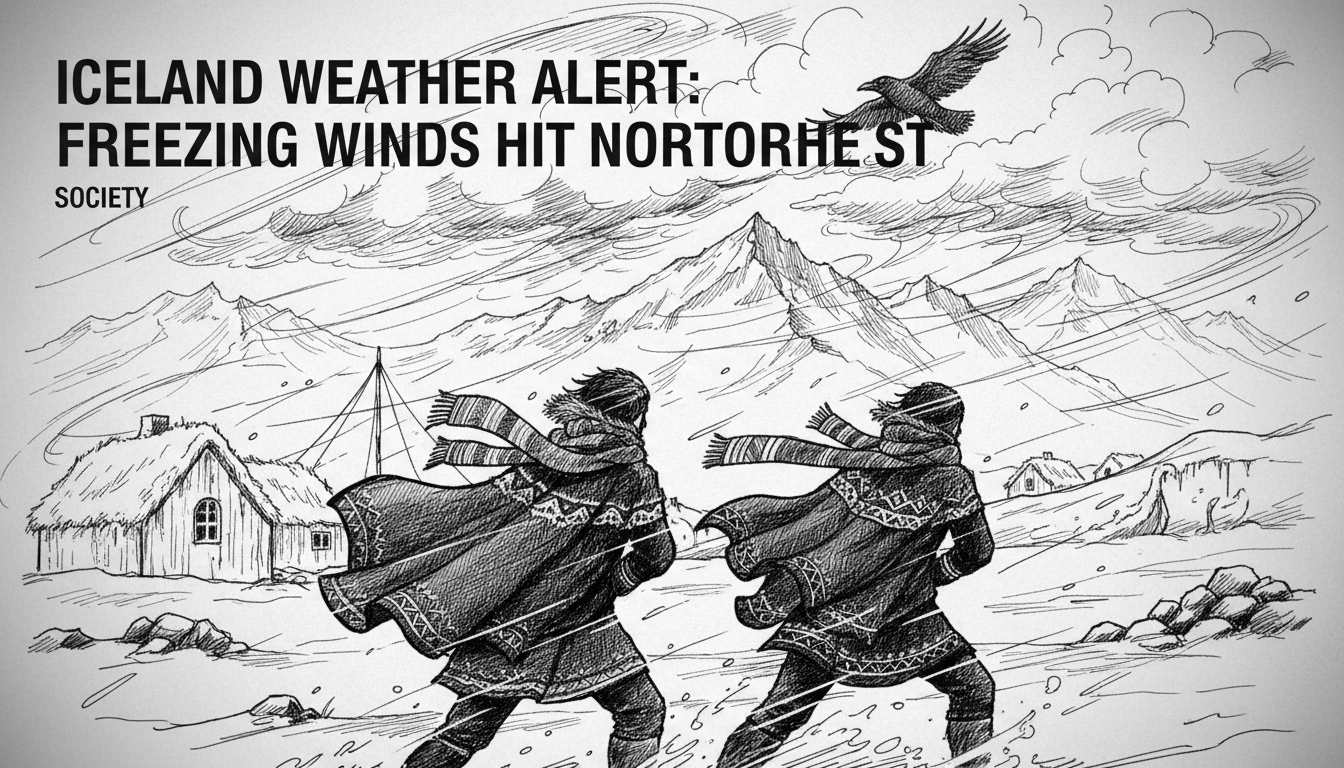
Iceland weather forecasts predict a sharp drop in temperatures and strong northeasterly winds tonight. The Icelandic Meteorological Office warns of widespread freezing conditions across the northeast, with temperatures plunging to around 0°C. This sudden shift follows a period of milder, wetter weather, highlighting the nation's famously volatile climate.
Residents in regions like Mývatn, Akureyri, and across the Northeast Peninsula should prepare for a cold night. Road conditions, particularly on mountain passes and in the highlands, could deteriorate rapidly. "The contrast is what defines our weather," says a senior forecaster at the Met Office. "We go from a damp 7 degrees to a biting frost within hours. This demands constant vigilance, especially for travel."
A Nation Defined by Atmospheric Extremes
Iceland's position in the North Atlantic, straddling the Arctic Circle and the Gulf Stream, creates a meteorological battleground. The clash between polar air masses and warmer Atlantic currents results in the rapid changes for which the country is known. While the Gulf Stream moderates winters, preventing the deep freezes seen at similar latitudes, it also fuels powerful low-pressure systems. These systems bring the strong winds and precipitation that can swiftly turn to ice.
Today's forecast exemplifies this duality. While the southwest experiences relatively gentle west winds of 3-10 m/s and temperatures up to 7°C, the northeast and east face an immediate, harsher regime. Winds strengthen there initially, bringing cloud and light rain to some areas. Meanwhile, the Southeast and the dramatic fjords of the east remain dry, awaiting the cold snap. This regional fragmentation is typical; weather in Reykjavik's Hafnafjörður district can be utterly different from conditions in Seyðisfjörður, just a few hundred kilometers away.
The Freeze Arrives: Tonight's Hazardous Outlook
The core of the weather alert focuses on tonight. "Frystir allvíða norðaustantil í kvöld" – it will freeze widely in the northeast tonight. This is the key public safety message from forecasters. After a day of mixed conditions, a cold air mass will settle over the northeastern quadrant of the country. Temperatures will hover around freezing, but the significant wind chill from northeasterly gusts will make it feel far colder.
This combination of freezing temperatures and wind is particularly dangerous. It leads to black ice forming quickly on roads, especially on bridges and shaded stretches of the Ring Road. For the agricultural sector in regions like Skagafjörður, it means bringing livestock into closer shelter. For fishermen in towns like Húsavík or Vopnafjörður, it means preparing vessels for icy conditions at sea. The forecast is clear: a sharp reminder that winter's grip, though loosened by the Gulf Stream, is never far away.
A Week of Shifting Winds and Temperatures
The instability continues into the week. Tuesday's weather looks similar at first but carries its own warning. Winds are expected to increase again, particularly from the north. The forecast specifically warns of strong wind gusts by evening, especially in northern areas. This pattern of fluctuating wind speed and direction is a primary driver of Iceland's changeable conditions.
Wednesday brings a more defined shift. A northwesterly wind of 10-18 m/s is predicted, strongest along the eastern coast. This will bring occasional sleet or snow showers to the Northeast and East, while other parts of the country see little precipitation. The overall trend is a cooling one. Each system passing through the North Atlantic nudges the temperature downward, reinforcing the seasonal transition.
Expert Perspective: Living with Meteorological Volatility
Meteorologists in Iceland stress a simple, non-negotiable rule: check the forecast frequently. The official Veður website and app are essential tools for daily life, not just for farmers and sailors but for anyone commuting, hiking, or planning outdoor activities. "A forecast is only a snapshot," explains an environmental scientist at the University of Iceland. "The models update constantly because the atmospheric dynamics around Iceland are so complex. What looks like a calm morning can become a windy, wet afternoon."
This expertise is woven into the national fabric. The Icelandic Met Office works closely with the Road and Coastal Administration to issue travel alerts. They provide specific warnings for highland roads, which become treacherous with even a dusting of snow or ice. This inter-agency cooperation is a critical component of public safety in a country where the environment is both a primary economic asset and a constant potential hazard.
The Broader Nordic Context: A Shared Climate Challenge
While Iceland's weather is uniquely fierce due to its oceanic isolation, the pattern of preparing for sudden cold snaps resonates across the Nordic region. Norway's coastal communities understand the danger of freezing spray and wind chill. Finland's transport authorities are experts at managing icy roads. Denmark, though milder, faces its own disruptive winter storms.
There is active climate data sharing and research collaboration between the Nordic meteorological institutes. Studying the intensification of North Atlantic storms or changes in Arctic air mass movements is a joint effort. Iceland's data contributes to a broader understanding of climate trends affecting the entire region, from Greenland's ice sheet to the Baltic Sea. The freezing winds forecast for northeast Iceland tonight are a local event with connections to hemispheric weather patterns.
Practical Implications for Residents and Travelers
For Icelanders, this forecast dictates daily decisions. It means checking the road conditions on Vegagerðin's website before a drive to the countryside. It means ensuring home heating systems, often powered by the nation's abundant geothermal energy, are functioning efficiently as the nights turn colder. In Reykjavik neighborhoods like Grafarvogur or Breiðholt, residents might secure outdoor furniture ahead of the predicted stronger winds later in the week.
For visitors, the message is one of respect and preparation. Travel weather in Iceland is not a minor consideration; it is the central factor. Tours to the highlands or the Diamond Beach near Vatnajökull glacier can be canceled or altered at short notice. The famous Icelandic saying "þetta reddast" (it will all work out) is an attitude, not a travel plan. A working plan involves waterproof layers, flexible itineraries, and a reliable source for the latest Vedur Iceland update.
Looking Ahead: The Seasonal Transition Deepens
This week's cold snap is not an anomaly but a signpost. It points toward the deeper winter ahead. While the forecast mentions "milt í veðri, a.m.k. miðað við árstíma" (mild in the weather, at least for the season), the overriding trend is cooling. The periods of rain will increasingly turn to sleet and snow, especially in the north and east. The daylight hours are shortening rapidly.
The freezing temperatures expected tonight in Iceland's northeast are a brief, sharp chapter in the long story of an Icelandic winter. They test preparedness, highlight the expertise of the forecasters, and underscore humanity's relationship with a powerful natural world. As the winds pick up again on Tuesday night, howling across the treeless landscapes, the question is not if the weather will change, but when and how dramatically it will change next.