
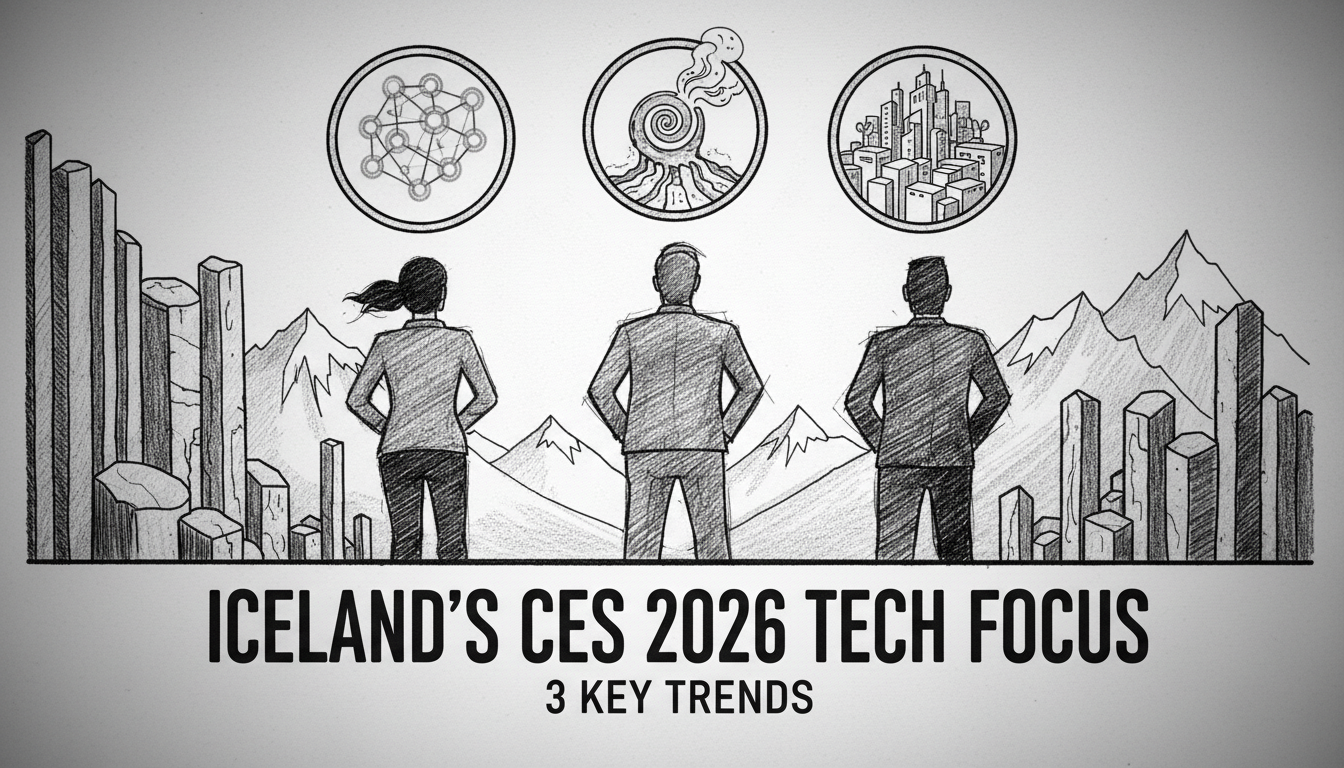
Iceland's tech industry is watching CES 2026 for innovations that align with its unique national strengths. The Consumer Electronics Show in Las Vegas sets the global agenda, but Reykjavik's developers and entrepreneurs are looking for specific signals. They want technologies that can leverage Iceland's 100% renewable energy grid and its advanced digital infrastructure. This year's focus is on sustainable computing, climate tech, and the next wave of digital services. For a small, connected nation, global trends can have an immediate and profound impact.
CES is more than a gadget show for Iceland. It is a strategic planning session. Industry leaders from Grandi to Kópavogur analyze which global movements merit investment and which pose a challenge. The Icelandic tech sector, while growing, must pick its battles carefully. Participation by Icelandic companies on the show floor provides a direct conduit for these conversations. Their presence turns a massive international event into a relevant forum for Iceland's specific ambitions in green technology and digital innovation.
The Green Imperative Meets Digital Demand
Every tech trend at CES 2026 will be viewed through Iceland's environmental lens. The country generates virtually all its electricity from geothermal and hydropower. This creates a powerful foundation for energy-intensive industries like data centers. "Our competitive advantage is literally underground," said Anna Jónsdóttir, a member of the Althing's Industry Committee. "At CES, we look for technologies that can turn our renewable surplus into economic and environmental value on the global stage."
The most relevant announcements will likely involve sustainable computing and energy-efficient hardware. Icelandic data center operators, concentrated in areas like Reykjanesbær near the geothermal plants, need the most efficient servers and cooling systems. Innovations in liquid cooling or low-power processors directly affect their bottom line and environmental claims. Similarly, any breakthrough in battery technology or energy storage is critical. It could enhance Iceland's ability to manage its renewable output and support more tech infrastructure.
Icelandic Footprint on the Global Stage
While Iceland is a consumer of global tech trends, it is also an emerging exporter of innovation. Icelandic companies at CES 2026 will showcase niches where the country excels. These often combine technical skill with a unique environment. Expect to see Icelandic startups in immersive tech—virtual and augmented reality—a sector that thrives on the country's strong gaming culture and digital literacy. Other demonstrations may focus on climate modeling software or ocean tech, leveraging Iceland's expertise in fisheries and marine monitoring.
The government's active support for tech growth means these companies often have backing from public-private funds. Their goal at CES is not just to sell products, but to attract partners and investment. "We go to CES to prove that innovation from a small island can have global relevance," said Davíð Þórsson, CEO of a Reykjavik-based VR firm exhibiting this year. "Our size forces us to think internationally from day one." Success for these firms validates Iceland's broader strategy of building a knowledge-based economy beyond its traditional pillars of fishing and tourism.
The Infrastructure Advantage and Its Limits
Iceland's tech readiness is exceptional. With over 99% internet penetration and a highly educated, English-speaking population, the country is a natural testbed for new digital services. Trends in connectivity, smart home devices, and telemedicine highlighted at CES can find rapid adoption in Reykjavik neighborhoods from Háaleiti to Grafarvogur. The nationwide fiber-optic network removes a major barrier to deployment that other countries face.
However, analysts point to persistent challenges. "Our infrastructure is world-class, but our domestic market is tiny," noted tech economist Dr. Helga Arnardóttir. "The real test is how we adapt and re-export global innovations. Can an Icelandic company build a better remote work platform using our experience? Can we design geothermal management software for the world?" CES often highlights the scale of Silicon Valley giants; the Icelandic response must be focused on specialization and sustainable niche leadership.
The Nordic Context and Competitive Cooperation
Iceland does not operate in a vacuum. Its tech sector is deeply integrated into the Nordic digital ecosystem. Trends that sweep Sweden's Fintech scene or Denmark's clean tech hubs quickly reach Iceland. CES serves as a common reference point for the region. Icelandic companies and policymakers will be watching how their Nordic counterparts engage with the same technologies, looking for areas of cooperation and differentiation.
Nordic cooperation on digital governance and green tech standards is already strong. Breakthroughs in carbon-neutral data center design or ethical AI frameworks presented at CES could become the basis for new Nordic-wide initiatives. Iceland's role in these collaborations is often as a green energy partner and a scalable testing environment. A new standard for energy-efficient computing, for instance, could be trialed in Icelandic data centers before wider Nordic adoption.
The Week Ahead: From Las Vegas to Laugavegur
The coming days will see a flurry of analysis from Iceland's tech community. Industry group meetings in Reykjavik will dissect the keynotes from CES. University courses at the University of Iceland and Reykjavik University may adjust curriculum projections based on emerging tech trends. The most immediate impact will be on investment decisions. Venture capital firms focusing on the Nordic region will evaluate which CES-hyped sectors align with Icelandic strengths.
The ultimate question for Iceland is one of agency. Will the country simply import the future defined in Las Vegas? Or can it use its unique assets—endless green power, a compact and connected society, and a culture of innovation—to shape that future? CES 2026 provides the raw material: the chips, the devices, the software platforms. Iceland's task is to assemble them into a model of sustainable, human-centric tech that works for an island in the North Atlantic, and perhaps, for the world beyond. The conversations starting this week in conference halls will echo in boardrooms along Reykjavik's harbor for months to come, determining the next chapter for Iceland's digital economy.