
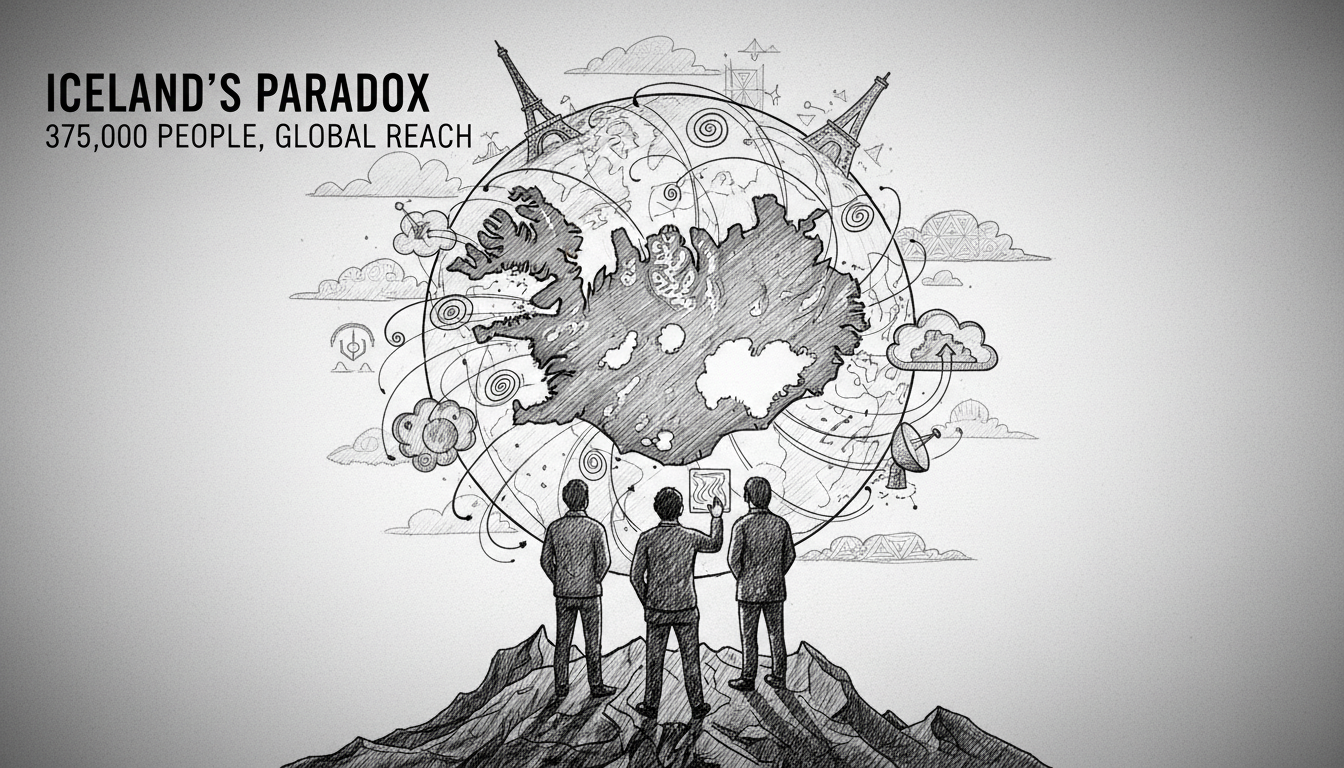
Iceland's 375,000 citizens manage a landmass larger than Ireland, creating a unique national dynamic. This small population must navigate immense geopolitical, environmental, and economic pressures. The country balances its position on the Mid-Atlantic Ridge with membership in NATO and the European Economic Area. It also protects vast natural resources while welcoming over two million annual visitors. This is the story of modern Iceland, a nation constantly defining its role on the world stage.
The Renewable Energy Powerhouse
Iceland generates nearly 100% of its electricity from renewable sources, primarily geothermal and hydropower. This achievement is a direct function of its volcanic geology. The Hellisheiði geothermal plant, near Reykjavik, is one of the largest in the world. It provides both electricity and hot water for the capital region's district heating system. "Our geology is our foundational economy," says Árni Finnsson, Chair of the Iceland Nature Conservation Association. "The challenge is using this bounty without degrading the landscapes it comes from." This energy independence insulates Iceland from global fossil fuel markets. It also forms the backbone of heavy industries like aluminum smelting. These plants consume about 80% of the nation's electricity output. Debates continue in the Althing over expanding this sector versus reserving power for future tech and domestic needs.
Tourism's Double-Edged Sword
The tourism boom, which saw arrivals skyrocket from 500,000 in 2010 to over 2 million pre-pandemic, has redefined Iceland's economy. It replaced fishing and aluminum as the top export sector. This surge created jobs and prosperity across Reykjavik and rural regions alike. Yet, it placed unprecedented strain on fragile ecosystems. Sites like the Fjaðrárgljúfur canyon and the Reykjanes peninsula's new volcanic eruption sites face overtourism. The government has responded with targeted policies. These include the "Pledge for Iceland" responsible travel initiative and proposed tourism taxes for conservation. Local planners in Reykjavik's 101 district now limit new hotel licenses. The goal is to shift from counting visitors to valuing their experience and impact.
A Society Built on Equality
Iceland consistently tops global rankings for gender equality, a status hard-won through persistent activism. The modern milestone was the 1975 "Women's Day Off," which paralyzed the country and changed the national conversation. Today, political parties enforce gender quotas for candidate lists. Corporate boards must have at least 40% of each gender. The pay gap, while the world's smallest, is still actively legislated against. This social framework extends to LGBTQ+ rights and universal childcare. Sociologist Dr. Thorgerður J. Einarsdóttir notes, "Equality is not seen as a women's issue here, but an economic and social necessity for a tiny population needing everyone's contribution." This mindset influences everything from parental leave policies to business leadership.
Security Without a Standing Army
As a founding NATO member with no standing army, Iceland's defense is a unique cooperative model. The country hosts rotating Allied air patrols and contributes to peacekeeping forces. The 2022 renewed agreement with the United States confirms continued defense cooperation. The Icelandic Coast Guard handles maritime defense, search and rescue, and policing of the vast 200-mile exclusive economic zone. This zone is critical for the fishing industry, which remains a cultural and economic cornerstone. Recent discussions in the Althing have focused on cyber defense and protecting underwater data cables. These cables are vital infrastructure for Iceland's data center industry and connectivity to Europe and North America.
Cultural Identity in the Global Stream
Icelandic culture is a powerful blend of deep historical roots and modern innovation. The Sagas, medieval literary works, are still widely read and referenced in daily life. The language has changed little in a millennium, protected by deliberate policy. Yet, Reykjavik is a hub for contemporary music, design, and gastronomy. This tension between preservation and innovation is constant. The government invests heavily in supporting artists, filmmakers, and writers. It aims to ensure a country of 375,000 can produce a cultural output rivaling larger nations. The annual Iceland Airwaves music festival and Reykjavik International Film Festival are key platforms for this exchange. They bring global attention while showcasing local talent.
The Nordic Anchor
Iceland's cooperation within the Nordic Council is a pillar of its foreign policy. This partnership provides a collective voice on issues like climate change, Arctic policy, and social welfare. Iceland often punches above its weight in these forums by sharing its expertise in geothermal energy and gender equality. It also learns from its neighbors' approaches to digital governance and green transition. This Nordic dimension offers a counterbalance to bilateral relationships with larger powers. It reinforces a regional identity based on shared values of democracy, sustainability, and human rights. As Climate Minister Guðlaugur Þór Þórðarson stated at a recent Nordic meeting, "Our shared Arctic environment makes our cooperation not just political, but essential for survival."
Looking to the Future
The path ahead for Iceland involves navigating climate change, which is altering its fisheries and glaciers at an alarming rate. It requires managing economic stability beyond tourism booms and aluminum contracts. The nation must also decide how to use its renewable energy advantage for maximum global and local benefit. Will it become a green data hub, a producer of green hydrogen, or a guardian of untouched wilderness? The debates in the Althing reflect these choices. They involve every citizen in a country where the line between the powerful and the public is notably thin. Iceland's story remains one of a small society leveraging immense natural and human capital. Its successes and struggles offer lessons for the world on sustainability, equality, and resilience. The ultimate question is whether this model can be maintained as global pressures intensify.