
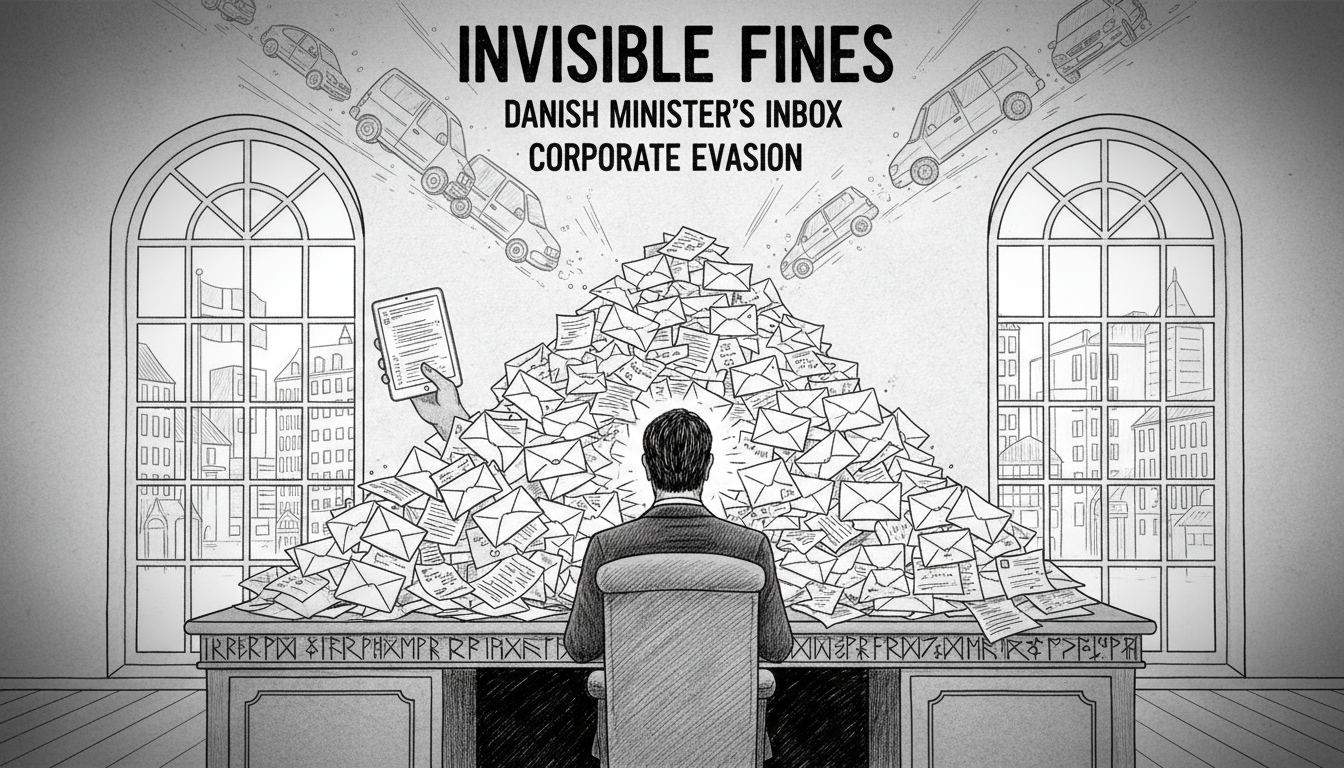
A new government mailbox for reporting unfair parking charges has received 180 complaints in its first days of operation. The Transport Minister opened the dedicated email address after private parking companies continued to send fines to drivers without placing a physical ticket on their windshields. This practice directly contradicts a recent ministerial clarification. The issue highlights a persistent gap between policy intent and corporate practice in Denmark's regulated sectors. For international observers, it offers a case study in how Danish consumer protection mechanisms respond when market actors find loopholes.
The core dispute centers on what are termed 'invisible parking fines.' Earlier this year, the Transport Minister explicitly stated that parking firms could not simply mail a charge after the fact without first placing a notice on the vehicle. The rule was meant to ensure transparency and give drivers immediate notice. Private companies, however, have adapted. According to the Danish Motorists' Federation, FDM, they now use a different method. They access a normally closed vehicle registry at the national motor agency to obtain driver information. They then use this data to issue charges and additional administrative fees by post.
Michael Ern Nielsen, a legal advisor for FDM, criticized the ongoing practice. He said it is wrong that motorists risk a charge merely for entering a parking lot. He noted the minister made it clear fines must be physically placed on the car. Yet companies continue their practice of sending invisible charges by mail, just under a different name. This legal maneuvering prompted Transport Minister Thomas Danielsen to establish the complaint mailbox. His stated goal is to understand the scope of the problem and stop the relevant companies' methods. He wants concrete information on which firms are bending the rules.
The broader context here touches on Danish society news and the social contract. Denmark's welfare system and high trust in public institutions rely on clear rules and fair enforcement. When private companies exploit technicalities, it erodes public confidence. This is not just about parking. It reflects a tension between commercial interests and consumer rights seen in other areas of Copenhagen integration and Danish social policy. The state creates a framework for fairness, but enforcement requires constant vigilance. The parking industry's trade association declined an interview. In a written comment, it welcomed authorities following up on whether the terms for accessing the vehicle registry were being followed. The association expects its members to operate according to their permits and urged authorities to contact any firms suspected of non-compliance.
This situation reveals a common challenge in Denmark's regulated markets. Rules are set, but compliance depends on the regulator's capacity to monitor and act. For residents and expats, the lesson is to be vigilant with private parking operators. Always check for a physical ticket. If one arrives later by mail without prior agreement or a windshield notice, you can now report it. The minister's direct intervention shows the political sensitivity around perceived unfairness. In a nation proud of its orderly systems, invisible fines strike a nerve. They feel like a breach of the straightforward, transparent dealings Danes expect. The next step will be whether the ministry uses the 180 complaints to launch specific investigations and sanctions. The effectiveness of this new tool will be measured by whether the invisible fines actually stop.